The Purple Fruit That June Has Always Belonged To
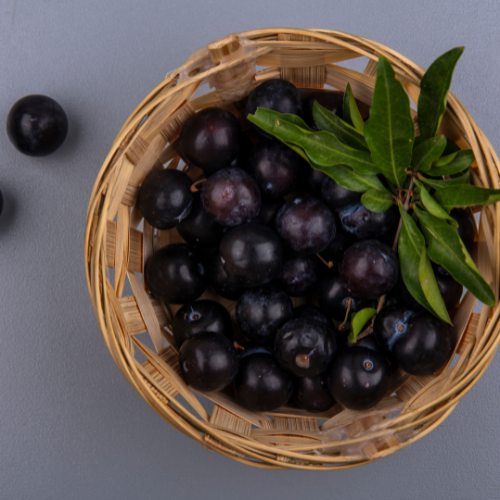
There’s a particular kind of hunger that only June can satisfy — not for mangoes or lychees, but for something darker, more fleeting, and a little strange. The kind you only feel when you spot a basket of ink-black berries in a roadside market and your mouth floods with a memory you didn’t know you had.
That fruit is Jamun. And if you want the best Jamun in Maharashtra — arguably in India — you’ll need to follow the road to Badlapur.
What Makes Badlapur Different From Every Other Jamun Town
India grows Jamun everywhere. You’ll find trees in UP, Odisha, Karnataka, and a hundred other states. So why does Badlapur have its own GI tag — officially recognized on 31 March 2024 — while most Jamun-growing regions don’t?
The short answer is terroir. The long answer is more interesting.
Badlapur sits in a pocket of Maharashtra’s Thane district where the land rises just enough to slow the rain. The soil is well-drained but holds moisture long enough for Jamun roots to go deep. That semi-hilly geography produces a microclimate that forces the fruit to develop slowly, concentrating its sugars, deepening its color, and thickening the skin just enough to survive a journey but not so much that it gets tough.
Local farmers have been tending these trees for generations using what might politely be called “patient farming” — planting during monsoon, letting trees establish without rush, harvesting only in June and July when each fruit has turned from reluctant green all the way to the deep purple-black that signals full ripeness. Nothing is forced. Nothing is early.
The result is a Jamun that is sweeter, juicier, and more aromatic than most of what you’ll find at urban fruit vendors. People who grew up eating Badlapur Jambhul — as it’s called locally — will tell you it’s not the same fruit. They’re right.
The Flavor Profile Nobody Talks About Honestly
Most writing about Jamun retreats into the same three words: sweet, tangy, astringent. True, but incomplete.
Badlapur Jamun has a flavor arc. It opens with a quick, bright sourness — almost a shock — then settles into a dense sweetness that doesn’t taste like sugar so much as it tastes like fermented darkness, like something that has been concentrating in the sun for months. The finish is where the astringency arrives, coating the tongue in a way that makes you reach for another one almost against your better judgment.
The juice is aggressive. It stains immediately and permanently. Your teeth will turn violet. Your fingernails will too. This is not a neat fruit. It is, however, an unforgettable one.
Why Diabetics Have Been Eating This for Centuries Before Anyone Called It a Superfood
Long before glycemic indexes were calculated in labs, Ayurvedic practitioners prescribed Jamun for what they called prameha — a category of metabolic disorders that maps closely to what we now call diabetes. The seeds especially were dried, powdered, and given to patients as a daily supplement.
Modern nutrition research has largely confirmed the instinct. Badlapur Jamun carries a low glycemic index, making it one of the rare sweet fruits that doesn’t spike blood sugar aggressively. It’s rich in iron (1.4 mg per 100g — meaningful for a fruit), carries a solid hit of Vitamin C, and packs antioxidant compounds that support everything from skin health to digestion.
The seeds — which most people spit out without a second thought — are processed into herbal powder used in Ayurvedic formulations to this day. Nothing from this fruit is wasted.
A Season That Lasts Six Weeks and Disappears
This is the part that makes Badlapur Jamun what it is: scarcity.
The harvest window is six to eight weeks. June arrives, the trees load with clusters of purple-black berries, and the region mobilizes. Fruits are handpicked — no machines, because even a minor bruise turns a Jamun into mush within hours — sorted by size, color, and sweetness, then packed immediately for local markets, domestic distribution, and export.
By August, it’s over. The trees rest. The markets move on.
That rhythm is exactly what gives the fruit its cultural weight. In Badlapur, Jamun season isn’t just a harvest — it’s an annual event. Local markets pile high with fruit, families drive in from nearby towns, and for a few weeks, the air around the orchards carries that particular sweet-dark smell that Jamun trees make when they’re heavy with ripe fruit.
Agritourism has grown around this window, drawing visitors who want to experience the orchards firsthand — picking fruit, watching the sorting process, and eating Jamun in the place it actually belongs.
From Badlapur to Singapore: The Export Story
The same qualities that make Badlapur Jamun beloved locally — its flavor intensity, deep color, and exceptional shelf stability relative to other Jamun varieties — have made it viable for international markets.
Frozen Jamun pulp, cold-pressed juice, dehydrated powder, and Ayurvedic seed powder now leave India every season to reach buyers in the UAE, Singapore, the UK, Qatar, and Malaysia. Jam pulp units de-seed and pasteurize fruit for beverage manufacturers. Cold-pressing centers bottle juice for health food distributors. Supporting infrastructure from APEDA and the Maharashtra State Agricultural Marketing Board has helped smaller cooperatives access air freight and cold chain logistics that were previously out of reach.
For a fruit that was, until recently, mostly a nostalgic seasonal snack, Badlapur Jamun has traveled remarkably far.
The GI Tag and What It Actually Means
India’s Geographical Indication registry is not a marketing exercise. When Badlapur Jamun received its GI tag in March 2024, it joined a list that includes Darjeeling Tea, Alphonso Mango, and Kolhapuri chappals — products where the place is inseparable from the product.
The GI recognition means several things practically: it protects local farmers from being undercut by inferior Jamun fraudulently sold under the Badlapur name, it creates a traceable origin story that export buyers can verify, and it signals to the broader market that this is not a generic commodity fruit.
For the farmers who have grown these trees for decades, it’s also something simpler: acknowledgment that what they’ve been doing has always mattered.
Conclusion
If you’re eating fresh Badlapur Jamun for the first time, some practical notes:
Don’t refrigerate before eating — the flavor flattens in cold. Rinse, eat at room temperature, and accept the staining. A small pinch of rock salt on the fruit is traditional and genuinely improves it — it sharpens the sweetness and softens the astringency.
Eat it quickly. A ripe Jamun doesn’t wait.
And if you find yourself with more than you can eat fresh, the pulp freezes well. The juice mixed with a pinch of black salt and chaat masala is one of those drinks that tastes like summer in a glass, in the best possible way.
Badlapur Jamun is, at its core, a fruit that refuses to be convenient. It stains, it bruises, it disappears for eleven months of the year, and it demands your full attention for the six weeks it’s around.
That’s exactly what makes it worth knowing about. We have also written articles on Muzaffarpur Lychee, Nagpur Orange and Kesar Mango.
FAQs
What makes Badlapur Jamun different from regular Jamun?
Badlapur’s semi-hilly terrain and slow ripening process concentrate the sugars naturally, giving it a sweeter, juicier flavor than Jamun grown elsewhere. Strict hand-harvesting in June–July ensures only fully ripe fruit reaches the market.
Is Badlapur Jamun safe for diabetics?
Yes — Jamun has one of the lowest glycemic indexes among sweet fruits, meaning it won’t spike blood sugar. The seeds are also used in Ayurvedic medicine specifically for blood sugar regulation.
When and where can I buy Badlapur Jamun?
Fresh Jamun is available in June–July at local Maharashtra markets. Year-round, you can find frozen pulp, juice, and powder online and in organic stores.
What does the GI tag actually mean for buyers?
It legally guarantees that only Jamun grown in Badlapur’s designated region can carry the name — protecting you from inferior fruit sold under a false label. The GI was officially registered on 31 March 2024.
Why does Jamun stain teeth and fingers so badly?
The deep purple color comes from anthocyanins — powerful antioxidants that bind instantly to porous surfaces. Tooth staining fades within an hour; it’s harmless and honestly a badge of honor.
Can Jamun seeds be eaten or used?
Absolutely — the seeds are the most medicinally valuable part. Dry them, grind into powder, and take a small amount daily with water for digestive and blood sugar support.
How long does fresh Jamun stay good at home?
At room temperature, 1–2 days. Refrigerated, up to 4 days. For longer storage, deseed, blend the pulp, and freeze — it keeps well for up to six months.
Can I get Badlapur Jamun outside India?
Not fresh, but frozen pulp, juice, and powder are exported every season to the UAE, Singapore, UK, Qatar, and Malaysia. Check Indian grocery stores in your city during June–September.