Temple Jewellery of Nagercoil: The Divine Craft of Tamil Nadu
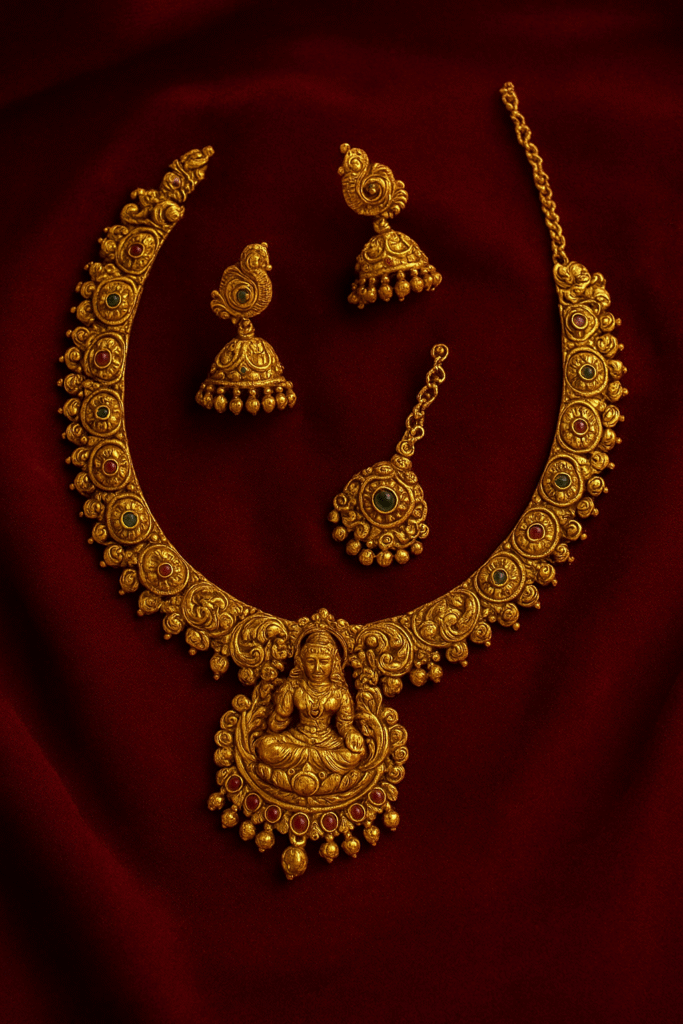
A traditional form of handcrafted jewellery originally designed for adorning temple deities, now celebrated as a timeless symbol of South Indian heritage and classical beauty.
Description: Jewellery from Nagercoil region
Type: Handicraft
Area: Nagercoil, Kanniyakumari district, Tamil Nadu
Country: India
Registered: 2007–08 (Geographical Indication under Handicrafts category)
Material: Gold, Precious Stones

History and Origin
Temple Jewellery of Nagercoil has its origins in the ancient Chola and Pandya dynasties, when royal goldsmiths crafted divine ornaments exclusively for temple idols. The craft took root in Vadasery, a locality in Nagercoil (Kanyakumari district, Tamil Nadu), where families of skilled artisans continue this legacy today.
These ornaments were once used solely for deity adornment during temple rituals, symbolizing purity and divinity. Over centuries, their intricate beauty attracted classical dancers, especially in Bharatanatyam and Kuchipudi, and later became an integral part of South Indian bridal jewellery.
The craft’s unique blend of artistry, tradition, and cultural symbolism earned it Geographical Indication (GI) status in 2007–08, officially recognizing its regional and historical significance.
Technique & Manufacturing Process
| Step | Process | Description |
|---|---|---|
| 1️⃣ | Design Sketching | Artisans begin by sketching motifs inspired by temple carvings, deities, and nature. |
| 2️⃣ | Metal Base Formation | A base of silver or copper is shaped into the desired form, serving as the core structure. |
| 3️⃣ | Gold Leaf Application | Thin sheets of gold are overlaid on the base metal to achieve a rich, radiant finish. |
| 4️⃣ | Stone Setting | Precious and semi-precious stones like rubies, emeralds, and red-green kuchu kal stones are embedded meticulously. |
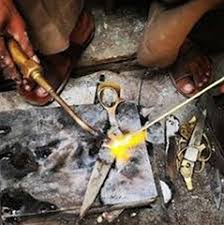
| 5️⃣ | Filigree & Detailing | Fine wires and chisels are used to engrave intricate designs and temple motifs. |
| 6️⃣ | Polishing & Finishing | The jewellery is polished to bring out its divine luster and ensure durability. |
Types of Temple Jewellery
| Type | Usage / Symbolism | Special Features |
|---|---|---|
| Oddiyanam (Waist Belt) | Worn by dancers and brides | Features goddess motifs and floral carvings |
| Vanki (Armlet) | Symbol of strength and grace | Curved form with embossed deity images |
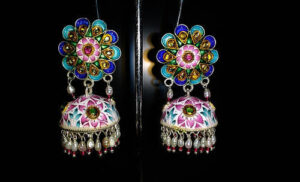
| Jhumka / Thodu (Earrings) | Used in classical dance and weddings | Bell-shaped with red and green stones |
| Manga Malai (Mango Necklace) | Bridal ornament | Mango-shaped pendants symbolizing fertility |
| Lakshmi Haram (Long Necklace) | Temple and bridal wear | Central image of Goddess Lakshmi symbolizing prosperity |
Cultural Significance
Temple Jewellery of Nagercoil is more than adornment — it is a spiritual art form representing South India’s devotion, faith, and aesthetics. Originally created for deities, these jewels symbolize purity, prosperity, and protection.
In Bharatanatyam, the ornaments form an essential part of the dancer’s attire, symbolizing the union of art and divinity. For brides, wearing temple jewellery signifies the blessings of Goddess Lakshmi and continuity of sacred traditions.
Symbolic Motifs and Meanings:
🪶 Peacock: Beauty and grace
🌸 Lotus: Purity and enlightenment
💰 Lakshmi: Prosperity and good fortune
🐘 Elephant / Makara: Strength and protection
Manufacture & Export
| Segment | Details |
|---|---|
| Production Hub | Vadasery (Nagercoil), Tamil Nadu — with over 200 traditional units and 700+ skilled artisans. |
| Domestic Market | High demand for weddings, temple use, and classical dance costumes across South India. |
| Export Market | Strong exports to USA, UK, Singapore, Japan, and the Middle East, where it appeals to traditional dance academies and bridal markets. |
| Government Support | Promoted by the Tamil Nadu Handicrafts Development Corporation (Poompuhar) and supported under the GI Handicraft Scheme, ensuring artisan training, authenticity certification, and global branding. |
Legacy and Preservation
The craft of Temple Jewellery in Nagercoil remains a living legacy — passed down through generations of goldsmith families in Vadasery. Despite the rise of machine-made imitations, genuine handcrafted pieces continue to hold immense value due to their artistry, cultural depth, and divine symbolism.
The GI tag has empowered artisans by protecting originality and promoting fair recognition in global markets. Each handcrafted jewel from Nagercoil reflects devotion, craftsmanship, and the timeless splendor of South Indian tradition.
Conclusion
Temple Jewellery of Nagercoil stands as a shining testament to India’s sacred artistry and cultural continuity. From temple sanctums to global stages, its intricate designs and divine motifs embody the essence of South Indian tradition. The craftsmanship not only preserves centuries-old techniques but also sustains the livelihoods of hundreds of artisans in Vadasery.



Post Comment