The Story of Parle-G
Parle-G is one of India’s most iconic biscuit brands, known for its affordability, consistent quality, and enduring consumer trust. Manufactured by Parle Products Pvt. Ltd., the brand traces its origins to 1929, when the company was established in Vile Parle, Mumbai, by Mohanlal Dayal Chauhan. In 1939, Parle introduced Parle Gluco, an affordable Indian-made glucose biscuit that quickly became a household favourite during the Swadeshi movement. Renamed Parle-G in the 1980s, with the “G” representing Glucose, the brand has evolved into one of India’s most recognized consumer products. Today, Parle-G continues to serve millions of consumers across India and more than 100 countries, reflecting the country’s rich manufacturing heritage and global food industry presence.
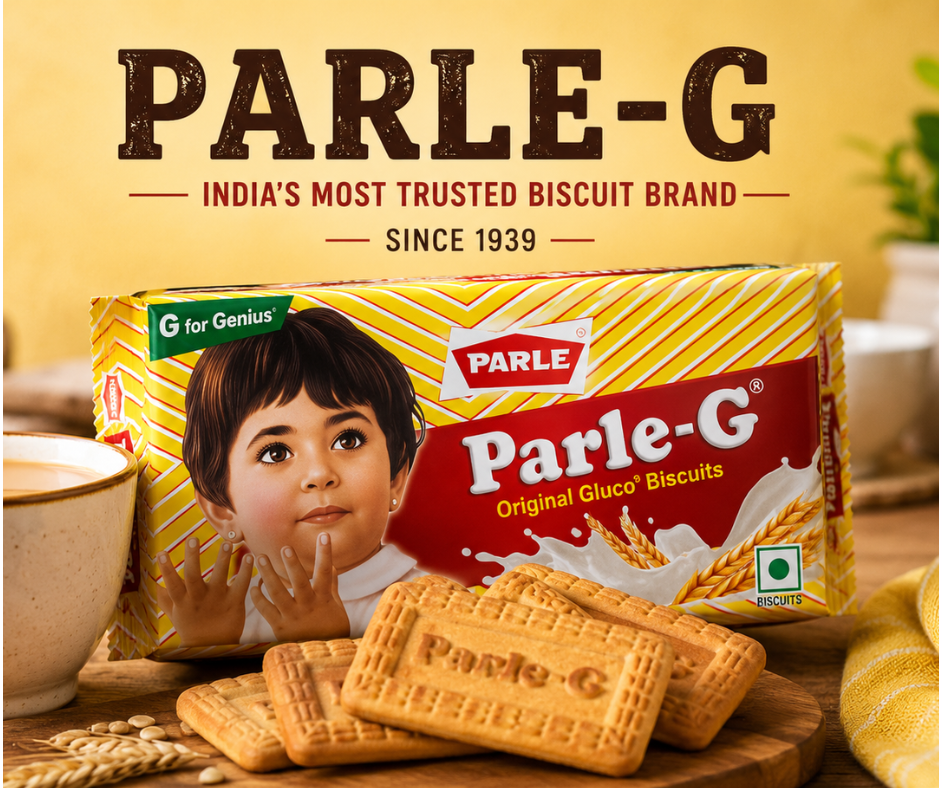
Parle Products Pvt. Ltd. was founded in 1929 in Vile Parle, Mumbai, by Mohanlal Dayal Chauhan. The company initially produced bread, rusks, and other bakery products before entering the biscuit segment. In 1939, during India’s Swadeshi movement, it launched Parle Gluco, an affordable Indian-made glucose biscuit that soon became a household favourite because of its quality, taste, and value. During the 1980s, the brand was renamed Parle-G, with the “G” officially representing Glucose, while later becoming popularly associated with “Genius.” Today, Parle-G is one of India’s most recognized and trusted biscuit brands, enjoyed by millions of consumers in India and over 100 countries worldwide
Affordable Pricing Strategy
One of Parle-G’s greatest strengths has been its commitment to affordability. For decades, the company maintained its popular low-price packs despite rising raw material and production costs.
Rather than significantly increasing prices, Parle Products optimized pack sizes while continuing to offer a product that remained accessible to millions of consumers. This customer-first approach has helped Parle-G build exceptional brand loyalty across urban and rural India.
Manufacturing & Quality Standards
Parle Products operates more than 130 manufacturing facilities, including several overseas production units in Nigeria, Kenya, Ethiopia, Ghana, Nepal, and Mexico.
The company follows internationally recognized food safety and quality standards, including:
- FSSC 22000
- ISO 22000
- HACCP-based food safety practices
- Automated baking and packaging systems
- Strict quality testing throughout production
These standards ensure that every pack maintains consistent taste, hygiene, and quality.
Distribution Network
Parle-G has one of India’s largest FMCG distribution networks.
The brand is available through:
- Over 7.5 million retail outlets
- More than 7,000 distributors
- Modern retail stores
- Supermarkets
- Wholesale markets
- E-commerce platforms
- International distributors
Its widespread availability has made Parle-G one of India’s most accessible food products.
Global Presence
Today, Parle-G is exported to more than 100 countries across Asia, Africa, Europe, North America, Australia, and the Middle East.
The brand continues to strengthen India’s presence in international food markets while serving millions of consumers worldwide.
The Little Girl on the Wrapper
One design choice has endured longer than most brand identities in the world. In the 1960s, an illustrator named Maganlal Daiya working at the agency Everest Creative drew a chubby-cheeked girl for the Parle-G wrapper. She was young, cheerful, wide-eyed.
She has appeared on every single Parle-G pack since.
For decades, people speculated about who she was. Rumours swirled — a founder’s granddaughter, a child model, a composite illustration. Parle let the mystery live. The girl became a cultural icon more enduring than any mascot that had a backstory, a name, or a marketing budget attached to her.
She remains unnamed. She remains on the wrapper. And she remains, for most Indians, the face of childhood itself.
Parle-G During the COVID-19 Pandemic
During the nationwide lockdown in 2020, demand for Parle-G increased significantly as it became one of the most affordable and widely available food products across India.
Government agencies, NGOs, and relief organizations distributed Parle-G biscuits extensively to support affected communities. The strong demand helped the company record one of its best sales performances in more than eight decades, further reinforcing consumer trust in the brand.
India's Biscuit Market
India is the world’s largest biscuit market by volume. While several premium biscuit brands compete globally, Parle-G continues to dominate the value segment because of its affordability, extensive distribution network, and long-standing consumer trust.
Its strong presence across both urban and rural markets has helped maintain its leadership position for decades.
The Iconic Parle-G Girl
One of the most recognizable elements of the brand is the Parle-G Girl featured on the biscuit wrapper.
Introduced during the 1960s, the illustration has remained virtually unchanged for decades and has become one of India’s most recognizable packaging designs. Today, it represents nostalgia, trust, and childhood memories for millions of consumers.
Business Growth
Parle Products has grown into one of India’s largest food companies.
Some key highlights include:
- Established in 1929
- Parle-G launched in 1939
- Products available in 100+ countries
- More than 130 manufacturing facilities
- Presence across 7.5 million+ retail outlets
- One of the world’s best-selling biscuit brands
- Strong focus on affordability, quality, and innovation
FAQs
When was the brand launched?
The brand was launched in 1939 as Parle Gluco by Parle Products Pvt. Ltd. and was later renamed during the 1980s.
Who founded Parle Products?
The company was founded by Mohanlal Dayal Chauhan in 1929 in Vile Parle, Mumbai, and has grown into one of India’s leading food manufacturers.
What does the "G" stand for?
Its products are exported to more than 100 countries, making it one of India’s most recognized food brands globally.
Why is Parle-G so popular in India?
Parle-G is widely trusted for its affordable pricing, consistent quality, nutritional value, and decades of consumer confidence, making it a household favourite across generations.
Where are its products manufactured?
The company manufactures its products at multiple production facilities across India and several international locations to meet global demand.