The Crimson Gold of Kashmir: Unveiling the Legacy of India's Saffron
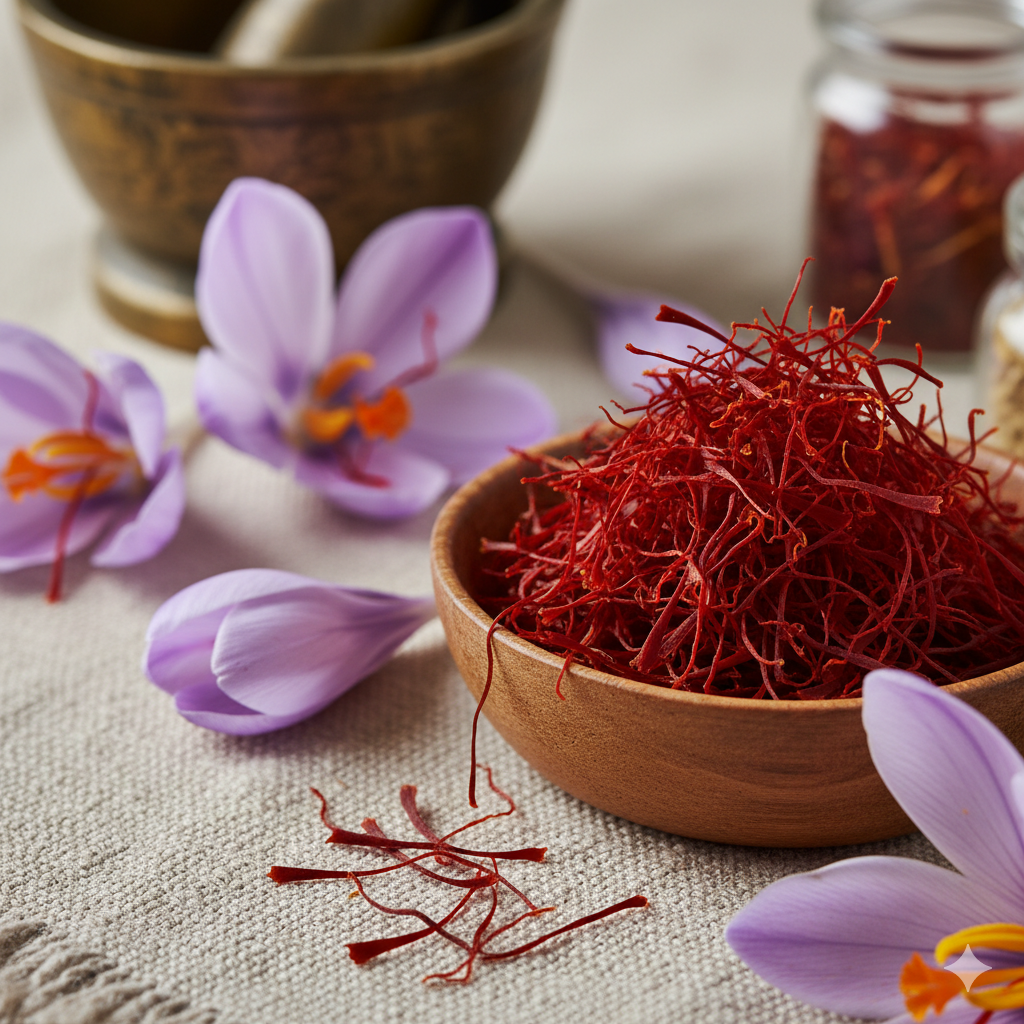
Saffron, or Kesar, is not just a spice; it is a thread that weaves through history, culture, and culinary artistry. Known worldwide as the most expensive spice by weight, Indian saffron captivates with its vibrant crimson hue, intoxicating aroma, and distinctive flavour. Over three millennia, it has been revered not only as a culinary ingredient but also as a symbol of luxury, spirituality, and wellness. For international buyers, understanding the legacy and meticulous production of Indian saffron is key to appreciating its unparalleled value.
Introduction: Overview and Cultural Significance
Indian saffron, cultivated mainly in Kashmir, is celebrated for its exceptional quality, particularly the deep-red Mongra and Lachha varieties. It plays a vital role in India’s culinary, spiritual, and medicinal traditions.
Key Highlights:
Culinary Delight: Essential for royal Indian dishes like Biryani, Kashmiri tea (Kahwa), and sweets such as Kheer and Phirni.
Symbol of Purity and Prosperity: Used in Hindu rituals, weddings, and festivals like Diwali, saffron signifies auspiciousness and abundance.
Traditional Medicine: Valued in Ayurveda for mood enhancement, skin health, and overall vitality.
History and Origin
Saffron’s journey to India is steeped in legend and history:
Origin: The saffron crocus (Crocus sativus) likely originated in the Mediterranean region. Its cultivation in India became established in the Kashmir valley.
Legend of Sufi Saints: Two Sufi saints, Khwaja Masood Wali and Sheikh Sharif-ud-din Wali, are believed to have introduced saffron to Kashmir in the 11th or 12th century.
Historical Importance: Historically, saffron was a royal commodity, traded along the Silk Route and mentioned in Sanskrit texts as Bahukam or Kunkumam. Its golden hue and potent aroma symbolized wealth and refinement.
Origin City/Region: The Saffron Bowl of India
India’s finest saffron comes from a unique geographical area that contributes to its premium quality.
Pampore, Kashmir:
Known as the “Saffron Bowl of India”, Pampore’s history traces back to Padmanpore, meaning ‘City of the Lotus’ or ‘Land of Gold’.
Unique Terroir: Elevated Karewa plateaus with rich, loamy soil and a climate of cold winters and warm summers provide ideal conditions for saffron.
Geographical Indication (GI) Tag: In 2020, Kashmiri saffron received a GI tag, guaranteeing authenticity, superior quality, and exclusive origin.
Traditional Making Process: A Labour of Love
The high value of saffron reflects the painstaking, manual process of its cultivation:
1. Cultivation and Bloom:
Propagated via corms (underground bulbs) planted between June and September.
Flowers bloom only once a year, over a brief 2–3 week period in October–November.
2. Harvest:
Hand-Plucking: Flowers are picked by hand before sunrise to preserve freshness and potency.
Timing is Crucial: Fields are harvested multiple times, as blooms appear gradually.
3. Separation and Curing:
Stigma Extraction: Each flower has only three crimson stigmas, carefully separated using tweezers.
Low-Yield Ratio: Approximately 150,000–200,000 flowers are needed to produce 1 kg of dried saffron threads.
Drying (Curing): Stigmas are dried over low heat or sunlight, reducing weight by ~80% while concentrating colour (crocin), aroma (safranal), and flavour (picrocrocin).
Global Appeal and Recognition
Kashmiri saffron is highly prized internationally for its superior quality, often surpassing ISO 3632 standards.
Why It Appeals Globally:
High-Value Export: India produces less saffron than global leaders, but its thick, aromatic threads command a premium. Major export markets include the UAE, USA, Australia, and Europe.
Quality Standards: Mongra saffron is among the darkest and most potent varieties worldwide, with high crocin concentration, offering stronger colouring for culinary and industrial uses.
Versatility in Cuisine: Beyond India, saffron enhances Spanish Paella, French Bouillabaisse, and Iranian desserts, appealing to chefs and premium food manufacturers globally.
Brand Spotlight: Baby Saffron
An established Indian brand that showcases saffron’s global reach:
| Detail | Information |
|---|---|
| Basic Overview | Baby Saffron is a leading producer and exporter of premium Kashmiri Mongra saffron, renowned for purity and quality assurance. |
| Founder(s) | M.L. Khanna (Parent company: L.R. Brothers) |
| Year Established | Circa 1968 |
| Annual Turnover | Privately held; data not publicly available |
| Export Data | Exports to 30+ countries, including USA, UK, Australia, New Zealand, UAE, Singapore, and Europe |
Conclusion: Proudly Made in India
Indian saffron is more than a spice—it is a symbol of culture, craftsmanship, and tradition. Each crimson thread represents an entire season of labor in Kashmir’s Karewa fields, connecting modern kitchens with centuries of heritage. Its GI certification, premium quality, and global recognition make Kashmiri saffron a luxury product worthy of international admiration. Choosing Indian saffron is a commitment to unparalleled quality, rich flavour, and the enduring legacy of a truly “Proudly Made in India” treasure.


Post Comment