Powdered Milk – Origin, Manufacture, and Export Overview
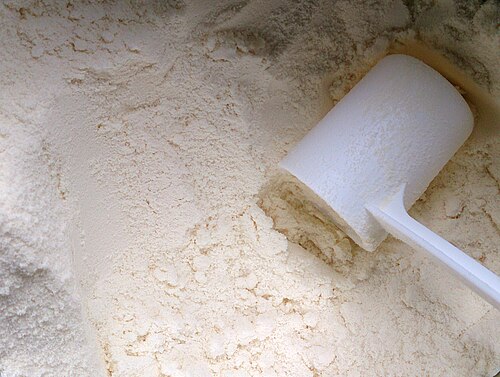
Powdered milk, also known as milk powder, dry milk, or milk solids, is a dairy product made by evaporating milk to remove all moisture. The process preserves the milk, extends its shelf life, and makes it easier to store and transport without refrigeration.
It includes products such as whole milk powder (WMP), skimmed milk powder (SMP), buttermilk powder, and dry whey.
👉 Wikipedia – Powdered Milk
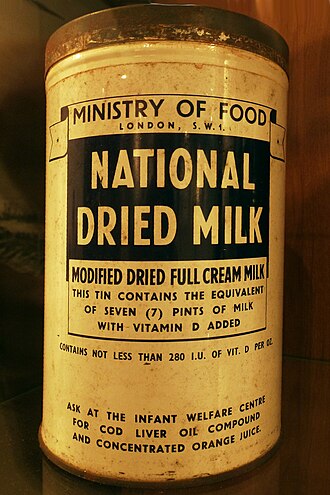
Origin and Historical Development
The concept of drying milk dates back centuries:
13th Century: Mongolian Tatar soldiers under Kublai Khan used sun-dried milk paste during travels.
1802: The first modern milk drying process was invented by Dr. Osip Krichevsky, a Russian physician.
1832: M. Dirchoff, a Russian chemist, began the first commercial production of dried milk.
1855: T.S. Grimwade patented an industrial milk drying method, while William Newton had earlier patented vacuum drying in 1837.
👉 Edubilla – Invention of Powdered Milk
Manufacturing Process
Modern powdered milk is produced through spray drying, drum drying, or freeze drying, depending on quality and application.
Milk Collection & Pasteurization – Fresh milk is pasteurized to eliminate bacteria.
Evaporation – The milk is concentrated to about 50% solids through vacuum evaporation.
Spray Drying – The concentrated milk is sprayed into a hot chamber, where water evaporates quickly, leaving fine milk solids.
Cooling & Packaging – The powder is cooled and packed in moisture-proof packaging for long-term storage.
👉 Tetra Pak Dairy Handbook
Alternate Methods:
Drum Drying: Milk is spread on a heated drum and scraped off after drying — results in a cooked flavor.
Freeze Drying: Preserves more nutrients, but is more expensive and used for premium powders.
Nutritional and Chemical Composition of Milk Powders
| Parameter | Skimmed / Nonfat Dry Milk Powder | Whole Milk Powder | Remarks / Notes |
|---|---|---|---|
| Protein | 36% | 25–27% | Contains all 21 standard amino acids (building blocks of proteins) |
| Carbohydrates (mainly Lactose) | 52% | 36–38% | Primary energy source; improves texture and sweetness |
| Fat | 1% | 26–40% | Provides creaminess and caloric value |
| Ash (Minerals) | 8% | 5–7% | Includes calcium, potassium, magnesium, phosphorus |
| Calcium (Ca) | 1.3% | — | Essential for bone health |
| Potassium (K) | 1.8% | — | Regulates fluid balance and nerve function |
| Vitamin D (Canada Requirement) | Added to provide 300–400 IU per daily intake | Added | Required fortification in Canadian standards |
| Oxysterol Content | Up to 30 µg/g | Up to 30 µg/g | Oxidized cholesterol; higher in milk powder than in fresh milk |
| Oxysterol Comparison (Powdered Eggs) | — | — | Powdered eggs can contain up to 200 µg/g oxysterols |
| Storage Sensitivity | High humidity and temperature reduce nutritive value | High humidity and temperature reduce nutritive value | Proper storage needed to prevent degradation |
Food Applications
Used in infant formulas, chocolates, bakery, confectionery, and dairy blends.
In Indian sweets like Gulab Jamun, Cham Cham, and Barfi, milk powder adds richness and texture.
Acts as a non-perishable substitute for milk in remote areas and disaster relief supplies.
👉 Bon Appétit Feature on Milk Powder Uses
Major Global Producers
| Country | Leading Companies | Products | Source |
|---|---|---|---|
| New Zealand | Fonterra Co-operative Group | Skim & whole milk powder for export | fonterra.com |
| China | Yili Group, Mengniu Dairy | Skimmed and infant milk powders | yili.com |
| Brazil | Itambé, Piracanjuba | Whole milk powder, dairy blends | itambe.com.br |
| Argentina | La Serenísima (Mastellone Hnos) | Dairy and whey powders | lacteos.com.ar |
| Australia | Murray Goulburn, Bega Cheese | Skim and whole milk powder | begacheese.com.au |
Leading Indian Manufacturers and Exporters
| Company / Brand | Headquarters | Key Products | Established | Official Website |
|---|---|---|---|---|
| Amul (GCMMF) | Anand, Gujarat | Skimmed & whole milk powder | 1946 | amul.com |
| Mother Dairy | Delhi NCR | Dairy whitener, SMP | 1974 | motherdairy.com |
| Parag Milk Foods (Gowardhan) | Pune, Maharashtra | Whole milk powder, SMP | 1992 | paragmilkfoods.com |
| Nestlé India (NIDO / Everyday) | Gurugram, Haryana | Dairy whitener, infant powders | 1961 | nestle.in |
| Anik Dairy | Indore, Madhya Pradesh | SMP, WMP, dairy ingredients | 1965 | anikdairy.in |
| SMP Dairy Pvt. Ltd. | Jaipur, Rajasthan | Skimmed milk powder for export | 1990 | smpdairy.com |
India’s Export Overview
According to APEDA and EximPedia:
India exported 63,738.47 metric tonnes of dairy products (including milk powder) in FY 2023-24, valued at USD 272.64 million.
Top destinations: Bangladesh (49%), Maldives (10%), United States (9%).
Export growth CAGR (value): 12.5%, Quantity CAGR: 6.4%.
👉 EximPedia – Dairy Products Export from India
👉 Volza – Milk Powder Export Data
Global Market Snapshot
| Region | Annual Production (approx.) | Export Share | Key Fact |
|---|---|---|---|
| European Union | 3.0 million tonnes (2020) | 40% exported | Mostly in bulk and consumer packs |
| New Zealand | 2.2 million tonnes | 95% exported | Major supplier to Asia & Africa |
| Australia | 13,000 tonnes | ~AUD 83 million value (2021) | Focus on high-quality SMP |
| India | 60,000+ tonnes | USD 272 million | Growing export hub in Asia |
Export Standards and Certifications
For export, manufacturers must comply with:
FSSAI & AGMARK (India)
ISO 22000 / HACCP food safety management
EIC / APEDA registration for export certification
Codex Alimentarius standards for international trade
Conclusion
Powdered milk remains a vital global dairy commodity — enabling nutrition where refrigeration is limited and serving as a foundation for numerous food products.
India, while still growing its export capacity, plays a strong role in supplying Asian and African markets, supported by brands like Amul, Mother Dairy, and Parag Milk Foods.
With advancements in spray-drying technology, energy-efficient plants, and global demand for instant fortified powders, the milk powder industry continues to expand as a cornerstone of the modern dairy economy.




Post Comment