Polki Jewellery: A Legacy in Sparkle, Proudly Made in India
India, a land steeped in heritage and artistic brilliance, has offered the world countless treasures, and among them, Polki jewellery shines as a timeless symbol of opulence and craftsmanship. More than just an ornament, Polki embodies centuries of history, royal elegance, and artisanal dedication. For global connoisseurs and buyers, understanding Polki is to appreciate a significant part of India’s cultural and artistic soul.
Introduction: Overview and Cultural Significance
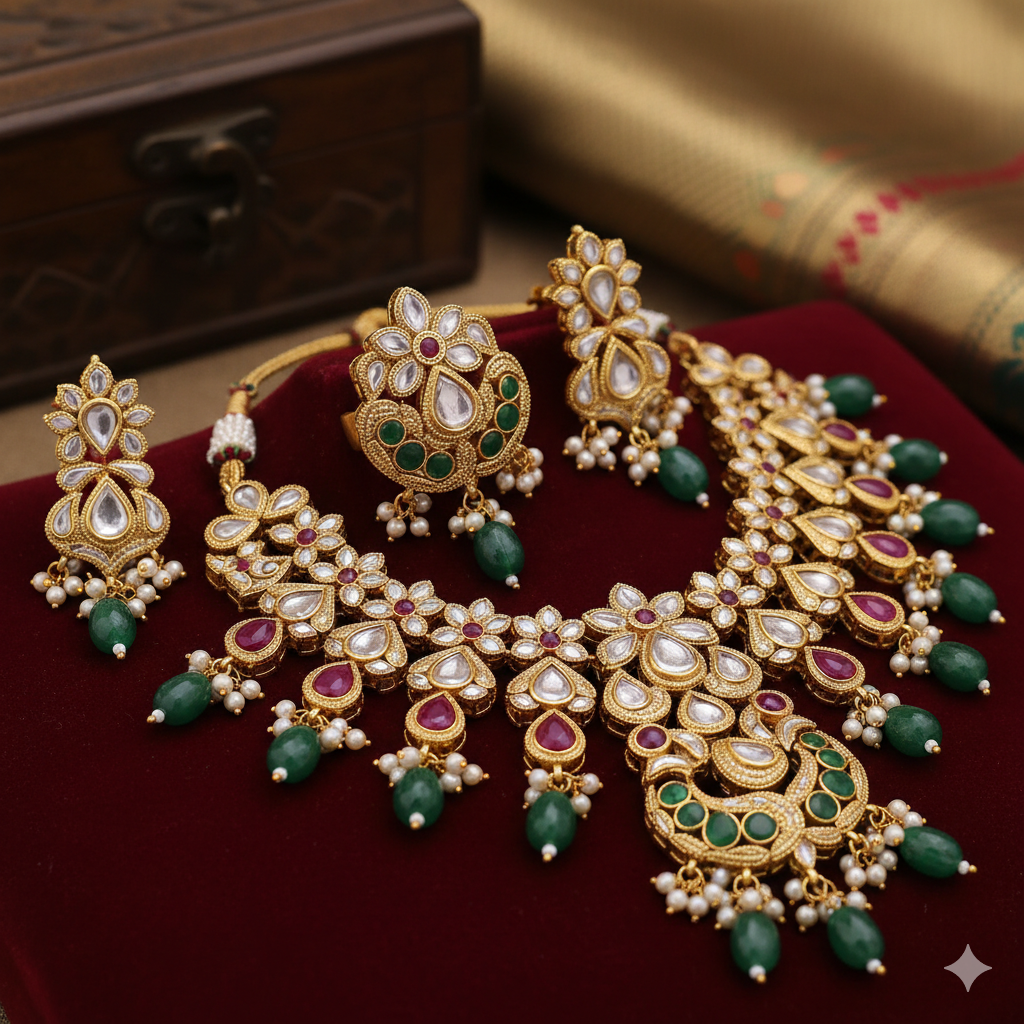
Polki jewellery features uncut, unpolished natural diamonds, often set in gold using lac (shellac) resin. Unlike the modern brilliant-cut diamonds familiar in Western jewellery, Polki retains its raw, organic allure, casting a subtle, captivating glow. Each piece has a unique charm, reminiscent of antique treasures.
Culturally, Polki is an integral part of Indian celebrations, particularly weddings. It is a quintessential element of a bride’s trousseau, symbolizing prosperity, blessings, and family traditions. Owning Polki is more than possessing a valuable asset—it is about embracing a living piece of history. Passed down through generations, these pieces accumulate stories, sentiment, and significance, standing as heirlooms cherished for lifetimes.
History and Origin
Mughal Era Roots: Polki jewellery traces back to the 16th century, flourishing under the Mughal rulers known for their refined taste and patronage of the arts.
Rajasthan – The Epicentre: Rajasthan, with its royal courts and gemstone heritage, became the hub for Polki craftsmanship. Jaipur, famously called the ‘Pink City,’ emerged as the most prominent centre for producing exquisite Polki jewellery.
Royal Patronage: Maharajas and Maharanis favored Polki for their opulent lifestyles, ensuring artisans refined their skills, which have been preserved and passed down over centuries.
Traditional Making Process
Creating Polki jewellery is a meticulous and skilled craft. Key steps include:
Diamond Selection: Natural, uncut diamonds are chosen for their unique shapes and natural brilliance.
Gold Framework: Pure 22-karat gold is crafted into a delicate base, often in intricate lattice (jali) designs.
Lac (Laakh) Setting: Using the traditional ‘jadau’ technique, diamonds are pressed into softened lac resin, securing them without prongs.
Foil Backing: Silver foil beneath each diamond enhances brilliance, reflecting light for a larger, luminous appearance.
Enamelling (Meenakari): Many pieces feature hand-painted Meenakari work on the reverse side, adding hidden splendor.
Finishing and Embellishments: Polishing, adding pearls or gemstones, and refining every detail completes the artwork.
Each stage reflects the artisan’s mastery, resulting in jewellery that is both aesthetically stunning and technically remarkable.
Global Appeal and Recognition
Polki jewellery is increasingly capturing the hearts of international buyers. Its unique qualities make it stand out in the global luxury market:
Distinctive Aesthetic: Each uncut diamond offers a unique, old-world charm, appealing to collectors seeking artisanal luxury.
Cultural Authenticity: Polki provides a tangible connection to Indian heritage, making it culturally meaningful to international buyers.
Growing Demand: The global interest in handcrafted and ethnic luxury items is rising, with Polki fitting seamlessly into this niche.
Fashion Forward: Contemporary designers are blending Polki into modern and fusion styles, making it versatile for both traditional and western fashion.
This rising international recognition is evident from its presence in fashion weeks and celebrity collections worldwide.
Brand Spotlight: Tanishq
Tanishq exemplifies the successful international presence of Polki jewellery.
Basic Overview: A division of Titan Company Limited (Tata Group), Tanishq is a leading Indian jewellery brand known for traditional and contemporary designs. Polki and Kundan collections celebrate India’s heritage while maintaining modern appeal.
Founder: Xerxes Desai
Year Established: 1994
Annual Turnover: INR 36,192 crores (~USD 4.3 billion) in 2023
Export Data: While exact Polki export figures aren’t public, Tanishq has international stores in the UAE, USA, and Singapore, catering to the global market and promoting Indian craftsmanship abroad.
Tanishq demonstrates how traditional art forms like Polki can be successfully scaled and appreciated on an international stage.
Conclusion: Proudly Made in India
Polki jewellery is far more than sparkling diamonds; it is a living testament to India’s artistic heritage, cultural depth, and meticulous craftsmanship. From the royal courts of Rajasthan to global fashion runways, Polki’s journey represents a seamless blend of tradition and contemporary elegance. Each piece narrates a story—of skilled artisans, rich history, and timeless beauty. For international buyers, owning Polki is owning a handcrafted treasure Proudly Made in India, reflecting centuries of culture, art, and unparalleled sparkle.




Post Comment