Jaipuri Juttis: A Walk Through Tradition and Timeless Elegance
Introduction: Overview and Cultural Significance
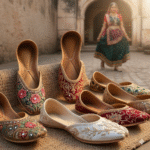
The Jaipuri jutti is a traditional slip-on shoe, celebrated for its exquisite handwork—floral motifs, geometric patterns, and embellishments with beads, mirrors, threads, or even precious metals. Crafted primarily from leather, juttis are a staple in Indian ethnic wear, gracing weddings, festivals, and daily outfits.
Culturally, juttis symbolize celebration and heritage. Worn during Rajasthani folk dances like Ghoomar or gifted at weddings, they connect wearers to centuries of tradition. Each pair is wearable art, carrying Rajasthan’s rich history into modern wardrobes, proudly representing India’s artisanal excellence.
History and Origin
The jutti’s story begins in ancient India, with leatherwork evidenced in the Indus Valley Civilization (circa 3000 BCE). The craft flourished during the Mughal era (16th–19th centuries), when royal patronage spurred opulent designs influenced by Mughal and Rajput aesthetics.
Key Highlights:
Initially exclusive to royalty, juttis symbolized wealth and status.
Jaipur emerged as a key hub, with artisans perfecting techniques over generations.
By the 19th century, juttis became accessible to wider communities, retaining their artistry and elegance.
Today, Jaipur remains the heart of jutti-making, with Jodhpur and Udaipur contributing distinct styles like pointed-toe mojaris, showcasing Rajasthan’s diverse craftsmanship.
Traditional Making Process
Creating a Jaipuri jutti is a labor-intensive art requiring skill, precision, and creativity. Employing ~50,000 artisans, many women from rural households, the craft supports vibrant communities.
Materials Used:
Leather: Cow, buffalo, or goat for durability and suppleness.
Fabrics: Silk, velvet, brocade, or cotton for uppers and linings.
Embellishments: Threads, beads, mirrors, or metallic wires for decoration.
Step-by-Step Process:
1. Cutting and Shaping:
Leather is cut into patterns for the upper (panna), sole (talla), and back (adda), then shaped by hand.
2. Embroidery and Embellishment:
Uppers are adorned with:
Zardozi: Gold/silver thread embroidery.
Dabka: Fine wire embroidery.
Gota Patti: Gold ribbon appliqué.
Mirror, bead, or sequin work for sparkle.
3. Joining and Finishing:
Components are hand-stitched to leather linings and soles using cotton threads. Edges are polished with natural oils or beeswax.
4. Quality Check:
Each pair is inspected for stitching, comfort, and finish.
Sustainability:
The process uses natural materials and minimal machinery, though some modern juttis incorporate eco-friendly vegan leather or sustainable dyes, aligning with global trends.
Global Appeal and Recognition
Jaipuri juttis have captivated global audiences for their:
Unique Handcraftsmanship: Each pair is individually crafted, ensuring exclusivity.
Cultural Richness: They connect wearers to India’s heritage.
Versatility: Pair with ethnic wear or Western outfits for a bohemian chic look.
Ethical Production: Supports artisans and sustainable practices.
Export Reach:
Juttis are popular in the USA, UK, UAE, Singapore, and Australia, sold via boutiques, e-commerce platforms (e.g., Amazon India, Myntra), and craft festivals like Jaipur’s Craft Mela.
India’s leather footwear exports, including juttis, contributed ~$1 billion to the $5.2 billion leather market (FY 2023–24), boosted by FTAs like India-UK.
Modern Trends:
Designers like Sabyasachi and Anita Dongre incorporate juttis into fusion fashion, while vegan leather options cater to eco-conscious buyers.
Challenges:
The craft faces competition from mass-produced footwear and skill shortages. Efforts to secure a GI tag could further protect its authenticity.
Brand Spotlight: Needledust
Overview:
Needledust redefines Jaipuri juttis with contemporary designs, blending tradition with global appeal.
Founded: 2014
Founder: Shirin Mann Sangha
Headquarters: New Delhi, India
Estimated Turnover: ~₹10–15 crore (2023, industry estimates)
Market Presence: Exports to USA, UK, UAE, and Australia; featured in Vogue, Elle, and global boutiques.
Needledust combines traditional techniques with modern aesthetics, offering juttis with minimalist patterns or bold embellishments. Its online presence and collaborations with influencers have made it a leader in the luxury jutti segment, empowering artisans while showcasing Indian craftsmanship.
Conclusion
Jaipuri juttis are more than footwear—they are living heritage, weaving stories of Rajasthan’s artistry, culture, and elegance. Each pair reflects centuries of skill, supporting thousands of artisans and vibrant communities.
In 2025, their global demand via e-commerce and designer collaborations underscores their modern relevance.
For international buyers, Jaipuri juttis offer a piece of India’s soul, blending tradition with style.
Proudly representing “Made in India, Loved Worldwide,” they embody the timeless charm of Rajasthan’s craft legacy, walking elegantly into the future.



Post Comment