Mithila Makhana- The Pride of Bihar
Mithila Makhana is a special variety of Makhana grown in the Mithila region of the Indian state of Bihar.
In Mithila, people also called it ‘Makhan’. It includes iconic cultural symbols of Mithila, such as the people, the pond, fish, and makhan. Especially, Mithila Makhana has deep roots in Indian culture. Its cultivation is not limited only to the Mithila location of Bihar; this plant is also considered highly significant for purity because it is counted in satvik food, for centuries, and is closely connected to local traditions, livelihoods, and health. Additionally, it is used in the Kojagara celebration, which Kayasthas and Maithili Brahmins celebrate for newlyweds.
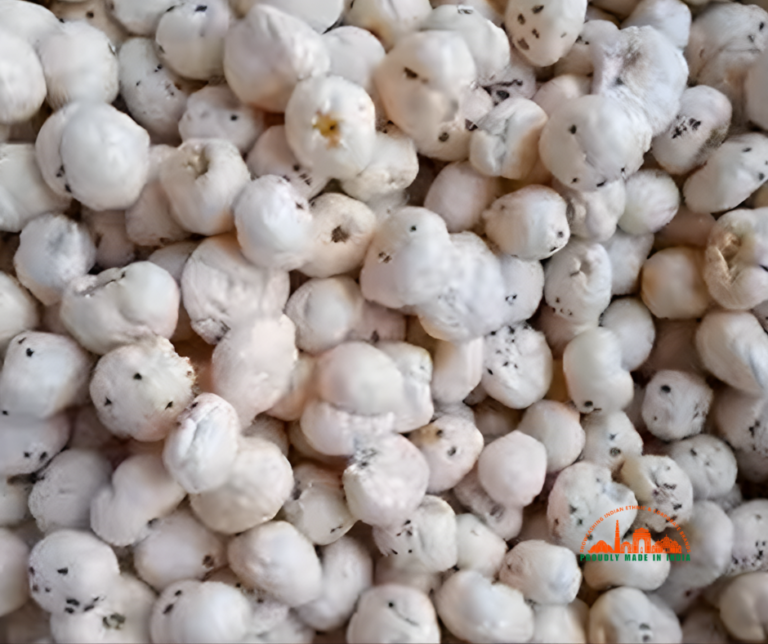
Basic Overview of Mithila Makhana
| Field | Details |
|---|---|
| Known Name | Makhana (Fox Nuts) |
| Botanical Name | Euryale ferox |
| Origin Region | Mithila Region, Bihar, India |
| Cultural Significance | Used in fasting (Vrat), religious rituals, and temple offerings |
| Industry | Traditional Food & Healthy Snacks |
| GI Status | GI Tagged Product of Bihar |
| Nutritional Value | High Protein, Low Fat, Rich in Antioxidants |
| Popular Forms | Roasted Snack, Makhana Kheer, Curry Ingredient |
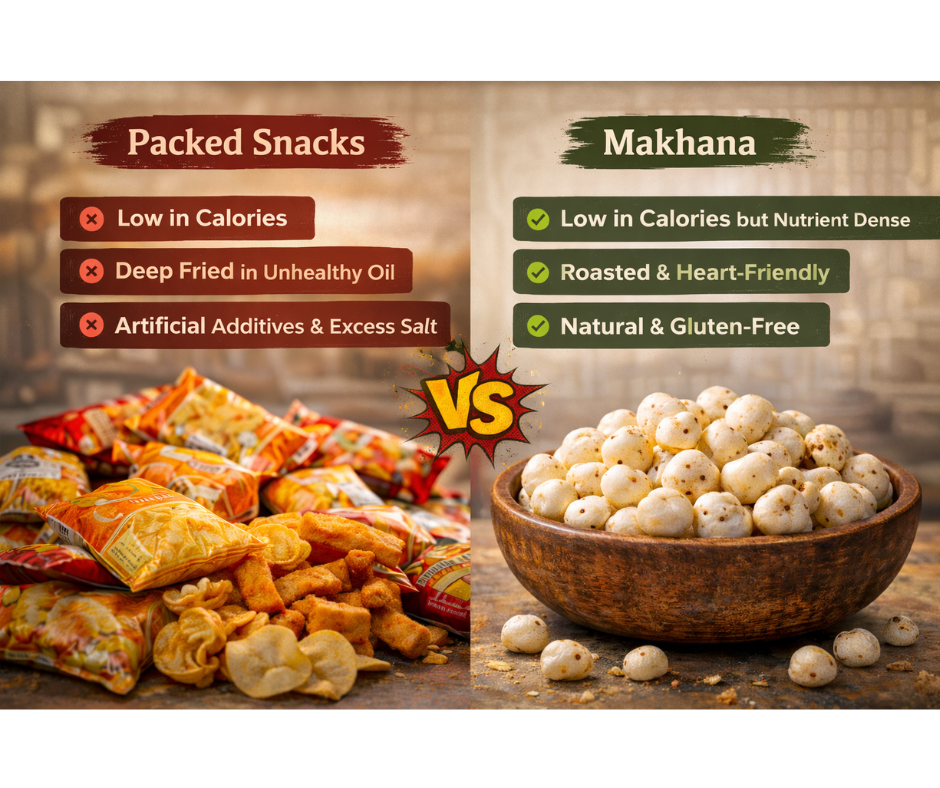
Why it is best alternative of unhealthy snacks
- Makhana is rich in plant-based protein, which helps in muscle repair and overall body strength.
- Packaged junk food often contains preservatives, artificial flavors, and excess salt. Plain makhana is natural, minimally processed, and clean.
- It is naturally low in fat and calories, making it ideal for weight management.
It is easy to digest, gluten-free, and suitable for kids, adults, and elderly people.
- It also contains antioxidants, magnesium, potassium, and fiber, which support heart health, digestion, and overall immunity.
Growth & Market Presence
- As consumers shift away from fried and processed snacks, makhana has emerged as a preferred alternative due to its low-calorie, high-protein profile.
- Its popularity has expanded beyond traditional Indian households to fitness enthusiasts, wellness communities, and health-focused individuals globally.
- In India, major food brands and local producers are introducing makhana in packaged and flavored forms, increasing its visibility and accessibility.
- Export demand for makhana is rising in countries like the USA, UK, Middle East, and Southeast Asia, where consumers are seeking healthy snack options.
- Marketing initiatives and participation in international food expos have boosted makhana’s presence as a global superfood.
- Bihar remains the leading producer, with more farmers adopting improved cultivation methods.
- Processing units and small-scale industries in the Mithila region are scaling up production, improving quality standards and packaging.
Traditional Process of Making Mithila Makhana
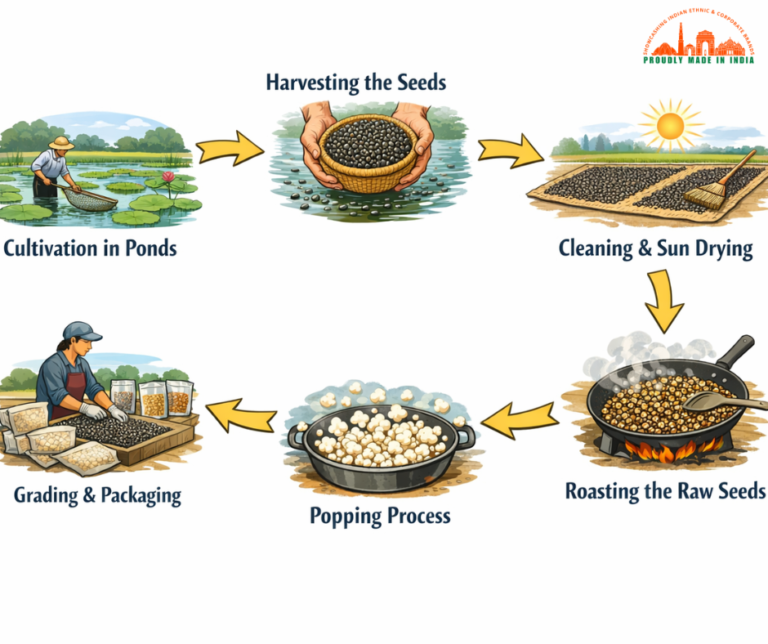
1. Cultivation in Ponds
- The makhana plant grows in stagnant water ponds and wetlands.
- Farmers cultivate it in natural ponds or specially prepared fields.
- The plant produces thorny leaves and purple flowers.
2. Harvesting the Seeds
Mature seeds sink to the bottom of the pond.
Farmers dive into the water to collect the raw seeds manually.
The seeds are black and hard at this stage.
3. Cleaning & Sun Drying
Collected seeds are washed and cleaned.
They are dried in sunlight to reduce moisture.
4. Roasting the Raw Seeds
Dried seeds are roasted in iron pans over high heat.
This step softens the hard outer shell.
5. Popping Process
Dried seeds are roasted in iron pans over high heat.
This step softens the hard outer shell.
6. Grading & Packaging
- Popped makhana is sorted by size and quality.
- It is then packed for sale in local and global markets.
Conclusion
The process of making makhana and delivering it from the field to our home is skill-based and labour-intensive. makhana has become a national pride of not only Bihar. Many brands are selling this Mithila makhana in the global market. Find those brands in this article- click here
It has been cherished for generations as a sacred and satvik food. Today, it has evolved from a traditional household ingredient into a globally recognised, as an Indian powerful superfood for modern healthy living.
FAQs
What is Mithila Makhana?
Mithila Makhana is a standard variety of makhana (also known as fox nuts or lotus seeds) cultivated in the Mithila region of Bihar, India.
Mithila Makhana GI tag district?
The Geographical Indication (GI) tag for Mithila Makhana covers the traditional Mithila production region in Bihar
Which district is famous for makhana?
In Bihar, Darbhanga, Madhubani and Saharsa.
Who is the largest producer of makhana in India?
Bihar is the largest producer of makhana (fox nuts) in India.
It contributes around 80–90% of the country’s total makhana production.
What is the price of 1 kg makhana in Bihar?
The price of Makhana can vary depending on the quality, but the price below is as per the date available online.
Lower / basic grades (raw): ~₹500 – ₹700 per kg
Average / medium quality: ~₹700 – ₹900 per kg
Premium handpicked / better grades: ~₹950 – ₹1,200 + per kg