Limca: The Desi Cold Drink That 28 billion Bottles Can't Be Wrong About
Walk into any roadside dhaba in the peak of May, sweat dripping, throat parched — and chances are, the first thing your eyes land on inside the cooler is that pale yellow bottle with the blue label. No fancy branding, no celebrity face plastered across it. Just Limca. And somehow, that’s always been enough.
But there’s more to this drink than nostalgia. From who actually owns it, to whether it’s better than Sprite, to what those 28 billion bottles really mean — here’s everything you’ve been searching about Limca, answered honestly.
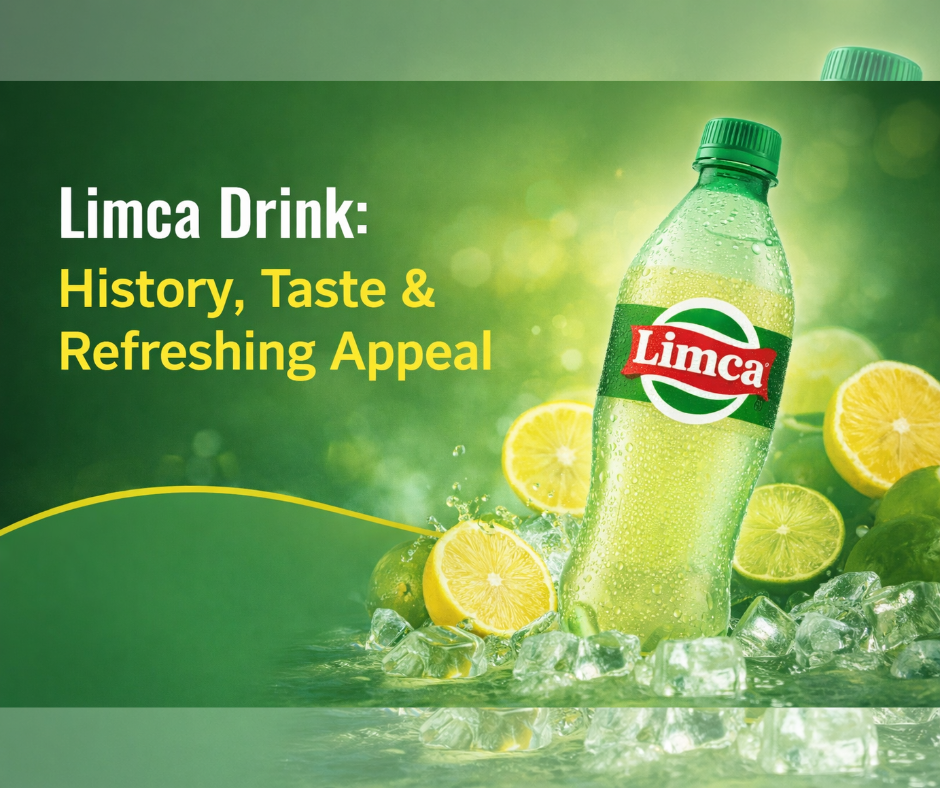
So What Does Limca Actually Taste Like?
Limca isn’t trying to be Sprite. That’s the first thing to understand.
Where Sprite leans into a clean, almost neutral lemon-lime sweetness, Limca goes tangier — slightly sharper on the tongue, with a more pronounced citrus bite. It’s fizzy without being aggressive. The aftertaste is lighter than most colas, and there’s a faint saltiness underneath that you probably never noticed consciously, but your body did (more on that below).
Most people describe it as “less sweet than other cold drinks” — which is exactly why it pairs well with Indian food. Something about that tangy edge cuts through spice rather than amplifying it.
When Was It Launched in India — And Who Made It?
Limca was born in India in the 1970s, developed by Ramesh Chauhan, the same man behind Thums Up, Maaza, and Gold Spot. Chauhan’s company, Parle Beverages, built an entire generation of Indian cold drinks during a time when Coca-Cola and Pepsi had actually left the Indian market (yes, that happened — they were asked to exit in 1977 under the Foreign Exchange Regulation Act).
In their absence, homegrown brands like Limca ruled the market. For years, a chilled Limca was simply what you ordered at a restaurant. It wasn’t competing with Coke — it was the category.
Who Owns it Now?
In 1993, when Coca-Cola re-entered India, the company acquired Parle’s brands — including Limca, Thums Up, Maaza, and Gold Spot — in what remains one of the most significant deals in Indian FMCG history.
Current Owner: The Coca-Cola Company
So Limca is now 100% an international brand in ownership, but entirely Indian in origin and character. It’s manufactured in India and sold primarily here, with limited availability in select international markets where the Indian diaspora is significant.
To be clear: Limca is not a PepsiCo brand. It has no connection to Pepsi. That confusion likely exists because both Sprite (Coca-Cola) and 7UP (PepsiCo) compete in the same lemon-lime category.
Limca vs Sprite: Which One Is Actually Better?
This is genuinely one of the most searched questions about Limca in India — and the answer depends on what you’re looking for.
| Feature | Limca | Sprite |
|---|---|---|
| Taste | Tangier, slight salt undertone | Cleaner, sweeter lemon-lime |
| Carbonation | Moderate | Higher |
| Calories (per 150 ml) | ~60 | ~60 |
| Sweetness Level | Lower | Higher |
| Food Pairing | Better with spicy/heavy food | Better as a standalone refresher |
| Parent Company | The Coca-Cola Company | The Coca-Cola Company |
| Origin | India | USA |
| Availability | Primarily India | Global |
The verdict? They’re both lemon-lime drinks under the same parent company, but Limca has a distinctly more complex flavour. If you want something that tastes like a cold drink made for Indian palates — Limca. If you want something universally familiar — Sprite.
Neither is “better.” They’re built for different moments.
Does this Contain Salt?
Yes — and this is not a complaint, it’s a feature.
Limca contains a small amount of sodium, which is why it has that subtle savouriness that makes it different from Sprite. In India’s extreme heat, a drink with trace electrolytes genuinely feels more refreshing than pure sugar water — your body responds to it differently. This is also why it became a go-to summer drink long before sports drinks entered the Indian market.
Some households have traditionally offered Limca to someone feeling nauseous or experiencing acidity, partly because of its carbonation and partly because of this sodium content. It’s not a medical remedy, but it’s not entirely a myth either.
Is Limca Good for Health — Or Bad?
Honest answer: Limca is a soft drink. It should be treated like one.
It contains sugar. It’s carbonated. It’s not a health drink, and anyone marketing it as one is being misleading.
That said, here’s a fair breakdown:
It’s fine when:
- Consumed occasionally, not daily
- Used as a treat on a hot day rather than a hydration substitute
- Consumed by adults and older children in reasonable quantities
It becomes a problem when:
- Drunk daily in large quantities (the sugar adds up fast)
- Used as a replacement for water
- Consumed by people managing diabetes or weight-related conditions
At ~60 calories per 150 ml, Limca is on the lower end compared to colas. But lower doesn’t mean “healthy.” The better question is: does it fit into an otherwise balanced diet? If yes, an occasional Limca is perfectly fine.
28 Billion Bottles vs the American Benchmark — What the Numbers Really Say
Here’s a comparison worth sitting with.
The United States — a country where soft drinks are consumed almost like tap water, where a cup holder in a car is practically standard design, where Big Gulp is a cultural reference — consumes roughly 130 billion bottles and cans of beverages annually across all categories.
India, where cold drinks are still largely an occasional purchase, not a daily habit, where large sections of the population don’t factor them into their grocery list — sold an estimated 28 billion bottles of Limca alone in 2024.
Let that settle.
In a country where the default beverage is chai, nimbu pani, or just water — where a cold drink is still something you “treat yourself to” — Limca crossed 28 billion units. That’s not distribution muscle. That’s brand trust built across generations.
For context: if you laid those 28 billion bottles end to end, you’d circle the Earth over 70 times.
What this number really signals is that Limca doesn’t need daily drinkers to be massive. It just needs to be the first choice every time someone reaches for a cold drink. And for a significant portion of India, it is.
Why Does Limca Still Exist When So Many Brands Have Died?
India has seen dozens of soft drink brands launch and vanish in the last 50 years. Gold Spot is gone. Campa Cola was revived as nostalgia, not out of genuine demand. Double Cola, Duke’s Lemonade — most people under 30 have never heard of them.
Limca survived because it never tried to be something it wasn’t.
It didn’t pivot to “health.” It didn’t chase trends. It didn’t spend decades repositioning itself with new flavours and gimmicks. The formula was refined quietly over the years to meet quality standards, but the identity remained untouched: a tangy, fizzy, light lemon drink for hot days.
That consistency is rare in FMCG. And Indian consumers — who have long memories for taste — rewarded it.
Quick Facts: Limca at a Glance
| Detail | Information |
|---|---|
| Type | Carbonated Soft Drink |
| Flavour | Lemon-Lime (tangy) |
| Founded | 1970s |
| Created By | Ramesh Chauhan, Parle Beverages |
| Current Owner | The Coca-Cola Company |
| Calories | ~60 per 150 ml |
| Contains Salt? | Yes (trace sodium) |
| Availability | India + select export markets |
| Category | Lemon-Lime Carbonated Drink |
The Bottom Line
Limca is not a global icon. It doesn’t have a Super Bowl ad. It doesn’t have an influencer pushing it on Instagram. It sells because, on a hot afternoon, when someone opens a cooler and sees that pale yellow bottle, something clicks.
Decades of taste memory. A flavour that was made for this climate. A price point almost anyone can afford. That combination — not marketing — is what 28 billion bottles look like.
It’s proudly, stubbornly, completely Indian. And apparently, that’s enough. We have covered an article on Soft Drinks to find out which Indian soft drink brand is on top or which one is at the bottom.
FAQs
Is Limca good for health?
Limca is a carbonated soft drink — not a health drink. It contains sugar and should be consumed occasionally, not daily. That said, at around 60 calories per 150 ml, it sits on the lower end compared to most colas. If your overall diet is balanced, an occasional Limca is perfectly fine.
Who owns Limca?
Limca is owned by The Coca-Cola Company. It was originally created by Ramesh Chauhan under Parle Beverages in the 1970s. Coca-Cola acquired it in 1993 when it re-entered the Indian market. Limca has no connection to PepsiCo.
Which is better — Limca or Sprite?
They serve different purposes. Limca is tangier with a subtle salty undertone, making it a better match for spicy Indian food. Sprite is cleaner and sweeter, better as a standalone refresher. Both are under Coca-Cola. Neither is objectively “better” — it comes down to the moment and your preference.
Does Limca contain salt?
Yes, Limca contains a small amount of sodium. This is part of why it feels distinctly more refreshing than purely sweet drinks, especially in India’s summer heat. It also explains why many households traditionally reached for it during mild nausea or acidity.
When was Limca launched in India?
Limca was launched in the 1970s by Parle Beverages, founded by Ramesh Chauhan. It gained popularity during a period when Coca-Cola and Pepsi had both exited the Indian market, giving homegrown brands like Limca room to dominate.
What does Limca taste like?
Limca has a tangy lemon-lime flavour with a slight salty edge and moderate carbonation. It’s less sweet than Sprite and has a sharper citrus bite. Most people describe it as light, fizzy, and more complex than a standard lemon drink.
Is Limca an Indian brand?
Yes, Limca is Indian in origin. It was created in India, for Indian consumers, by an Indian company. While it is now owned by The Coca-Cola Company, it remains manufactured in India and is sold primarily in the Indian market.
What is Limca used for?
Limca is primarily drunk as a refreshing cold beverage, especially in summer. It is also used as a mixer in mocktails. Some people use it as a home remedy for acidity or an unsettled stomach, though it is not a medical treatment.