Coffee Production in India: The Aroma of the Western Ghats
Coffee production in India stands as a proud symbol of the country’s rich agricultural heritage, thriving biodiversity, and sustainable farming traditions. Renowned globally for its shade-grown, hand-picked beans, Indian coffee holds a distinctive place among the finest coffees in the world.
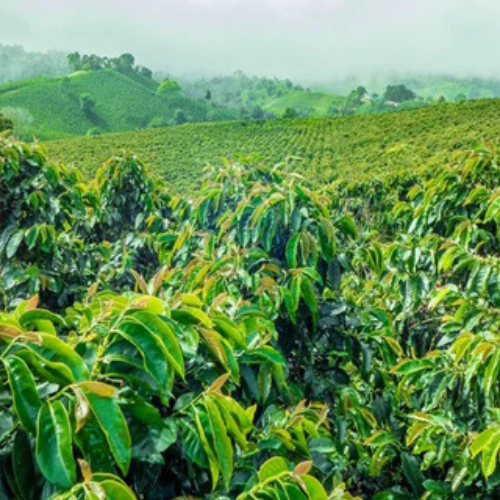
Cultivated predominantly in the southern hill tracts of Karnataka, Kerala, and Tamil Nadu, Indian coffee is cherished for its mild flavor, fine aroma, and unique interplay of spice-shaded terroir — a flavor born in the misty mountains of the Western Ghats.

History and Origin
Coffee cultivation in India traces its roots back to the 17th century when the legendary saint Baba Budan smuggled seven coffee seeds from Yemen and planted them in the Chikkamagaluru hills of Karnataka. This small act sowed the seeds of an enduring agricultural tradition that would shape India’s economy and culture for centuries.
Over time, coffee plantations spread across the southern states — Karnataka, Kerala, and Tamil Nadu — where ideal rainfall, altitude, and shaded forests nurtured premium-quality beans. In recent years, new cultivation areas have also emerged in Andhra Pradesh, Odisha, and the Northeastern states, expanding India’s coffee geography.
Today, India is among the top ten coffee producers in the world, contributing around 3–4.5% of global coffee output, and is celebrated for its high-quality Arabica and Robusta beans.
Cultivation and Production Process
Coffee in India is cultivated under natural shade, often alongside spices like pepper, cardamom, and vanilla — enhancing both crop resilience and flavor complexity. The cultivation process combines traditional wisdom with modern agronomic practices to maintain quality and sustainability.
| Step | Process | Details |
|---|---|---|
| 1 | Soil Preparation | Coffee thrives in red and lateritic soils, rich in organic matter and well-drained. |
| 2 | Planting & Propagation | Seeds or saplings are planted on terraced slopes to prevent soil erosion. |
| 3 | Shade Management | Shade trees such as silver oak and jackfruit maintain ecosystem balance. |
| 4 | Irrigation & Care | Moderate, controlled irrigation sustains consistent growth. |
| 5 | Harvesting | Hand-picked during December–March to ensure selective quality. |
| 6 | Processing | Beans are processed via wet (washed) or dry (unwashed) methods to define flavor. |
Manufacture and Export
The coffee industry is a cornerstone of India’s agri-based exports, supporting thousands of smallholder farmers and cooperatives across the Western and Eastern Ghats. Nearly 80% of India’s coffee is exported to international markets.
| Aspect | Details |
|---|---|
| Type | Plantation Crop |
| Main Varieties | Arabica (30%), Robusta (70%) |
| Primary Production Areas | Karnataka (71%), Kerala (21%), Tamil Nadu (5%) |
| Emerging Regions | Andhra Pradesh, Odisha, Assam, Meghalaya, Nagaland |
| Registered GI Coffees | Coorg Arabica, Chikmagalur Arabica, Wayanad Robusta, Araku Valley Arabica, Bababudangiris Arabica |
| Major Export Destinations | Italy, Germany, Russia, Spain, Belgium, USA |
| Export Volume (2023–24) | ~2.4 lakh tonnes |
| Support Bodies | Coffee Board of India, APEDA, Central Coffee Research Institute |
Cultural and Economic Importance
For the people of the Western Ghats, coffee is more than a crop — it’s a way of life. Generations of planters and tribal farmers have sustained its cultivation, creating a socio-economic backbone for regions like Kodagu, Chikkamagaluru, and Wayanad.
Economically, coffee contributes significantly to India’s rural livelihoods, foreign exchange earnings, and employment. Socially, it fosters community-based farming, women’s participation, and eco-tourism in plantation areas.
With over 2.5 lakh coffee growers — 98% of whom are small and marginal farmers — the sector remains a model of inclusive, sustainable agricultural growth.
Recognition and Global Reach
Indian coffee enjoys international acclaim for its smooth taste, balanced acidity, and shade-grown origin. Specialty Indian coffees such as Monsooned Malabar, Coorg Arabica, and Araku Valley Arabica are sought after by gourmet roasters and premium brands worldwide.
Government and institutional support from the Coffee Board of India, APEDA, and state horticulture departments continue to boost exports, improve processing infrastructure, and promote sustainability through certification programs like Rainforest Alliance and Fair Trade.
Conclusion
From the misty slopes of Chikkamagaluru to the cafes of Rome and Berlin, Indian coffee tells a story of heritage, harmony, and hard work.
Rooted in the red soils of the Western Ghats and nurtured under forest canopies, it represents a fusion of tradition, biodiversity, and global excellence.