Bidriware: The Mystical Metal Art of India
India, a land steeped in artistic heritage, is home to an array of traditional crafts that have mesmerized the world for centuries. Among these, Bidriware stands out as a unique and exquisite metal art form, celebrated for its striking contrast of silver inlay against a deep, black alloy. More than just decorative pieces, Bidriware items are a testament to centuries of skillful craftsmanship, cultural exchange, and enduring artistic vision.
Introduction: Overview and Cultural Significance
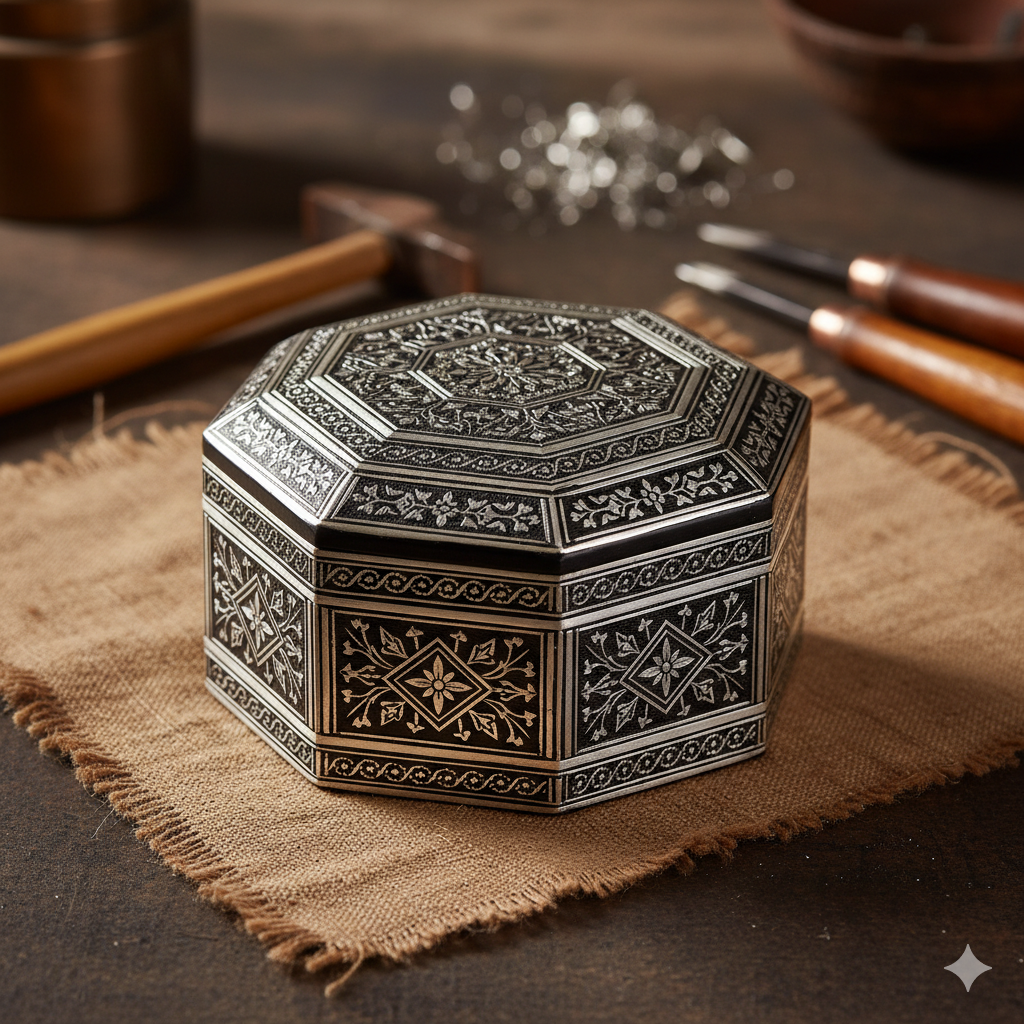
Bidriware is a sophisticated metal handicraft that harmoniously blends casting, engraving, and inlay work, resulting in intricate patterns that gleam against a matte backdrop. Its applications range from decorative items and utility articles to jewelry, making it highly valued for both its beauty and the labor-intensive process involved in creating it.
Culturally, Bidriware has long been associated with nobility and luxury, often adorning the homes of aristocrats and symbolizing refined taste. Its unique aesthetic, combining Islamic and indigenous Indian design elements, reflects the rich tapestry of cultural influences that have shaped its evolution over centuries.
History and Origin
The origins of Bidriware trace back to the 14th century in Bidar, a city in the Deccan region of southern India, during the reign of the Bahmani Sultanate. The craft is believed to have been introduced by Abdullah bin Kaiser, a craftsman from Iran, who was invited by Sultan Ahmed Shah Bahmani to enhance royal palaces and courtly spaces.
Key historical points:
Persian Roots: The original Persian motifs influenced floral and geometric designs.
Indian Adaptation: Local artisans blended these with Indian aesthetics, creating a distinct style.
Spread Across India: Beyond Bidar, the craft reached Hyderabad, Lucknow, and Murshidabad, each region developing subtle variations.
Bidar – The Epicenter: Despite its spread, Bidar remains the symbolic heart of this craft.
Traditional Making Process
Creating Bidriware is meticulous and multi-staged, requiring exceptional skill and patience. Here is a step-by-step look:
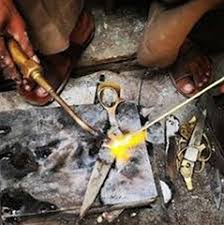
Casting the Base Alloy:
Alloy of zinc (90–94%), copper, and trace amounts of lead and tin is melted and poured into molds.
Typical items: vases, plates, boxes, hookahs, and jewelry.
Smoothing and Filing:
Cast objects are smoothed to remove imperfections and achieve a uniform surface.
Engraving the Design:
Freehand engraving is done with intricate patterns.
Common motifs: Ashtamangal (eight auspicious symbols), floral patterns, geometric designs, and Persian arabesques.
Inlaying the Silver:
Thin silver sheets or wires are hammered into engraved grooves.
Precision is key to ensure flush embedding.
Polishing:
Excess silver is removed, revealing the emerging design.
Oxidation (Blackening Process):
The object is immersed in a special solution made from Bidar soil, ammonium chloride, and water.
This turns the zinc alloy black while keeping the silver inlay bright and untarnished.
Final Buffing and Finishing:
Light oiling enhances the sheen of the silver and deepens the black, completing the visual contrast.
Global Appeal and Recognition
Bidriware’s captivating aesthetics and intricate craftsmanship have earned it acclaim worldwide. Its enduring appeal comes from:
Exquisite Design: Stunning black-and-silver contrast with elaborate motifs.
Handmade Authenticity: Each piece is labor-intensive, offering a sense of artisanal genuineness.
Cultural Storytelling: Every object embodies centuries of Indian heritage and craftsmanship.
Versatility: Modern Bidriware includes decorative items, corporate gifts, and fashion accessories.
Export Insights:
Bidriware contributes significantly to India’s handicraft exports, particularly in Europe, North America, and the Middle East.
Its uniqueness and craftsmanship make it highly valued among collectors and interior decorators globally.
Brand Spotlight: Bidri Crafts
Bidri Crafts is a prominent name in the promotion of Bidriware worldwide.
Key Highlights:
Overview: Works directly with master artisans in Bidar to preserve authenticity and fair trade practices.
Collections: Range from traditional to contemporary designs, catering to an international audience.
Founders & Legacy: Many modern Bidriware brands are family-run, with artisan knowledge passed down through generations.
Annual Turnover & Export Data: Exact figures are proprietary, but such brands significantly contribute to India’s global handicraft exports.
Conclusion: Proudly Made in India
Bidriware exemplifies “Proudly Made in India”, combining exceptional craftsmanship, rich history, and cultural significance. From the royal courts of the Deccan to international markets, its journey reflects the enduring allure of Indian artistry. Owning Bidriware is more than acquiring a decorative object—it is embracing a piece of living history, meticulously crafted and imbued with the soul of India.
If you want, I can also create a slightly shorter, SEO-optimized version that highlights key points in bullets for faster reading without losing the essence. This works very well for online blogs.
Do you want me to do that next?


Post Comment