Chikankari: Poetry in Thread – A Legacy of Indian Hand Embroidery
Chikankari, the exquisite hand embroidery from Lucknow, is far more than a textile technique; it is a living piece of India’s cultural heritage. Celebrated as “poetry in thread,” Chikankari epitomizes subtle elegance, sophistication, and meticulous craftsmanship. Its delicate designs have captivated not just local connoisseurs but also international buyers seeking authentic, hand-crafted luxury. This embroidery is a testament to centuries of refinement, artisanal skill, and timeless aesthetics that seamlessly bridge traditional artistry with contemporary global fashion.
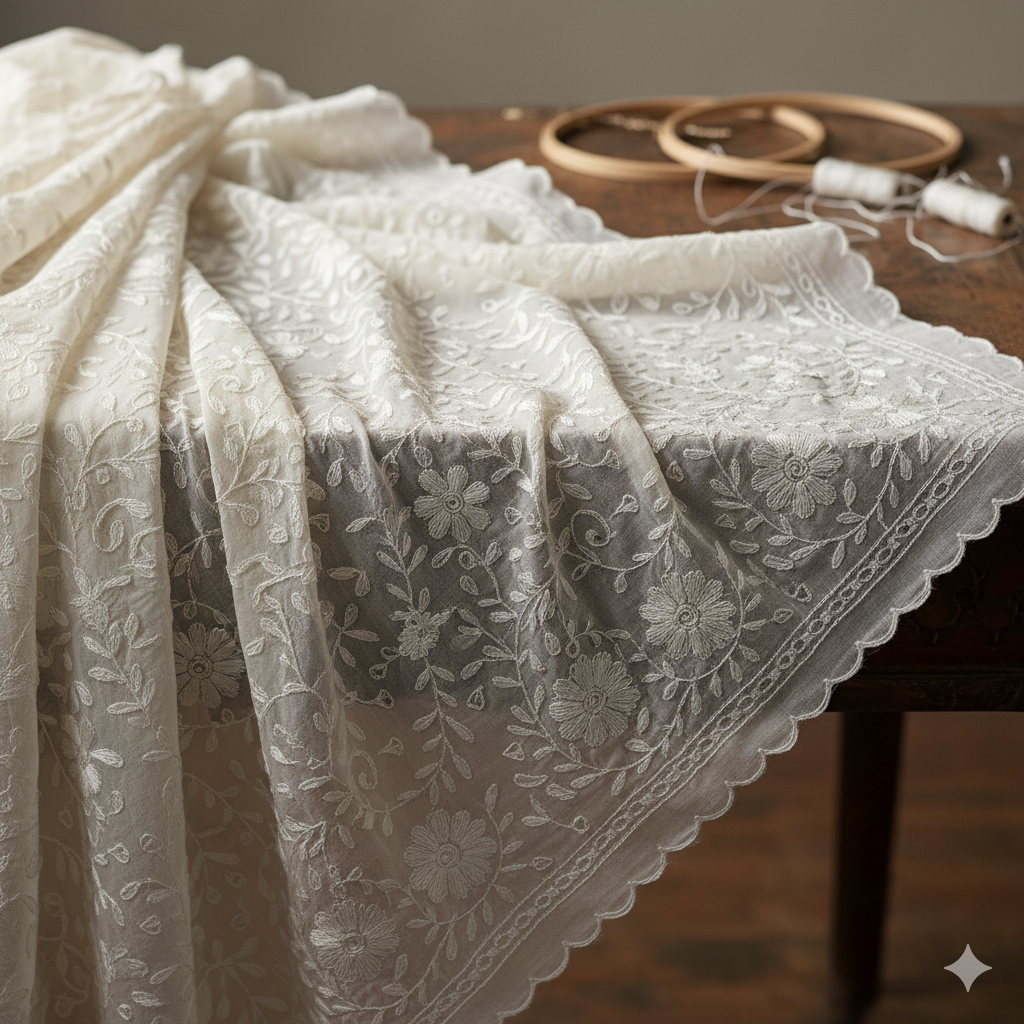
History and Origin
The origins of Chikankari are deeply tied to the Mughal Empire, with its journey spanning royal patronage to widespread recognition in modern fashion.
Historical Significance
Mughal Patronage: Chikankari is widely believed to have been introduced to India by Nur Jahan, wife of Emperor Jahangir, in the 17th century. Its style may trace back to Persian white-on-white embroidery. Initially reserved for the elite, it represented purity and understated elegance in Mughal courts.
Nawabi Flourish: During the 18th and 19th centuries, the Nawabs of Awadh, ruling from Lucknow, encouraged artisans to refine and diversify the stitches. This era solidified Chikankari’s association with Lucknow’s royal culture.
Cultural Significance
Symbol of Elegance: Traditionally, Chikankari was executed on fine muslin or cotton using white thread, creating delicate shadow work (Bakhiya), which is subtle yet visually captivating.
Heirloom and Livelihood: Beyond its aesthetic value, Chikankari garments are cherished heirlooms and remain a primary source of income for hundreds of thousands of artisans, especially women, in Lucknow and surrounding regions.
Origin City and Region
The craft’s birthplace, Lucknow, continues to be its cultural and commercial hub.
Geographical Indication (GI) Status: Recognized as Lucknawi Chikankari, the GI status protects its authenticity and links the craft legally to its region of origin.
Artisan Cluster: Lucknow’s artisan clusters include embroiderers, block printers, and washermen. Famous local markets such as Chowk and Hazratganj are central to its trade and craftsmanship ecosystem.
Traditional Making Process
Chikankari is a slow, artisanal fashion, with every stage executed by hand, reflecting immense patience and precision.
Materials
Fabrics: Traditionally fine muslin (malmal) and cotton. Today, also Georgette, Chiffon, Silk, Organza, and Linen.
Threads: Fine, untwisted cotton or silk threads in white or pastel shades to preserve delicacy.
Step-by-Step Crafting
Chhapayi (Block Printing):
Master artisans draw motifs (buti) on paper, then carve them into Sheesham wooden blocks.
Blocks are dipped in a washable color paste and pressed onto the semi-stitched fabric.
Kadhai (Embroidery):
Artisans stitch meticulously over the block-printed outlines.
Stitch Variations: Up to 32, including:
Bakhiya (Shadow Work): Creates a subtle shaded effect.
Jaali (Net/Mesh Work): Forms delicate lattice-like patterns.
Phanda and Murri: Tiny knots resembling pearls or rice grains.
Washing and Finishing:
Garments are washed multiple times to remove temporary dye marks (Charakh).
Finished pieces are starched and pressed to preserve fabric integrity and elegance.
Global Appeal and Recognition
Chikankari’s charm lies in its timeless elegance, adaptability, and ethical craftsmanship.
International Appreciation
Timeless Aesthetic: Contrasts with heavy machine-made textiles, appealing to luxury markets.
Slow, Sustainable Fashion: Entirely hand-made, supporting sustainable fashion ideals.
Versatility: Works not only in traditional Indian attire (Kurtas, Sarees) but also in contemporary dresses, scarves, jackets, and home décor.
Export Value
Key Markets: USA, UK, Europe, and the Middle East, where high-quality, hand-crafted textiles are highly valued.
Economic Impact: Supports thousands of rural and urban artisans. Government initiatives and e-commerce platforms have expanded its global reach.
Brand Spotlight: SEWA Chikan (Self-Reliant Women’s Association)
SEWA Chikan exemplifies an ethical, artisan-driven approach to Chikankari production and marketing.
| Detail | Information |
|---|---|
| Overview | A women’s artisan collective promoting authentic Chikankari, emphasizing fair wages and skill enhancement. |
| Founder(s) | Ela Bhatt (SEWA); Chikankari initiatives are collective efforts within SEWA. |
| Year Established | SEWA founded in 1972; Chikankari projects developed subsequently to revive the craft. |
| Mission | Ensure fair profit share for artisans and sustain Chikankari as a livelihood. |
| International Presence | Showcased at global exhibitions, connecting directly with ethical buyers worldwide. |
Conclusion: Proudly Made in India
Chikankari embodies centuries of Indian textile heritage, blending Mughal elegance and Nawabi sophistication with contemporary global fashion appeal. Every stitch tells a story of patience, skill, and cultural legacy. Its global recognition is not just a testament to aesthetic beauty but also to ethical, artisan-focused production. As a fully hand-made, culturally rooted craft, Chikankari remains a shining example of Proudly Made in India, offering buyers worldwide a unique piece of India’s living heritage.


Post Comment