Attappady Avanipala Jaggery
Jaggery from Attappady carries a strong local identity. Buyers value it for natural sweetness, earthy taste, and traditional preparation. It reflects the farming culture of a unique tribal region. Attappady lies in the hills of Kerala. The area is known for natural landscapes, small farms, and community-based agriculture. These conditions support traditional sweetener production. Avanipala Jaggery has gained attention because people now prefer less processed foods. Many homes want authentic alternatives to refined sugar. This jaggery stands for more than taste. It represents rural skill, local crops, and food heritage.
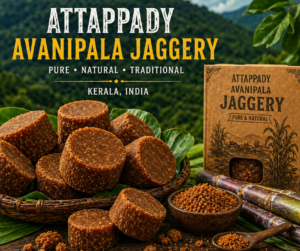
Origin History Table of Attappady Avanipala Jaggery
| Aspect | Details |
|---|---|
| Common Name | Jaggery |
| Regional Name | Attappady Avanipala Jaggery |
| Main Origin Area | Attappady |
| State | Kerala |
| Production Base | Rural farms and community units |
| Historical Growth | Household production expanded to local trade |
| Traditional Makers | Farming and tribal communities |
| Preparation Style | Boiled natural juice into solid jaggery |
| Market Rise | Demand increased for traditional sweeteners |
| Present Identity | Heritage jaggery from Kerala |
What Makes It Special
- This jaggery offers deep sweetness with earthy notes. The flavor feels richer than refined sugar.
- Its texture may vary by batch. Some pieces feel firm, while others remain softer.
- Many buyers like its traditional image. They want food with clear roots and simple processing.
- Color can range from golden brown to dark brown. That depends on raw material and heating stage.
- Because of these qualities, it attracts homes and specialty buyers.
Raw Material and Production Method
- Jaggery usually starts from natural sweet juice. Producers collect and filter the liquid first.
- Next, they boil it in wide pans. Constant stirring helps proper thickening.
- As moisture reduces, the liquid turns dense. Then makers pour it into molds or trays.
- After cooling, it becomes solid jaggery pieces. Proper storage keeps moisture away.
- Traditional skill matters at each stage. Timing affects taste, texture, and color.
Health Perspective and Uses
Jaggery is often preferred over refined sugar by many households. It feels less processed and more traditional. People use it in tea, sweets, and festive dishes. It also suits payasam and local snacks. Some use jaggery in warm drinks during cooler months. It blends well with ginger and spices. Still, jaggery is a sweetener. Moderate use remains important. Balanced intake is always wise.
Culinary Importance
Attappady jaggery works in many recipes. Kerala sweets often pair well with jaggery flavor. It can sweeten porridges and rice dishes. Bakers also use jaggery in cookies and cakes. Many homes melt it into syrup for desserts. Others grate it for direct use. Its earthy sweetness adds character that white sugar cannot match.
How to Buy Good Quality Jaggery
Choose jaggery with a clean smell and firm texture. Avoid damp or sticky pieces. Natural color variation is common. Very bright artificial shades need caution. Check packaging date and storage condition. Moisture can damage quality fast. Trusted regional sellers often give better consistency. Store in an airtight container after purchase.
Why Demand Keeps Growing
Consumers now prefer traditional foods with identity. Attappady products fit this trend. Regional branding has improved awareness. More people now know Kerala artisanal foods. Online selling also widened reach. Earlier, only local markets led sales. As natural sweetener demand rises, this jaggery may gain further value.
Final Thoughts
Jaggery from Attappady reflects local farming wisdom and natural sweetness. Its traditional making style and rich taste give it lasting value in modern kitchens.
FAQs
What is Attappady Avanipala Jaggery?
It is a traditional jaggery linked with Attappady, Kerala.
Where is Attappady located?
It is in Kerala.
Is jaggery better than refined sugar?
Many people prefer it as a less processed option.
How is jaggery used?
It is used in sweets, tea, desserts, and daily cooking.
How should I store jaggery?
Keep it dry, airtight, and away from moisture.