Jaggery vs Sugar- Why Indians Are Switching Back to Gur in 2026
There is a quiet revolution happening in Indian kitchens. After decades of white refined sugar dominating teacups, mithai shops, and dining tables across the country, millions of Indians are rediscovering something their grandmothers never stopped using gur.
Jaggery, known as gur in Hindi, is not a new health trend imported from the West. It is one of the oldest sweeteners in human history, used in India for over 3,000 years. What is new is the reason people are returning to it. Armed with nutritional data, growing distrust of processed foods, and a renewed pride in traditional Indian ingredients, consumers from Mumbai apartments to Delhi offices are making the switch. But is jaggery truly better than sugar? And if so, why did we ever leave it behind? This article breaks it all down.
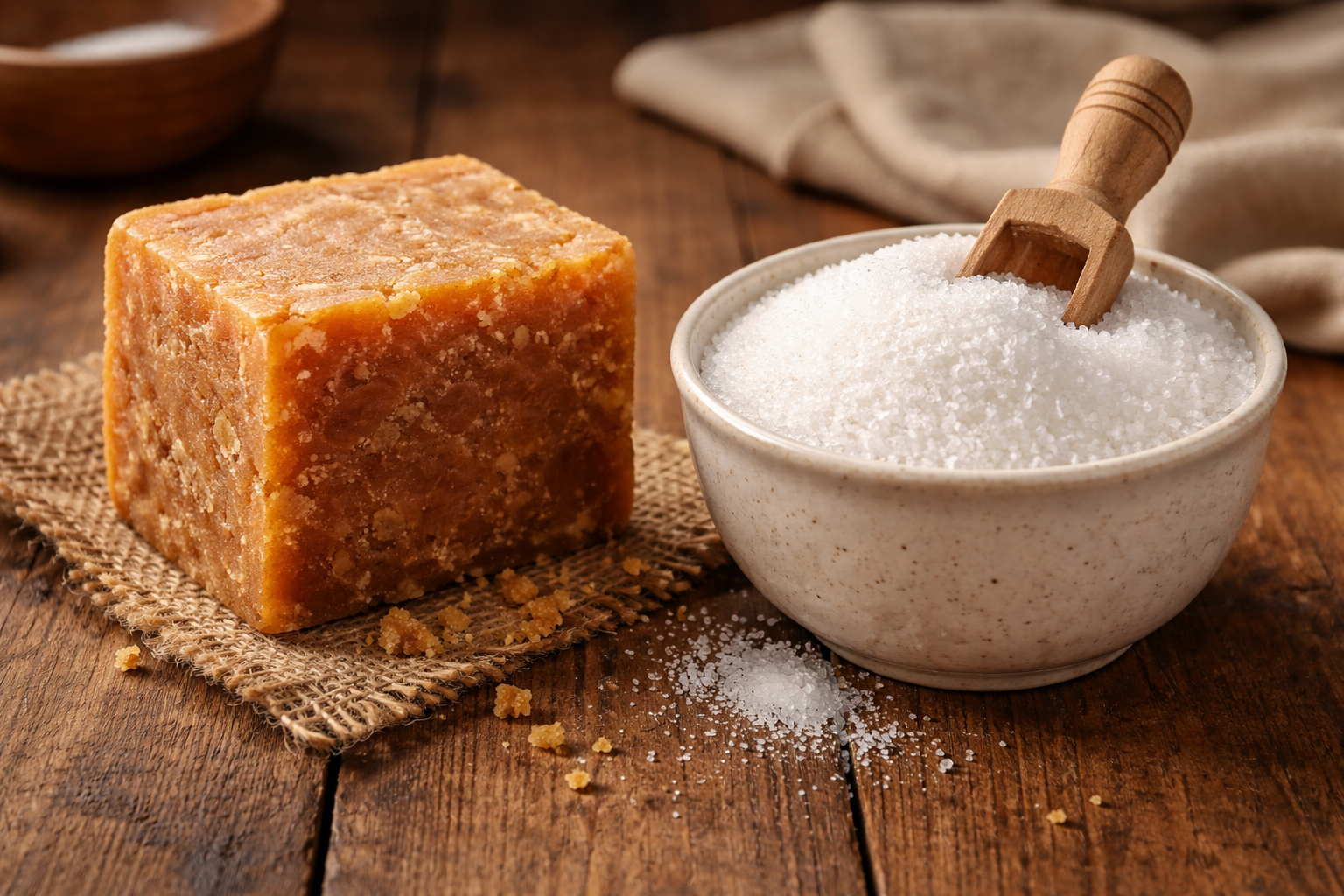
What Is Jaggery and How Is It Made?
Jaggery is an unrefined natural sweetener made by boiling and concentrating sugarcane juice or date palm sap. Unlike refined white sugar, jaggery undergoes minimal processing. No chemicals, no bleaching agents, no synthetic additives.
The process is simple and ancient. Sugarcane juice is extracted, clarified by heating, and then stirred continuously in large iron vessels until it thickens and solidifies. The result is a golden-brown to dark brown block of concentrated sweetness that retains most of its natural minerals and plant compounds.
India is the world’s largest producer of jaggery, accounting for nearly 70% of global production. States like Maharashtra, Karnataka, Uttar Pradesh, Tamil Nadu, and West Bengal have centuries-old traditions of jaggery making, each producing varieties with distinct color, texture, and flavor.
Jaggery vs Sugar- The Core Difference
At their most basic level, both jaggery and sugar come from the same source, sugarcane. But the way they are processed creates a dramatic difference in their nutritional profile.
White refined sugar is processed through multiple chemical stages, including carbonation, filtration through bone char, and crystallisation. By the end of this process, sugar is essentially pure sucrose stripped of every nutrient, mineral, and beneficial compound that existed in the original plant.
Jaggery retains what sugar discards.
Because it is minimally processed, jaggery keeps its natural iron, magnesium, potassium, phosphorus, and small amounts of B vitamins intact. It also contains plant-based antioxidants that are completely absent in refined sugar.
Nutritional Comparison: Jaggery vs Sugar (Per 100g)
| Nutrient | Jaggery (per 100g) | White Sugar (per 100g) |
|---|---|---|
| Calories | 383 kcal | 387 kcal |
| Sucrose | 65–85 g | 99.9 g |
| Iron | 11 mg | 0.01 mg |
| Magnesium | 70–90 mg | 0 mg |
| Potassium | 1050 mg | 2 mg |
| Calcium | 40–100 mg | 1 mg |
| Antioxidants | Present | Absent |
| Processing Chemicals | None | Multiple |
The calorie difference is minimal. Both are sweeteners and should be consumed in moderation. But the micronutrient gap is enormous. One tablespoon of jaggery gives you a meaningful dose of iron and potassium that sugar simply cannot provide.
7 Proven Health Benefits of Jaggery
1. Supports Digestive Health
Jaggery has been used as a post-meal digestive aid in Indian households for generations. It stimulates digestive enzymes and helps activate bowel movement. Many nutritionists recommend a small piece of gur after meals instead of a sweet dessert.
2. Natural Source of Iron
India has one of the highest rates of iron-deficiency anemia in the world, particularly among women and children. Jaggery is one of the richest plant-based sources of iron available. Regular consumption, even in small amounts, can contribute meaningfully to daily iron intake.
3. Detoxifies the Liver
Jaggery is a natural liver cleanser. It helps the liver flush out toxins by stimulating detoxification enzymes. This is why traditional Indian medicine recommended jaggery for workers in dusty or polluted environments — a practice now supported by modern research.
4. Boosts Immunity
The zinc and selenium present in jaggery help prevent free radical damage and build immunity. Combined with its antioxidant content, jaggery supports the body’s natural defense system in a way that refined sugar actively undermines.
5. Regulates Blood Pressure
The high potassium content in jaggery helps balance electrolytes, reduce water retention, and manage blood pressure. This makes it a significantly better choice than sugar for people managing hypertension.
6. Provides Sustained Energy
White sugar causes a rapid spike in blood glucose followed by a sharp crash — the familiar sugar rush and subsequent fatigue. Jaggery, being less refined, is digested more slowly, providing steadier and more sustained energy release throughout the day.
7. Relieves Menstrual Discomfort
Jaggery triggers the release of endorphins which help relax the body and ease menstrual cramps. It is also rich in iron, which helps replenish what is lost during menstruation. This is why many Indian mothers still serve warm jaggery water or gur-ghee rotis during periods.
Why Did Indians Switch to Sugar in the First Place?
The story of India abandoning jaggery for white sugar is largely a colonial and industrial one.
During British rule, large-scale sugarcane industries were established that prioritised refined white sugar for export and commercial use. White sugar was marketed as modern, clean, and aspirational. Jaggery, by contrast, was associated with rural living and backwardness a perception that lingered for decades after independence.
As Indian cities grew and processed food became the norm, white sugar embedded itself into every part of the food industry from packaged biscuits to cold drinks to restaurant kitchens.
But that perception is now reversing rapidly.
The Jaggery Revival - What's Driving It?
Several powerful forces are bringing gur back to center stage in India.
Health awareness: The post-COVID generation of Indian consumers is reading labels, questioning ingredients, and actively choosing less processed foods. Jaggery fits perfectly into this movement.
Ayurveda’s global rise: As Ayurvedic wellness gains global attention, traditional Indian ingredients are being revalidated by both ancient texts and modern science. Jaggery appears in Ayurvedic recommendations across digestion, immunity, and women’s health.
Vocal for Local sentiment: The growing pride in Indian-made, Indian-origin products has extended to food. Choosing jaggery over refined sugar is increasingly seen as a patriotic and culturally rooted decision.
D2C brands and organic marketplaces: Startups selling organic, stone-pressed, chemical-free jaggery have made it easier than ever to access high-quality gur online. What was once only available at local kirana stores now ships to every pin code in India.
Best Types of Jaggery Available in India
Not all jaggery is the same. Here are the main varieties worth knowing:
Sugarcane Jaggery — The most common variety, produced widely across Maharashtra, Karnataka, and UP. Golden to dark brown, mildly sweet.
Date Palm Jaggery (Nolen Gur) — Made from date palm sap, primarily in West Bengal and Odisha. Darker, richer, with a distinctive caramel-like flavor. Highly seasonal and prized.
Coconut Jaggery — Made from coconut palm sap, popular in Kerala, Karnataka, and Goa. Lighter in color, less sweet, with a subtle coconut undertone.
Palmyra Jaggery (Karuppatti) — Made from palmyra palm in Tamil Nadu. Considered one of the most medicinal varieties in Ayurveda.
Marayoor Jaggery — A GI-tagged variety from Kerala’s Marayoor region, known for its purity and distinctive taste. One of the most premium jaggery varieties in India.
How to Use Jaggery as a Sugar Replacement
Replacing sugar with jaggery in daily life is simpler than most people think.
In tea and coffee, use an equal amount of jaggery powder instead of sugar. The flavor will be slightly richer and more complex most people prefer it after the first week.
In cooking and baking, replace 1 cup of sugar with ¾ cup of jaggery powder. Since jaggery has a slightly stronger sweetness and more moisture, reduce it slightly and adjust liquid ingredients.
In traditional Indian sweets, jaggery is the original ingredient in most recipes kheer, ladoo, pongal, puran poli, and chikki all taste better and more authentic when made with gur instead of sugar.
A Word of Caution
Jaggery is healthier than sugar but it is not a free pass. It still contains sucrose and raises blood sugar, though more gradually. People with diabetes should consult their doctor before increasing jaggery consumption. Moderation remains key 2 to 3 teaspoons per day is a reasonable daily amount for most healthy adults.
Also watch for adulterated jaggery in the market. Some commercially sold jaggery contains added sugar, artificial colors, and hydros (sodium hydrosulfite) to improve appearance. Always buy from trusted brands or certified organic sources.
The Verdict — Should You Switch?
Yes- with awareness.
Jaggery is not a miracle food. But compared to refined white sugar, it is nutritionally richer, less chemically processed, and more aligned with India’s traditional food wisdom. For a country dealing with rising diabetes, iron deficiency, and lifestyle diseases, returning to gur is not nostalgia — it is good sense.
Your grandmother had it right all along.
FAQs
Is jaggery better than sugar for weight loss?
Jaggery has almost the same calories as sugar, so it does not directly cause weight loss. However, it provides more nutrients per calorie and causes a slower blood sugar rise, which can help reduce cravings and energy crashes that lead to overeating.
Can diabetics eat jaggery instead of sugar?
Jaggery has a slightly lower glycemic index than white sugar but still raises blood glucose. Diabetics should not replace sugar with jaggery freely without medical advice. Small amounts may be acceptable for some — always consult your doctor.
Which state produces the best jaggery in India?
Maharashtra (especially Kolhapur) and Karnataka are known for producing some of India’s finest sugarcane jaggery. West Bengal produces the most prized date palm jaggery (Nolen Gur). Kerala’s Marayoor jaggery holds a GI tag for its exceptional quality.
How do I identify pure jaggery without adulteration?
Pure jaggery is typically dark golden to deep brown in color. If it looks very yellow or bright, it may contain chemical bleaching agents. It should dissolve cleanly in water without leaving a white residue. Buy from organic certified brands whenever possible.
Can I use jaggery in tea and coffee every day?
Yes. Replacing sugar with jaggery in your daily tea or coffee is one of the easiest and most beneficial dietary switches you can make. Start with jaggery powder for easy dissolving.
What is the difference between jaggery powder and jaggery blocks?
Both are the same product jaggery powder is simply grated or ground jaggery made for convenience. Powder dissolves faster and is easier to measure. Blocks have a longer shelf life if stored properly in an airtight container.