Rabari Embroidery – Vibrant Mirror Thread Heritage of India
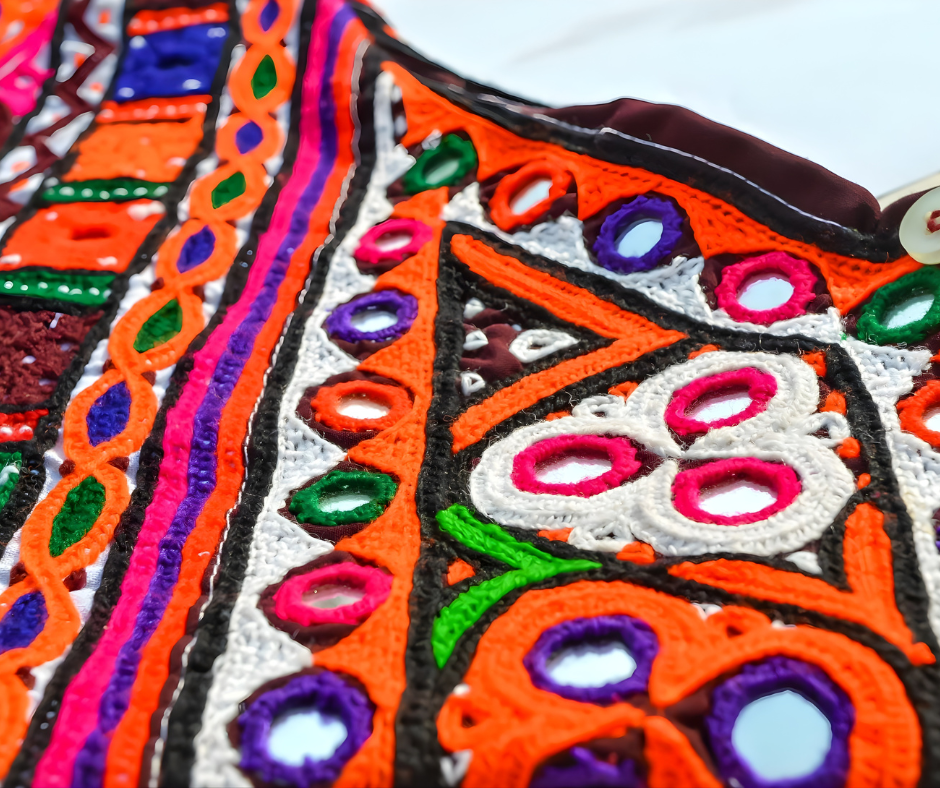
Rabari Embroidery is one of India’s most visually expressive and culturally rich hand-embroidery traditions, celebrated for its bold mirror work, striking color contrasts, and symbolic motifs stitched entirely by hand. Originating from the nomadic Rabari communities of Gujarat and Rajasthan, this embroidery represents identity, spirituality, and storytelling passed through generations of women artisans. Known for its dramatic use of mirrors and thick thread outlines, Rabari work stands as a proud emblem of India’s handcrafted textile heritage.
Basic Overview
| Field | Details |
|---|---|
| Traditional Visual | Mirrors, bold geometric motifs, animal & floral symbols on dark fabrics |
| Alternative Names | Rabari Mirror Work, Kutch Rabari Embroidery |
| Craft Type | Traditional Mirror Hand Embroidery |
| Area | Kutch, Bhuj, Anjar, Barmer |
| State | Gujarat, Rajasthan |
| Country | India |
| GI Registration | Kutch Embroidery (includes Rabari style) |
| Raw Material | Cotton Threads, Silk Threads, Cotton Fabric, Mirrors |
| Registered Logo | GI Tag India, Handloom Mark |
| Primary Community | Rabari Women Artisans |
Rabari Embroidery – Origins & Cultural Legacy
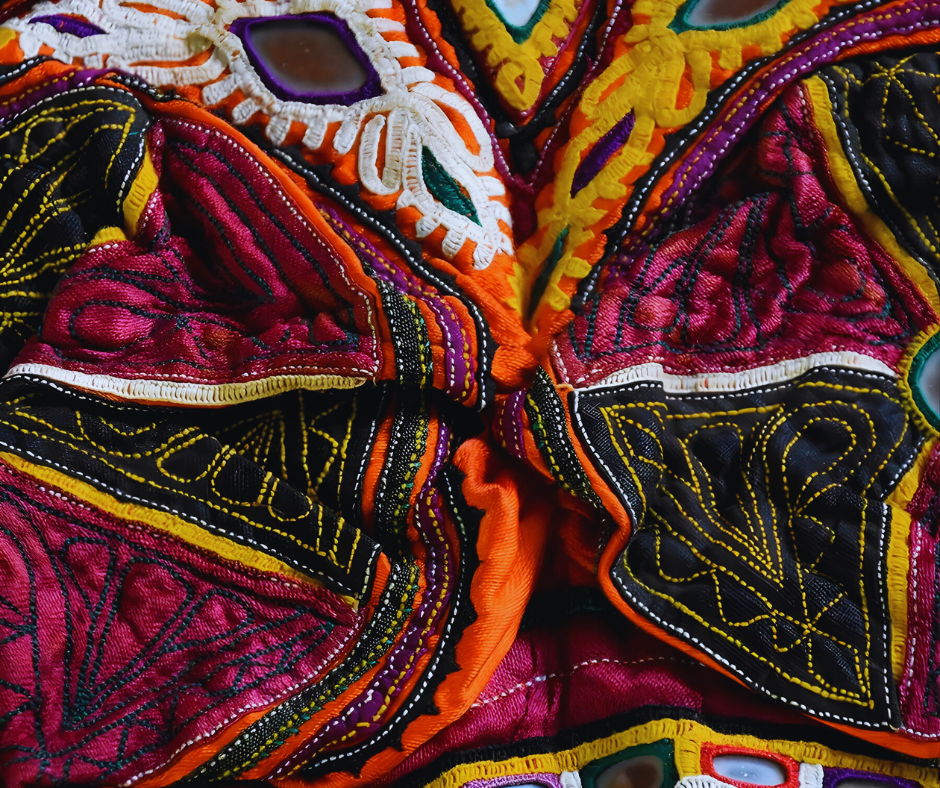
The roots of Rabari Embroidery lie within the nomadic Rabari tribes who historically migrated across desert regions with livestock. Embroidery was more than decoration — it was a visual identity marker reflecting marital status, prosperity, and clan belonging. Young girls traditionally learned stitching skills from mothers and grandmothers, preparing embroidered garments for weddings, festivals, and dowries.
A distinctive feature of Rabari work is its heavy mirror inlay, believed in folklore to protect against evil spirits by reflecting negative energy. Motifs often include camels, scorpions, peacocks, temples, and abstract geometric forms, each symbolizing elements of desert life and spiritual belief. Over centuries, this embroidery evolved into a vibrant cultural language stitched onto textiles.
Global Appeal & Market Recognition
Admired for bold mirrors & vibrant desert color palettes
Growing demand in ethical fashion & handmade accessories
Export presence in Europe, USA & Australia
Recognized as a signature Kutch textile identity
Preferred by slow-fashion and sustainable brands
Popular in jackets, bags, cushion covers & wall décor
Celebrated for authenticity and handcrafted charm
Exceptional Craftsmanship & Artistic Features
Mirror Inlay Technique
Small circular and square mirrors are stitched securely using decorative thread frames.
Bold Color Contrast
Bright reds, oranges, yellows, greens, and whites stand out against black or deep indigo fabrics.
Symbolic Motifs
Animals, flowers, temples, and abstract forms narrate cultural stories.
Thick Thread Outlines
Raised stitching gives depth and tactile richness to patterns.
Entirely Handcrafted
No machine can replicate the irregular beauty of authentic Rabari work.
Cultural Identity Expression
Designs often indicate marital status, region, and clan heritage.
Time-Intensive Detailing
A single traditional blouse or panel can take weeks to complete.
Sustainable Craft Practice
Low-energy, fabric-friendly, and community-driven production.
GI-Certified Authenticity
Protected under Kutch Embroidery Geographical Indication recognition.
Manufacturer & Artisan Clusters
| Cluster / Brand | Founded | Promoter | Business Type | Market Reach | Ownership | Origin |
|---|---|---|---|---|---|---|
| Gujarat State Handloom Dept. | 1970s | Govt. of Gujarat | Craft Promotion | Global | Govt. | Gujarat |
| Kutch Rabari Artisan Clusters | Traditional | Rabari Families | Embroidery | Domestic & Export | Cooperative | Kutch |
| Bhuj Craft NGOs | 1990s | Social Enterprises | Textile Development | International | NGO | Bhuj |
| Ethical Fashion Labels | 2010s | Private Designers | Sustainable Apparel | Europe, USA | Pvt. | India |
| Rural Women SHGs | 2000s | Community Groups | Handicrafts | India | Cooperative | Gujarat |
Conclusion
Rabari Embroidery – Vibrant Mirror Thread Heritage of India stands as a dazzling fusion of culture, craftsmanship, and symbolism. With its radiant mirrors, bold threadwork, and deep community roots, Rabari embroidery preserves centuries of nomadic storytelling while adapting beautifully to modern fashion and décor. From traditional bridal attire in desert villages to contemporary global runways, this art form continues to shine as a timeless representation of India’s colorful and proudly handmade textile legacy.