Punjab Phulkari – A Timeless Hand-Embroidered Craft of India
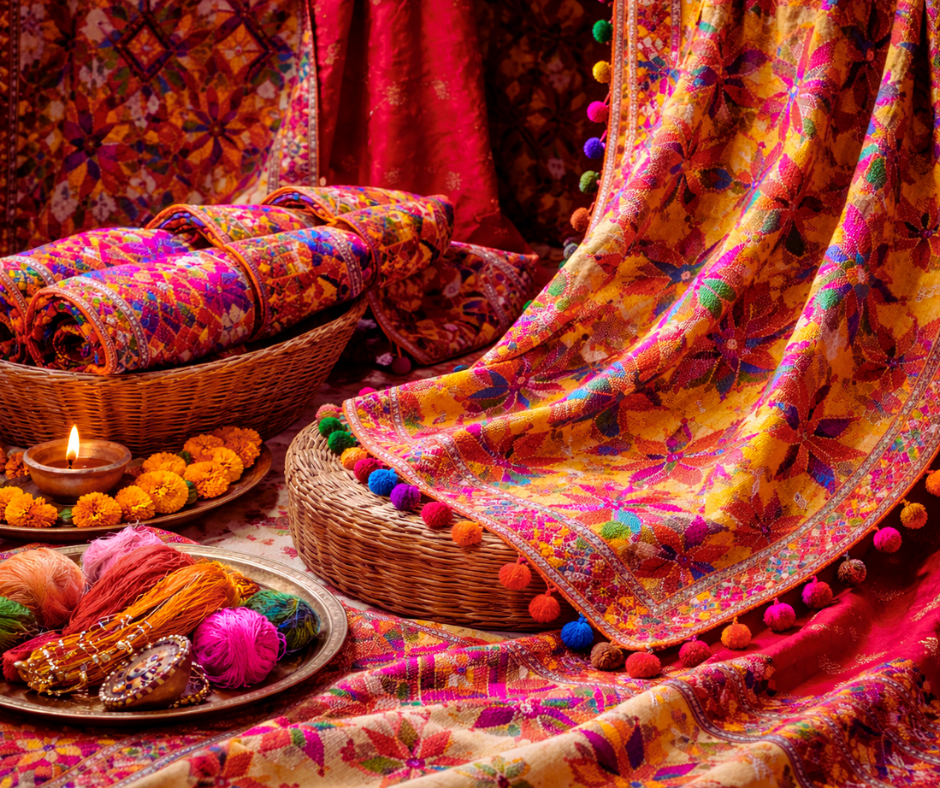
Punjab Phulkari is a traditional embroidery art that highlights the cultural richness and creative spirit of Punjab. The term means “flower work,” and the craft is recognized for its bright colors, detailed stitching, and meaningful patterns. Passed down through generations, Punjab Phulkari continues to stand as one of India’s most admired handmade textile traditions, valued for its artistry and cultural significance.
Basic Overview
| Attribute | Details |
|---|---|
| Name | Punjab Phulkari (ਫੁਲਕਾਰੀ / پھلکاری) |
| Type | Traditional Handcrafted Embroidery |
| Region of Origin | Punjab Region (India & Pakistan) |
| Country | India |
| Main Crafting Hubs | Patiala, Amritsar, Jalandhar, Bathinda, and Hoshiarpur |
| Registered (GI Tag) | 2010 – Phulkari of Punjab |
| Base Fabric | Handspun cotton (Khaddar) |
| Thread Used | Bright silken thread (Pat) |
| Primary Technique | Darn stitch worked from the reverse side |
| Common Motifs | Flowers, geometric shapes, birds, daily life scenes |
| Traditional Varieties | Chope, Bagh, Tilpatr, Neelak |
| Video Link | 🎥 Watch Phulkari Embroidery of Punjab – Traditional Handicraft Process |
History and Origin
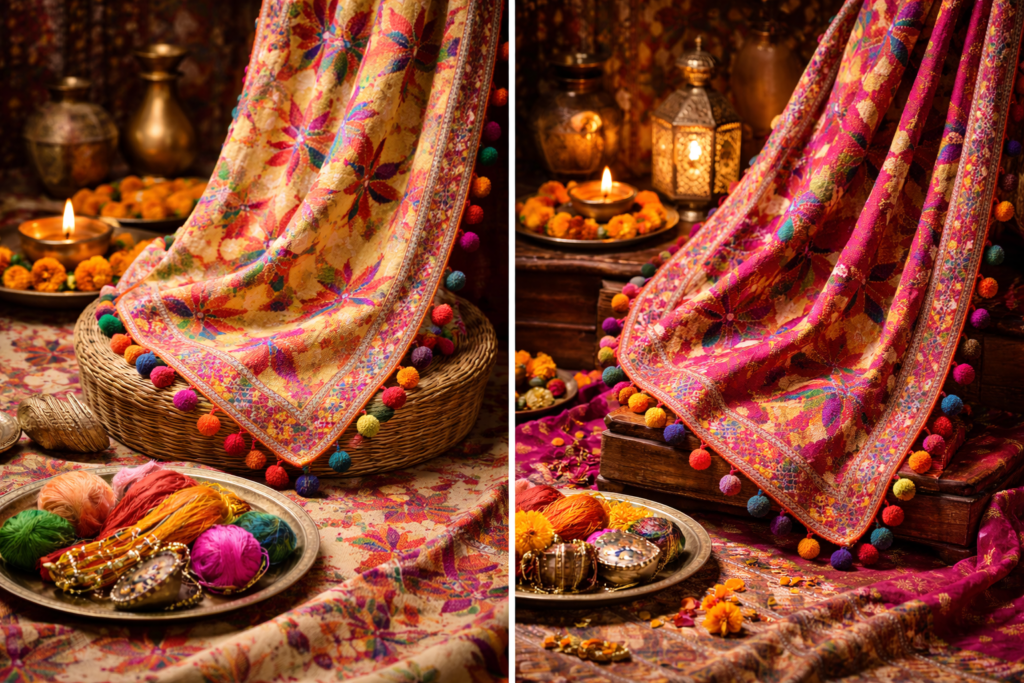
Phulkari is a traditional embroidery style that began in the Punjab region during the 15th century. The name comes from the Punjabi words “Phul” (flower) and “Kari” (work), meaning floral craftsmanship. Its existence is reflected in old Punjabi folk songs and classic literature, showing that it has been part of regional culture for many centuries.
In its early days, Phulkari was a home-based art, created mainly by women for their own families rather than for sale. Shawls, dupattas, and odhnis were carefully embroidered for weddings, births, and festivals, making each piece personal and meaningful. The craft represented affection, blessings, and family pride, passing from one generation to the next as a symbol of heritage.
Traditional Varieties of Phulkari
| Type | Description |
|---|---|
| Chope | Presented to brides during weddings, usually done in yellow or golden thread on red fabric. |
| Bagh | Literally meaning “garden”; the entire surface is densely covered with embroidery. |
| Tilpatr | Features small scattered motifs, leaving portions of the base fabric visible. |
| Neelak | Made using blue or black fabric with colorful silk threads. |
| Darshan Dwar | Offered in temples or to welcome honored guests. |
Cultural and Emotional Significance
Phulkari embodies the essence of Punjabi life — celebration, womanhood, and community. In earlier times, women embroidered Phulkari together in their courtyards, singing folk songs and sharing stories. The embroidery symbolized not just beauty, but a woman’s skill, devotion, and identity.
According to textile historian Pal (1960), the craft began to decline by the 1950s with the rise of industrial fabrics. However, revival movements, NGOs, and designers have since restored its prominence in modern India.
Economic and Global Importance
Today, Phulkari serves as both a cultural emblem and a source of livelihood for thousands of women in rural Punjab. Self-help groups and cooperatives have brought it into the global spotlight, connecting traditional artisans with international fashion markets.
| Segment | Product Range | Global Demand |
|---|---|---|
| Fashion & Apparel | Dupattas, sarees, jackets, stoles | High in USA, UK, Canada |
| Home Décor | Cushion covers, wall hangings, table runners | Growing eco-craft trend |
| Accessories | Bags, clutches, footwear, pouches | Popular among youth |
| Corporate & Cultural Gifts | Customized Phulkari items | Used by Indian missions and embassies |
Manufacturers and Exporters
While Phulkari remains a community-driven craft, several cooperatives, NGOs, and private enterprises have emerged to support artisans and bring authentic Phulkari to the world market.
| Manufacturer / Exporter | Location | Specialty |
|---|---|---|
| Punjab Small Industries & Export Corporation (PSIEC) | Chandigarh, Punjab | Promotes authentic Phulkari products under government craft schemes. |
| Phulkari Cooperative Society | Patiala, Punjab | Women-run cooperative preserving traditional hand embroidery. |
| Baba Deep Singh Handicraft Cluster | Amritsar, Punjab | Trains local artisans and supplies Phulkari garments for export. |
| Phulkari Heritage Store | Amritsar, Punjab | Retail & export unit showcasing premium Phulkari dupattas and apparel. |
| Punjaban Designer House | Ludhiana, Punjab | Blends traditional Phulkari motifs with modern fashion collections. |
| Cottage Industries Emporium | New Delhi (Govt. of India) | Authorized retailer & exporter of Indian handicrafts including Phulkari. |
| India Handloom Brand (IHB) | Pan-India | Certifies genuine handloom Phulkari for domestic and international trade. |
Modern Adaptations
Contemporary Phulkari has gracefully evolved to match changing tastes. Today, it decorates denim jackets, handbags, scarves, and even sneakers. Renowned designers such as Ritu Kumar and Manish Malhotra have reimagined Phulkari motifs in couture collections — keeping its folk essence alive in global fashion.
This fusion of tradition and innovation ensures that the threads of Punjab’s heritage continue to weave across generations and borders.
Conclusion
Phulkari is not just embroidery — it is a living heritage, a tapestry of memories, emotions, and artistry. From bridal trousseaus to global fashion ramps, it stands as a testament to Punjab’s creativity and the enduring spirit of its women.