Payyannur Pavithra Ring – Sacred Silver Tradition of India PMII
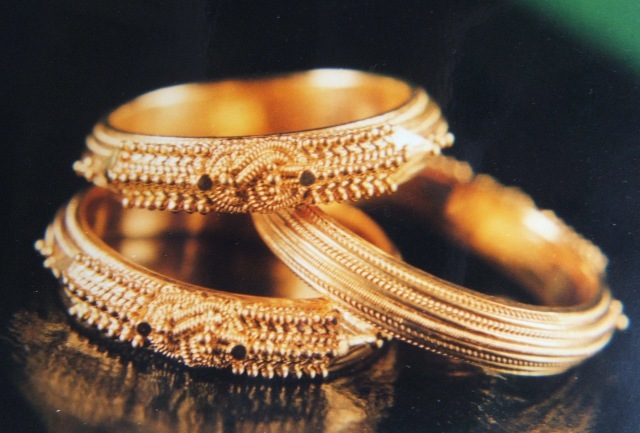
A symbol of purity, devotion, and ancestral reverence, the Payyannur Pavithra Mothiram (sacred ring) from Kerala represents one of India’s most spiritually significant traditional crafts. Rooted in Vedic rituals and centuries-old temple traditions, this handcrafted ring embodies both religious sanctity and the exceptional skill of Payyannur’s hereditary goldsmiths.
Description: Sacred ritual ring
Type: Handicraft / Ritual Ornament
Area: Payyannur, Kannur District, Kerala
Country: India
Registered: 2009–10 (Geographical Indication under Handicrafts category)
Material: Gold (22 ct), Silver, or Darbha (Kusha grass)
History and Origin
The Payyannur Pavithra Mothiram traces its origin to the Payyannur Subramanya Temple in Kannur district, Kerala. In ancient times, devotees performing sacred rites such as Pithru Bali (rituals honoring ancestors) were required to wear rings made of darbha (Kusha grass) — a symbol of purity and spiritual discipline.
Over time, for durability and permanence, temple priests and artisans began crafting the same sacred design in gold, preserving both its sanctity and symbolism. Thus was born the Payyannur Pavithra Mothiram — a ring that retains the spiritual purity of the original grass form but endures through the noble metal.
The craft flourished in Payyannur, where a few traditional goldsmith families (known as Vishwakarma Acharyas) continue to create these rings using age-old techniques and strict spiritual discipline. Each ring is believed to embody divine energy and is worn to maintain spiritual balance during rituals.
According to tradition, a craftsman spends nearly a full day making a single ring, observing complete ritual purity. To be recognized as a holy artisan, one must abstain from meat, alcohol, and impure conduct throughout life — a practice that enhances the sacredness of the craft.
Technique & Manufacturing Process
| Step | Process | Description |
|---|---|---|
| 1️⃣ | Design Formation | The artisan begins with a sketch representing the sacred knot motif and the triple-band structure symbolizing balance in life and spirituality. |
| 2️⃣ | Metal Preparation | High-purity gold or silver is melted and shaped into thin wires and strips, forming the base for the unique interwoven design. |
| 3️⃣ | Weaving & Knotting | The wires are hand-twisted and woven into a knot-like form — the defining feature of the Pavithra Mothiram, symbolizing unity and continuity. |
| 4️⃣ | Shaping & Finishing | The ring is carefully shaped to size and polished by hand, ensuring precision, symmetry, and a radiant finish. |
| 5️⃣ | Ritual Purification | Upon completion, the ring undergoes Pavithra Pooja (ritual consecration) to infuse spiritual sanctity before being worn. |
Each ring is a masterpiece of both artistry and devotion, taking nearly one full day to complete.
Cultural and Religious Significance
| Aspect | Details |
|---|---|
| Usage | Worn during Pithru Bali (ancestral worship), Upanayanam (sacred thread ceremony), and Vedic rituals. |
| Worn On | Right-hand ring finger, as per traditional scriptures. |
| Symbolism | The knot-shaped design represents the intertwining of spiritual energies and the eternal connection between humans and the divine. |
| Material Meaning | Gold represents immortality and divinity; Darbha grass signifies purity and simplicity; Silver symbolizes clarity and peace. |
The Pavithra Ring is not ordinary jewellery — it is a sacred object of faith. It is believed to channel divine energy, purify the mind, and protect the wearer from negative influences.
Manufacture & Export
| Segment | Details |
|---|---|
| Production Hub | Payyannur, Kannur District, Kerala — home to traditional goldsmith families preserving the craft for generations. |
| Domestic Market | Popular among devotees, priests, and spiritual practitioners across South India for rituals and auspicious ceremonies. |
| Export Market | Increasing global demand from Indian diaspora communities in the USA, UAE, Singapore, and the UK for religious use. |
| Government Support | Recognized under the Geographical Indication (GI) scheme for Handicrafts (2009–10); supported by Kerala Handicrafts Development Corporation and Sargaalaya Craft Village. |
| Authenticity Measures | Each authentic ring bears the hallmark of Payyannur’s craftsmanship, ensuring cultural and spiritual integrity. |
Legacy and Preservation
The making of the Payyannur Pavithra Mothiram is more than a craft — it is a sacred samskara (spiritual discipline). The artisans who create it live by strict vows of purity, making every ring an offering of devotion.
While machine-made imitations exist, the true Pavithra Mothiram of Payyannur stands apart in design, ritual sanctity, and craftsmanship. Its GI registration protects this age-old tradition and ensures due recognition for the artisans who dedicate their lives to this divine craft.
Today, the ring continues to bridge faith and artistry — connecting modern devotees to ancient Vedic practices.
Conclusion
The Payyannur Pavithra Mothiram is not just an ornament; it is a living expression of Kerala’s sacred heritage. Born from temple rituals and sustained by generations of devout artisans, it symbolizes purity, protection, and the eternal bond between the mortal and the divine.