Which Company Owns Parachute Coconut Oil? The Complete Story of Marico's Blue Bottle Brand
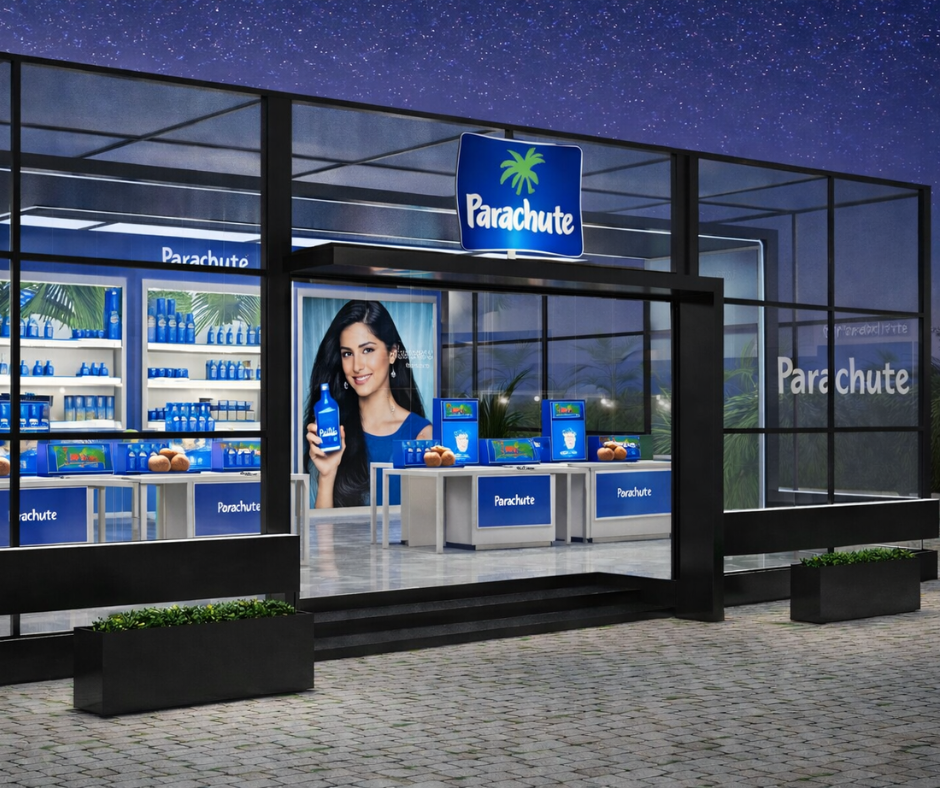
Walk into any kirana shop, pharmacy, or supermarket in India and you will almost certainly spot that unmistakable blue bottle. Parachute Coconut Oil has been a fixture in Indian homes for over five decades. But one question people keep searching for is simple: which company makes Parachute Coconut Oil?
The short answer — Parachute is a product of Marico Limited, an Indian FMCG company headquartered in Mumbai, built by entrepreneur Harsh Mariwala. Here is the full story.
Quick Answer
Parent Company | Marico Limited |
Founder | Harsh Mariwala |
Incorporated | 1988 (as Marico Foods Limited) |
Headquarters | Mumbai, Maharashtra |
India Market Share | ~60–63% of branded coconut oil |
Listed On | BSE & NSE (ticker: MARICO) |
Global Presence | 25+ countries |
Marico Limited: The Company Behind the Blue Bottle
Marico Limited is a publicly listed Indian FMCG company. Parachute is its flagship brand — the one that gave Marico its national scale, distribution muscle, and consumer trust. Everything else Marico built came after Parachute proved the model.
Today Marico’s portfolio also includes Saffola (healthy cooking oils), Livon (hair serums), Set Wet (male grooming), and Beardo (men’s grooming). In FY25, Marico reported revenues of approximately USD 1.3 billion, with a market capitalisation of around ₹68,000 crore.
But the company started as something far more humble.
From a Spice Trading Family to a ₹68,000 Crore Empire
The origins of Parachute trace back to 1862 — not a boardroom, but the commodity lanes of Masjid Bunder in Mumbai. Harsh Mariwala’s great-great-grandfather, Kanchi Morarji, migrated from Kutch, Gujarat and started a spice commission agency trading between Kerala and North India. His nephew Vallabhdas became so successful in pepper trading that merchants called him “Mariwala” — from Mari, the Gujarati word for pepper. The surname stuck.
By 1948 the family had set up Bombay Oil Industries, processing and selling coconut oil wholesale in 15-litre tin cans to business buyers. No brand, no blue bottle — just bulk commodity.
That changed when a 20-year-old Harsh Mariwala joined the business in 1971 after graduating from Sydenham College. His question was simple but nobody in the family had asked it: why are we selling this to businesses when millions of Indian households use coconut oil every single day?
By 1974 he had built Parachute into a consumer brand with its own distribution network and small retail packs.
The Blue Bottle That Retailers Refused to Stock
The packaging decision that made Parachute iconic almost never happened.
In the early 1980s every coconut oil brand in India sold in tin containers. Harsh wanted to switch to plastic — cheaper to produce, easier to pour, more visible on shelves. Market research came back with a unanimous no. Years earlier, another brand had tried square plastic bottles. They leaked. The oil attracted rats into shops. Retailers remembered it vividly and refused to touch plastic again.
Most founders would have moved on. Harsh believed the problem was poor execution, not the concept. His team designed leak-proof round bottles with secure caps and invested in better mould technology to eliminate any leaking.
The relaunch was an immediate success. The round blue bottle became the category standard — so iconic that most people can picture it before they even recall the brand name.
1990: The Breakaway That Built Marico
Through the 1980s Parachute kept growing, but it was still part of the Mariwala family’s Bombay Oil Industries. Harsh wanted to build a professionally run FMCG company — a structure the family commodity business couldn’t support.
In 1990 he separated the consumer business entirely, incorporating Marico Foods Limited as a standalone company. Around 200 employees left Bombay Oil Industries to join him — a clear signal of confidence in the new venture.
What followed was rapid and systematic:
- 1992 — HQ moves to Bandra, Mumbai
- 1994 — First international office opens in Dubai
- 1996 — Marico lists on BSE and NSE
- 1999 — First overseas plant opens in Bangladesh, where Parachute eventually captures ~70% market share
- 2006 — Nihar brand acquired from Unilever
- 2024 — Market cap reaches ₹68,000 crore
Market Share and Manufacturing
Parachute holds approximately 60–63% of India’s branded coconut oil market — meaning nearly 2 in 3 households buying branded coconut oil are buying Parachute. In value-added hair oils, Marico holds around 27% market share through the Parachute Advansed range.
The brand is manufactured at 8 plants across India: Puducherry, Perundurai (Tamil Nadu), Kanjikode (Kerala), Jalgaon, Paldhi (Maharashtra), Dehradun, Baddi, and Paonta Sahib (Himachal Pradesh). The South India concentration reflects the geography of coconut farming — manufacturing close to Kerala and Tamil Nadu’s coconut belt keeps costs low and quality consistent.
Internationally, Parachute is present in 25+ countries across South Asia, the Middle East, and Africa. Bangladesh is Marico’s largest international market, where the brand has become so dominant it is essentially synonymous with coconut oil.
Check our other blogs also on Vatika Hair Oil and Bajaj Almond Oil.
Yes — completely. Marico Limited is an Indian company, founded by an Indian entrepreneur, incorporated and headquartered in Mumbai, and listed on Indian stock exchanges. It has never been owned by or merged with a foreign multinational.
Unlike brands such as Nihar — which Marico acquired from Unilever — Parachute was built entirely within India, tracing its roots to a Gujarati family’s spice trading business from the 1860s.
FAQs
Which company owns Parachute Coconut Oil?
Parachute Coconut Oil is owned by Marico Limited, a publicly listed Indian FMCG company headquartered in Mumbai and founded by Harsh Mariwala.
Who is the manufacturer of Parachute Coconut Oil?
Marico Limited manufactures Parachute at 8 plants across India including facilities in Puducherry, Kerala, Tamil Nadu, Maharashtra, and Himachal Pradesh.
What is Parachute's market share in India?
Parachute holds approximately 60–63% of India’s branded coconut oil market as of 2024 — the largest share of any single brand in the category.
What did the old Parachute bottle look like?
Originally, Parachute coconut oil was sold in 15-litre tin cans in bulk to businesses. The iconic round blue plastic bottle for consumers was introduced in the early 1980s, after Marico solved the leaking problem that had made retailers refuse to stock plastic bottles previously.
Is Parachute the same company as Saffola?
Yes. Both Parachute and Saffola are brands under Marico Limited. Parachute covers coconut oil and hair care; Saffola covers healthy cooking oils and packaged foods.
Is Parachute Coconut Oil good for cooking?
The original Parachute Coconut Oil is edible-grade and widely used for cooking in South Indian households — particularly in Kerala and coastal Karnataka where coconut oil is a staple cooking medium. It is also commonly used for hair oiling, baby massage, and skincare.