Muga Silk – Timeless Golden Legacy of Assam
Muga Silk is Assam’s most iconic and culturally treasured handloom heritage, celebrated worldwide for its natural golden-yellow sheen, exceptional durability, and regal elegance. Deeply rooted in Assam’s ancient weaving traditions, this rare wild silk symbolizes prosperity, purity, and cultural pride. Crafted using indigenous silkworm species and traditional handloom techniques, Muga silk reflects India’s finest artisanal excellence and sustainable craftsmanship — truly Proudly Made in India.
Basic Overview
| Field | Details |
|---|---|
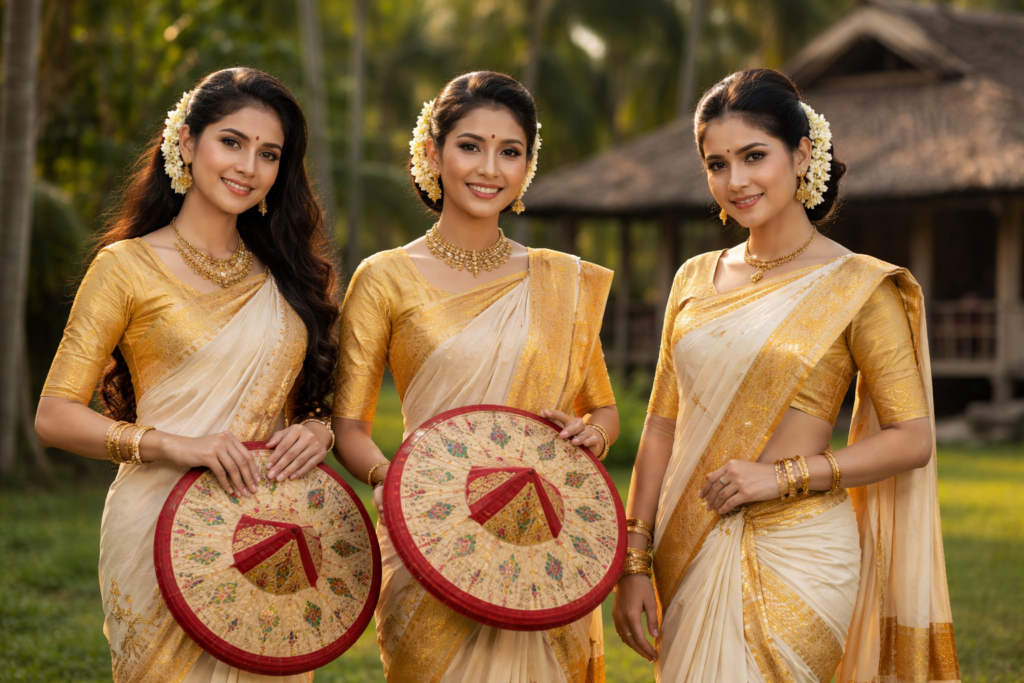
| Traditional Visual | Muga Silk Mekhala Chador worn by Assamese women with traditional Jaapi |
| Alternative Names | Golden Silk of Assam |
| Craft Type | Traditional Handloom Weaving |
| Area | Sualkuchi, Jorhat, Dibrugarh, Kamrup – Assam |
| Country | India |
| GI Registration | 2007 |
| Raw Material | Wild Silk (Antheraea assamensis silkworm) |
| Registered Logo | Handloom Mark, India Handloom Brand |
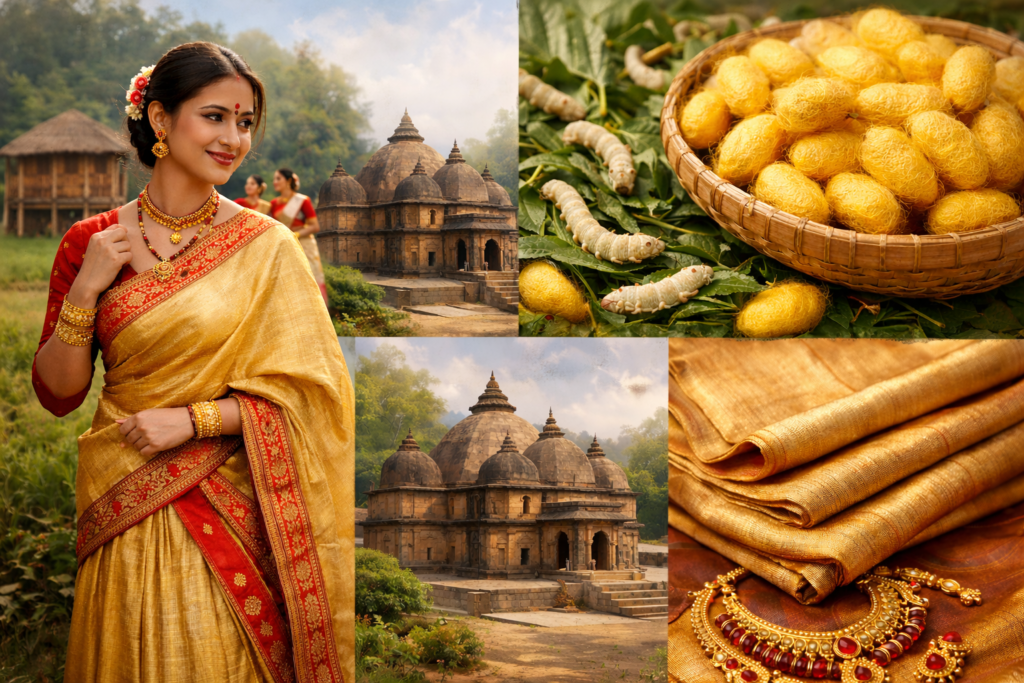
Muga Silk – Tracing Its Origins & Cultural Legacy
The tradition of Muga silk weaving in Assam dates back over 2,000 years, deeply influenced by royal patronage, temple rituals, and indigenous tribal culture. Ancient Assamese kingdoms, especially the Ahom dynasty, patronized Muga silk for royal garments, ceremonial attire, and sacred offerings.
Traditionally woven into the Mekhala Chador, Assam’s iconic women’s attire, Muga silk continues to hold immense cultural importance. It is worn during Bihu festivals, weddings, religious ceremonies, and important social occasions, symbolizing prestige, purity, and prosperity.
Global Appeal & Market Recognition
Highly prized for natural golden glow & royal appeal
Strong domestic demand across Assam & Northeast India
Export presence in USA, UK, Europe, Japan & Southeast Asia
Recognized as Assam’s cultural textile identity
Preferred by luxury handloom & ethical fashion brands
Celebrated for eco-friendly wild silk production
Exceptional Craftsmanship & Artistic Features
Natural Golden Sheen
Unique golden-yellow color that deepens with every wash.
Wild Silk Origin
Derived from rare silkworms reared on Som & Soalu trees.
Superior Stregth & Longevity
Stronger and more durable than most silk varieties.
Handwoven Excellence
Created using traditional throw-shuttle handlooms.
Minimal Chemical Processing
Maintains purity and eco-sustainability.
Fine Natural Texture
Soft, breathable, and skin-friendly fabric.
Traditional Motifs
Floral vines, peacock forms, temple borders, and geometric designs.
Time-Intensive Process
Each Mekhala Chador takes 15 days to 2 months, depending on intricacy.
Sustainable Craftsmanship
Promotes slow fashion, biodiversity conservation & rural livelihoods.
GI-Certified Authenticity
Protected heritage under India’s Geographical Indication Act.
Natural Golden Sheen
Unique golden-yellow color that deepens with every wash.
Wild Silk Origin
Derived from rare silkworms reared on Som & Soalu trees.Superior Strength & Longevity
Stronger and more durable than most silk varieties.Handwoven Excellence
Created using traditional throw-shuttle handlooms.Minimal Chemical Processing
Maintains purity and eco-sustainability.Fine Natural Texture
Soft, breathable, and skin-friendly fabric.Traditional Motifs
Floral vines, peacock forms, temple borders, and geometric designs.Time-Intensive Process
Each Mekhala Chador takes 15 days to 2 months, depending on intricacy.Sustainable Craftsmanship
Promotes slow fashion, biodiversity conservation & rural livelihoods.GI-Certified Authenticity
Protected heritage under India’s Geographical Indication Act.
Manufacturer & Top Brands
| Brand Name | Founded | Founder / Promoter | Business Type | Export Markets | Owner | Origin |
|---|---|---|---|---|---|---|
| Assam Silk Emporium | 1972 | Govt. of Assam | Handloom Promotion | Global | Govt. of Assam | Assam |
| Sualkuchi Handloom Cluster | 1900s | Weaver Community | Traditional Weaving | Global | Cooperative | Sualkuchi |
| Mekhela Sador House | 2000s | Local Artisans | Handloom Retail | India | Pvt | Assam |
| J.P. Silk Mills | 1985 | Jain Group | Silk Manufacturing | Global | Pvt Ltd | Assam |
| Aarong Assam | 2015 | Social Enterprise | Ethical Handloom | Europe, USA | Pvt | Assam |
Conclusion
Muga Silk – Timeless Golden Legacy of Assam magnificently represents Assam’s cultural grandeur, artisanal mastery, and sustainable textile heritage. With its unmatched golden glow, royal lineage, and eco-conscious production, Muga silk continues to mesmerize heritage lovers, designers, and global luxury markets. From Assam’s ancient royal courts to international fashion runways, Muga Silk stands proudly as a symbol of Indian textile brilliance — truly Proudly Made in India.