Moradabad Metal Craft- India's Brass Handicraft Capital
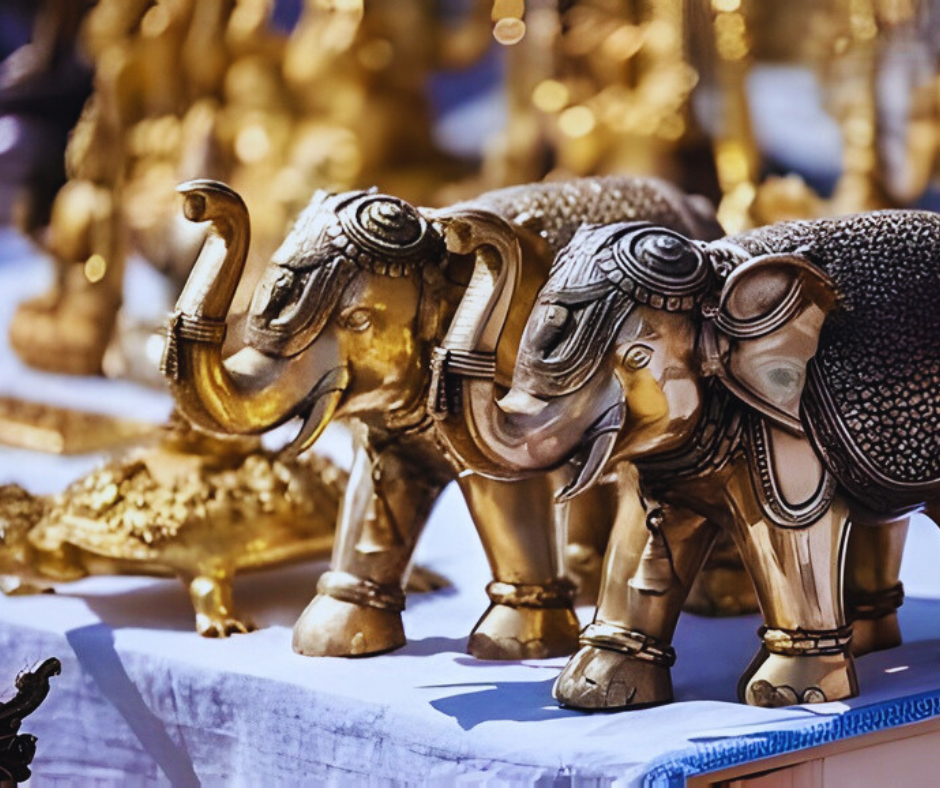
Step into the narrow lanes of Moradabad, and the air itself tells a story. The rhythmic clinking of hammers on brass, the warm glow of molten metal, the smell of freshly polished copper, this is everyday life in a city that has been making things with its hands for over four centuries. Known as Peetal Nagri, the Brass City Moradabad, is India’s most celebrated hub for handcrafted metalware, responsible for more than 40% of India’s total handicraft exports.
What began as artisans crafting under Mughal patronage has grown into a ₹15,000 crore industry employing hundreds of thousands of skilled workers and supplying handcrafted décor to homes, luxury hotels, and lifestyle retailers across the world.
Quick Overview of Moradabad Metal Craft
| Aspect | Details |
|---|---|
| Origin Year | 1625 A.D. (Historical roots of craft tradition) |
| Early Development | Early 19th Century – Local artisans began producing engraved brass and wood-metal items |
| Craft Focus | Brass décor, metal engravings, wood-metal fusion handicrafts |
| Growth Phase | Mid-20th Century – Emerged as a major export cluster |
| Key Markets | Europe, Middle East, United States |
| Core Strength | Intricate detailing, handmade artistry, heritage craftsmanship |
| Industry Role | Significant contributor to India’s handicraft exports and cultural identity |
How It All Began: Mughal Roots and British Export Push
Moradabad’s history is inseparable from the Mughal empire. In 1624–1625 CE, Mughal general Rustam Khan Dakhani captured the settlement of Chaupala on the banks of the Ramganga River and refounded it as a city. The name “Moradabad” was later given in honour of Prince Murad Bakhsh, the youngest son of Emperor Shah Jahan, a name the city carries to this day.
Under Mughal patronage, skilled artisans, many of whom migrated from Banaras, Lucknow, Agra, Jalesar, and Kashmir, settled in the city. They brought with them centuries of knowledge in metalwork, engraving, and enamelling, fusing Persian, Turkish, and Egyptian ornamental techniques with Indian craftsmanship. The Mughal elite’s preference for decorative copper-plated utensils and ornamental brassware created immediate demand, and Moradabad became the craft’s home.
The British colonial period gave the craft its first international platform. By the late 19th century, Moradabad’s lacquered brassware was captivating audiences at international exhibitions, including the Wembley Exhibition in London in 1924–25. British traders actively took the art to foreign markets, and the export story of Moradabad began in earnest.
One remarkable and little-known fact about Moradabad’s craft: the sand from the Ramganga River plays a direct role in the quality of its metal products. The sand is unusually fine and soft, making it the perfect natural binding material for the metal casting moulds that artisans have used for generations a geographical advantage no other city can replicate.
A City Born from Mughal Ambition
Moradabad’s story begins in 1600, when Murad Bakhsh, son of Mughal Emperor Shah Jahan, founded the city on the banks of the Ramganga River. The city’s name is a direct tribute to him: “Morad” + “abad” (city of Murad).
From the very beginning, the city attracted skilled craftsmen. Artisans who had mastered Persian and Central Asian metalworking techniques were drawn here under Mughal patronage. During Shah Jahan’s reign, brassware from Moradabad was already being exported to Iran, Turkey, and the Middle East a remarkable fact that puts the city’s global outlook in perspective. Even four centuries ago, Moradabad was building export relationships.
Other artisans from Banaras, Lucknow, Agra, and various parts of North India migrated here over time, adding layers of technique and tradition that made the craft increasingly rich. The Mughal elite’s preference for ornately decorated copper-plated utensils drove the kind of demand that sharpened artisan skills for generations.
One particularly distinctive feature of Moradabad Metal Craft has nothing to do with the artisans themselves it is the Ram Ganga River sand used in the metal casting process. This sand is so fine and soft that it acts as the ideal binding material for casting intricate shapes. It is part of what earned the craft its GI tag; this specific quality literally cannot be replicated anywhere else.
Moradabad Metal Craft Manufacturing Excellence
| Category | Details |
|---|---|
| Industry Establishment | Large-scale brass handicraft production began in the early 19th century |
| Major Expansion Period | 1950s–1990s (including addition of aluminium & iron products) |
| Total Manufacturing Units | Approx. 5,000 units including small workshops & large factories |
| Export Houses / Export Units | About 600 registered export units |
| Key Products | Brass, aluminium, iron, copper décor; lamps, vases, trays, candle stands, furniture accessories, wall décor |
| Major Export Markets | USA, UK, Germany, France, UAE, Canada, Australia |
| Share in India’s Handicraft Exports | More than 40% of India’s handicraft metalware exports |
| SEZ (Special Economic Zone) | Moradabad SEZ established in 2003, operational since 2007 |
| Employment | Over 2 lakh artisans and workers directly & indirectly employed |
| Official Information Sources | moradabad.nic.in, exporthubs.gov.in, origin-gi.com |
Moradabad Metal Craft – Price Range
| Category | Product Type | Estimated Price Range (₹) |
|---|---|---|
| Brass | Vases | 250 – 4,500 |
| Lamps / Lanterns | 300 – 6,500 | |
| Candle Stands | 150 – 2,500 | |
| Trays / Platters | 200 – 3,200 | |
| Figurines / Statues | 350 – 15,000 | |
| Aluminium | Bowls / Trays | 120 – 1,200 |
| Decorative Items | 150 – 2,000 | |
| Wall Décor | 250 – 3,000 | |
| Iron | Lanterns / Lamps | 150 – 1,500 |
| Furniture Accessories | 50 – 600 | |
| Wall Art / Frames | 200 – 2,500 | |
| Copper | Décor Items | 400 – 4,000 |
| Bowls / Trays | 300 – 2,500 | |
| Mixed Metal | Handles / Knobs | 40 – 500 |
| Candle Holders | 80 – 1,800 | |
| Table Décor | 200 – 3,000 |
Craftsmanship & Manufacturing Excellence
Moradabad’s metal craft manufacturing combines traditional artistry with modern production techniques:
Designing – Artisans create sketches, CAD designs, and prototypes tailored for domestic and international markets.
Casting & Moulding – Molten metal is poured into sand or die-cast molds to form the basic shapes.
Engraving & Hammering – Craftsmen engrave floral motifs, geometric patterns, and embossed textures entirely by hand.
Finishing & Polishing – Products are finished with antique brass, nickel plating, copper plating, powder coating, matte or glossy polish.
Quality Inspection – Each piece undergoes strict checks for weight, finish, durability, and oxidation resistance before export.
Global Export Powerhouse
Today, Moradabad stands as a leading metalware export hub, with over 600 export units and thousands of small workshops supplying décor to luxury brands and lifestyle retailers worldwide.
The Moradabad SEZ, established in 2003, provides modern warehousing, packaging, logistics support, and international buyer facilities, enhancing export efficiency.
Major Export Destinations:
United States
United Kingdom
Germany
France
UAE
Canada
Australia
Moradabad alone contributes to over 40% of India’s handicraft metalware exports, making it a pillar of the nation’s handicraft economy.
Why Moradabad Metal Craft Is Globally Valued?
Authentic handcrafted detailing
Generations of skilled artisans
Wide product range for décor, gifting, hospitality, and retail
Sustainable production using recyclable metals
Blend of traditional Indian art with modern global design trends
Challenges & Future Prospects
While challenges like rising raw material costs, international competition, and the need for technological upgrades exist, opportunities continue to grow:
Rising demand for handmade and sustainable décor
Government support through SEZs, MSME schemes, and export promotion councils
Increasing global preference for Indian craftsmanship
Moradabad Metal & Wood–Metal Craft – Top Brands / Organizations
| Brand / Organization | Known For | Type | Market Reach |
|---|---|---|---|
| Hind Handicrafts (Moradabad) | Brass décor, metal home accessories, giftware | Manufacturer / Export House | Global Export |
| Sambhav Handicrafts | Metal-wood fusion décor, bowls, trays, art pieces | Private Export Brand | International |
| A.S. Handicrafts | Designer brassware, lanterns, utility décor | Manufacturer / Exporter | USA, Europe, Middle East |
| RK Handicrafts Moradabad | Traditional engraved metal items & souvenirs | Manufacturer / Wholesaler | Domestic & Export |
| EPCH – Export Promotion Council for Handicrafts | Export promotion, trade fairs, artisan support | Government Organization | National & Global |
| Moradabad Handicrafts Development Society | Artisan training, cluster development, exhibitions | Industry / Society | National |
Conclusion
Wood & Moradabad Metal Craft represents a refined blend of traditional Indian artistry and modern design excellence. With skilled craftsmanship, premium materials, and heritage-driven techniques, these creations continue to deliver timeless décor value across domestic and international markets. This sector not only preserves cultural legacy but also strengthens India’s global identity in handcrafted luxury and artistic manufacturing.
FAQs
Q1. What is Moradabad Metal Craft?
Moradabad Metal Craft refers to the traditional handcrafted metalware produced in Moradabad, Uttar Pradesh. It covers brass, copper, aluminium, and iron products, including decorative items, lamps, vases, trays, religious artefacts, and utility goods, all made using hand-engraving, sand casting, enamelling, and polishing techniques.
Q2. Why is Moradabad called the Brass City of India?
Moradabad earned the title “Brass City” or “Peetal Nagri” because of its centuries-old tradition of handcrafting intricate brassware. It accounts for more than 40% of India’s total handicraft metalware exports and exports to over 80 countries worldwide.
Q3. When was Moradabad founded and by whom?
Moradabad was founded in 1600 by Murad Bakhsh, son of Mughal Emperor Shah Jahan. The city’s name is derived directly from the prince’s name.
Q4. Does Moradabad Metal Craft have a GI tag?
Yes. Moradabad Metal Craft received its Geographical Indication (GI) tag in 2013–14, officially recognising the craft’s unique origin and protecting the authenticity of its traditional techniques, including Ramganga river sand casting and hand-engraving (Nakashi).
Q5. How many workshops and export units operate in Moradabad?
Moradabad has over 25,000 metal craft industrial units ranging from small family workshops to large factories, and more than 600 registered export houses supplying buyers across 80+ countries.
Q6. What is the Moradabad SEZ?
The Moradabad Special Economic Zone (SEZ) is the only UP Government-developed SEZ in northern India. Set up in 2003 and operational since April 2007, it provides infrastructure, customs clearance, warehousing, and logistics support specifically for handicraft exporters, recording merchandise exports of ₹272 crore in FY 2022–23.
Q7. Which countries import Moradabad Metal Craft?
Moradabad exports to more than 80 countries. The largest buyers are the USA, UK, Germany, France, UAE, Canada, and Australia. The USA alone accounts for more than 42% of exports from the Moradabad SEZ.
Q8. What is the ODOP scheme for Moradabad?
Under Uttar Pradesh’s One District One Product (ODOP) programme, Moradabad’s metal craft has been officially identified as the district’s signature product. The scheme provides artisans with credit support, marketing assistance, skill development training, and packaging and branding help to boost both domestic and global sales.