Khurja Ceramic Pottery– Preserving India’s Rich Heritage
Khurja Ceramic Pottery is one of India’s most admired ceramic handicrafts, originating from Khurja town in Bulandshahr district of Uttar Pradesh. Recognized for its glossy finish, bright color palettes, and strong durability, Khurja proudly holds the reputation of being the “Ceramic City of India.” The craft harmoniously combines age-old pottery traditions with organized industrial production, making it popular in both domestic households and international décor markets.
Basic Overview
| Feature | Details |
|---|---|
| Craft Type | Handicraft / Ceramic Art |
| Location | Khurja, Bulandshahr, Uttar Pradesh, India |
| Raw Materials | Refined Clay blended with Quartz & Feldspar |
| GI Registration | Yes – 2008–2009 |
| Product Range | Blue Pottery, Glazed Ceramics, Terracotta Items, Decorative Wares, Tiles, Sanitary Ware |
| Identity Title | “Ceramic City of India” |
Origins & Historical Evolution of Khurja Ceramic Pottery
Khurja’s ceramic tradition carries centuries of layered history and folklore. Several narratives explain its origins:
Historical accounts suggest that skilled potters from Middle-Eastern regions settled in Khurja during early invasions, bringing advanced glazing knowledge.
Some traditions link the migration of pottery communities to the Mughal period, when decorative ceramics gained royal appreciation.
Many artisan families identify themselves as “Multani Kumhars,” hinting at ancestral roots connected to Multan’s glazing culture.
The organized industrial journey began in the early 1940s when the regional government initiated a pottery factory to modernize production. Although the first unit closed shortly afterward, the establishment of a Pottery Development Centre in the 1950s revived the sector by training artisans, introducing new kilns, and improving design standards. This institutional support gradually transformed Khurja into a nationally recognized ceramic hub.
Materials & Manufacturing Process
Primary Materials
Locally sourced clay enriched with quartz and feldspar for strength and smooth texture.
Shaping Techniques
Hand-molding, slip casting, and traditional wheel-throwing methods.
Decoration Style
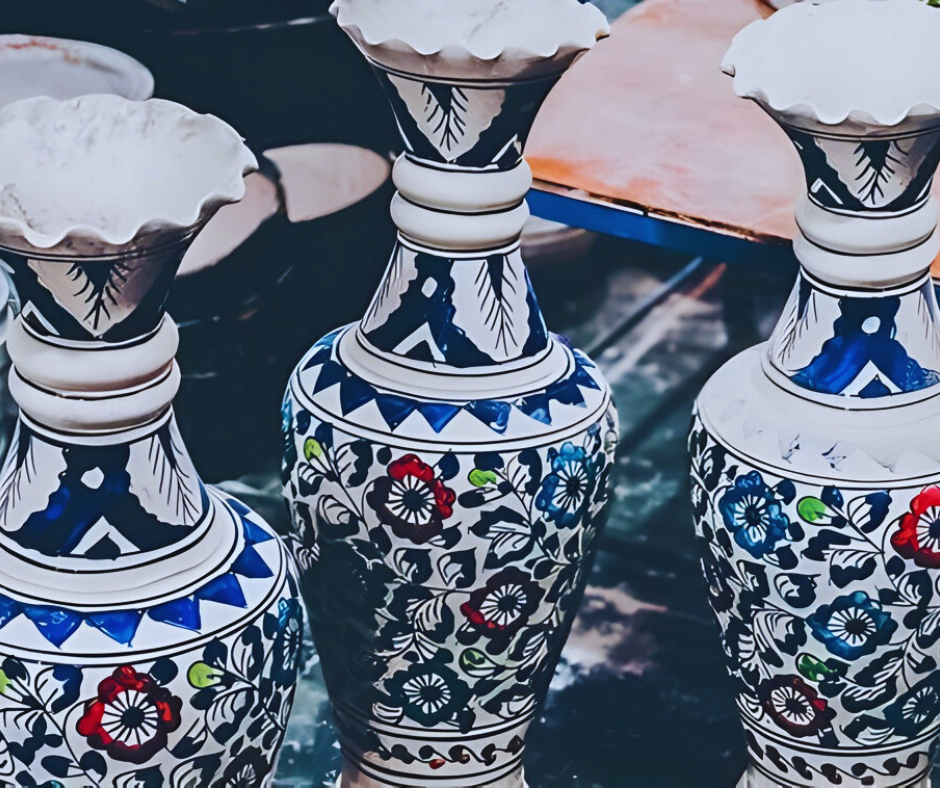
Hand-painted floral vines, geometric borders, and classic motifs using vibrant blues, greens, reds, and earthy browns.
Glazing & Firing
Application of glossy glaze followed by high-temperature kiln firing to ensure shine, water resistance, and durability.
Product Variety
Tableware, planters, vases, tiles, electrical insulators, sanitary fittings, and decorative showpieces.
Geographical Indication (GI) Recognition
Manufacturing Strength & Export Presence
| Brand / Organization | Location | Known For | Market Reach | Type |
|---|---|---|---|---|
| DNF Ceramics | Khurja, Uttar Pradesh | Export-quality ceramic tableware, mugs, plates, décor items | Global | Private Manufacturer / Exporter |
| Khurja Ceramic | Khurja, Uttar Pradesh | Wholesale pottery, planters, home & garden ceramics | Domestic & Export | Wholesale Manufacturer |
| Blue Stone Ceramics | Khurja, Uttar Pradesh | Handcrafted vases, pots, crockery, decorative ware | International | Private Ceramic Brand |
| RK Ceramic Khurja | Khurja, Uttar Pradesh | Utility ceramics, tiles, sanitary items | Domestic | Industrial Ceramic Unit |
| Ceramic India Khurja | Uttar Pradesh | Designer ceramic gifts, lifestyle décor products | Global | Online / Export Brand |
Cultural & Economic Significance
Acts as a major livelihood source for pottery families and factory workers
Strengthens India’s decorative and utility ceramic export sector
Promotes regional identity and heritage tourism
Encourages design innovation while preserving manual skills
GI certification enhances buyer confidence and product authenticity
Conclusion
Khurja Ceramic Pottery stands as a vibrant symbol of India’s enduring clay artistry. Blending heritage craftsmanship with evolving industrial methods, it continues to serve as both a cultural treasure and a competitive export industry. With sustained artisan training, design modernization, and GI protection, Khurja’s ceramic legacy remains resilient — ensuring that this colorful and functional art form continues to enrich homes and markets for generations to come.