Kanchipuram Silk Sarees: A Timeless Indian Heritage Woven in Tradition
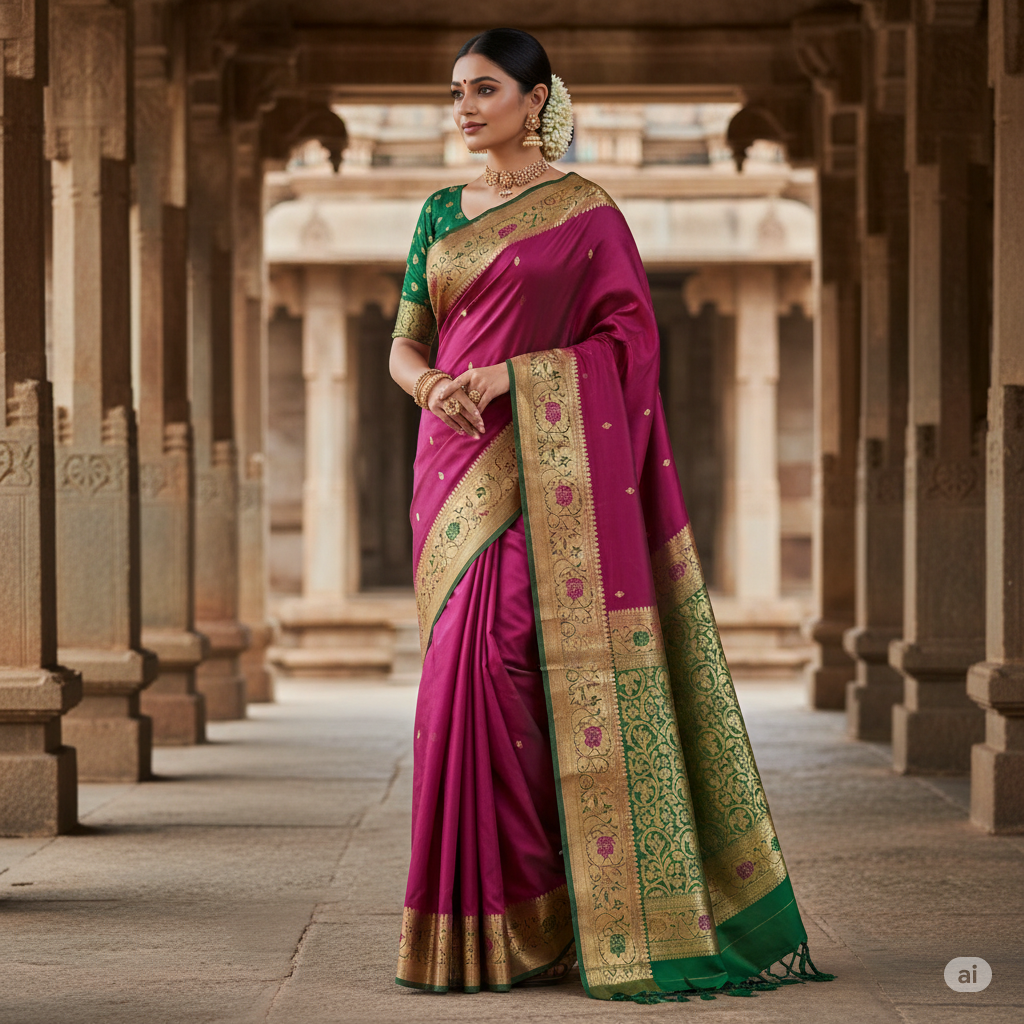
Kanchipuram silk sarees, often referred to as Kanjeevaram sarees, are more than just garments; they are a testament to India’s rich cultural tapestry and the ingenuity of its artisans. These sarees, renowned for their opulence and intricate craftsmanship, have graced the wardrobes of royalty and commoners alike for centuries. In this article, we delve into the history, making process, global appeal, and the legacy of a prominent brand that has brought these masterpieces to the world stage.
History and Cultural Significance
The origins of Kanchipuram silk sarees trace back to the 7th century during the reign of the Pallava dynasty. Legend has it that the weavers of Kanchipuram are descendants of Sage Markandeya, who, in ancient times, wove cloths from lotus fibers for deities. Over time, this art form flourished under royal patronage, particularly during the Chola and Vijayanagara empires, transforming Kanchipuram into a renowned center for silk weaving.
These sarees hold profound cultural significance in India. They are considered auspicious and are often worn during weddings, religious ceremonies, and festivals. The motifs and designs on the sarees, such as temple borders and checks, are symbolic, representing divine protection and prosperity. Each saree is not merely a piece of clothing but a narrative of tradition, devotion, and artistry.
Origin City/Region
Kanchipuram, a temple town in Tamil Nadu, is the birthplace of these illustrious silk sarees. Situated approximately 70 kilometers from Chennai, the town has been a hub for silk weaving for over a millennium. The artisans here, known as ‘Kanchipuram weavers,’ have inherited the craft through generations, preserving techniques that have remained largely unchanged. The town’s proximity to the silk-producing regions and its rich cultural heritage have made it the ideal locale for this art form to thrive.
Traditional Making Process
The creation of a Kanchipuram silk saree is an intricate process that demands skill, patience, and dedication. Here’s a step-by-step look at how these masterpieces are crafted:
1. Selection of Silk Threads
The journey begins with the selection of high-quality mulberry silk threads. Only the finest silk is chosen to ensure the saree’s durability and sheen. These threads are then cleaned and softened to prepare them for dyeing.
2. Dyeing
Artisans use natural dyes to achieve vibrant colors. The dyeing process is meticulous, with each color being applied separately to ensure uniformity and richness. Traditional colors like gold, red, and green are commonly used, each carrying its own symbolism.
3. Designing the Motifs
Designs are inspired by nature, temples, and mythology. Common motifs include peacocks, elephants, and temple towers. These designs are meticulously planned and transferred onto graph paper, serving as blueprints for the weavers.
4. Setting Up the Loom
The loom is prepared with a double warp technique, where two silk threads are twisted together to form a single strand. This method adds strength and durability to the saree. The borders and pallu (the decorative end piece) are woven separately and later interlocked with the body of the saree.
5. Weaving
Weaving is done on traditional pit looms. The process is labor-intensive, with each saree taking several days to complete. The weaver’s skill ensures that the motifs align perfectly, and the zari work (gold or silver thread) adds a touch of luxury.
6. Finishing Touches
Once woven, the saree undergoes a finishing process that includes washing and ironing to enhance its sheen and softness. The final product is a masterpiece that reflects the weaver’s dedication and artistry.
Global Appeal and Recognition
Kanchipuram silk sarees have transcended regional boundaries to gain international acclaim. Their luxurious feel, rich colors, and intricate handwoven craftsmanship make them a favorite among consumers seeking traditional yet fashionable options for special events.
The sarees’ global appeal is further bolstered by the implementation of Geographical Indication (GI) tagging. This certification safeguards the authenticity of Kanchipuram silk sarees, empowering weaving communities and fostering global recognition.
In recent years, India’s Kanchipuram silk exports have reached hundreds of millions of dollars, underscoring the saree’s status as a global luxury item.
Brand Spotlight: The Chennai Silks
One of the prominent brands that has brought Kanchipuram silk sarees to the global stage is The Chennai Silks.
Overview: The Chennai Silks is a leading textile retailer in South India, renowned for its vast collection of silk sarees, including the iconic Kanchipuram variety.
Founder: Thiru. A. Kulandaivel Mudaliar, who began his journey in the textile business in 1962.
Year Established: The first textile shop was started in Tirupur in 1991 as “Kumaran Silks,” later renamed “The Chennai Silks” in 2001.
Annual Turnover: While specific figures are not publicly available, the brand has expanded significantly, with multiple showrooms across Southern India.
Export Data: The Chennai Silks exports to international markets, including the United States and Europe, supplying to various global buyers.
In 2007, The Chennai Silks set a Guinness World Record for creating the most expensive silk saree, valued at approximately $100,021. This saree featured reproductions of 11 famous paintings by Indian artist Raja Ravi Varma and took around 4,760 hours to complete.
Proudly Made in India
Kanchipuram silk sarees epitomize the essence of Indian craftsmanship and heritage. They are a fusion of tradition, artistry, and cultural significance, making them a cherished possession for many. The meticulous hand-weaving process, the use of high-quality mulberry silk, and the rich symbolism embedded in each design make these sarees not just garments but stories woven in silk.
As global appreciation for sustainable and handcrafted luxury grows, Kanchipuram silk sarees stand out as a symbol of India’s rich textile heritage. Their journey from the loom to the global stage reflects the timeless appeal of traditional Indian craftsmanship.
Conclusion
Kanchipuram silk sarees are more than just attire; they are a celebration of India’s rich cultural heritage and the artistry of its weavers. From their ancient origins to their global acclaim, these sarees continue to captivate hearts worldwide, embodying the timeless elegance and craftsmanship of India.