Jaipuri Juttis: A Walk Through Tradition and Timeless Elegance
India is a land where every art form carries a story, and its traditional crafts are a testament to centuries of culture and creativity. Among these, the Jaipuri jutti holds a special place, representing the perfect blend of heritage, artistry, and timeless fashion. More than just footwear, these handcrafted shoes reflect the soul of Rajasthan, making them a must-have for both cultural enthusiasts and international buyers seeking authentic Indian products.
Introduction: Cultural Heritage of Jaipuri Juttis
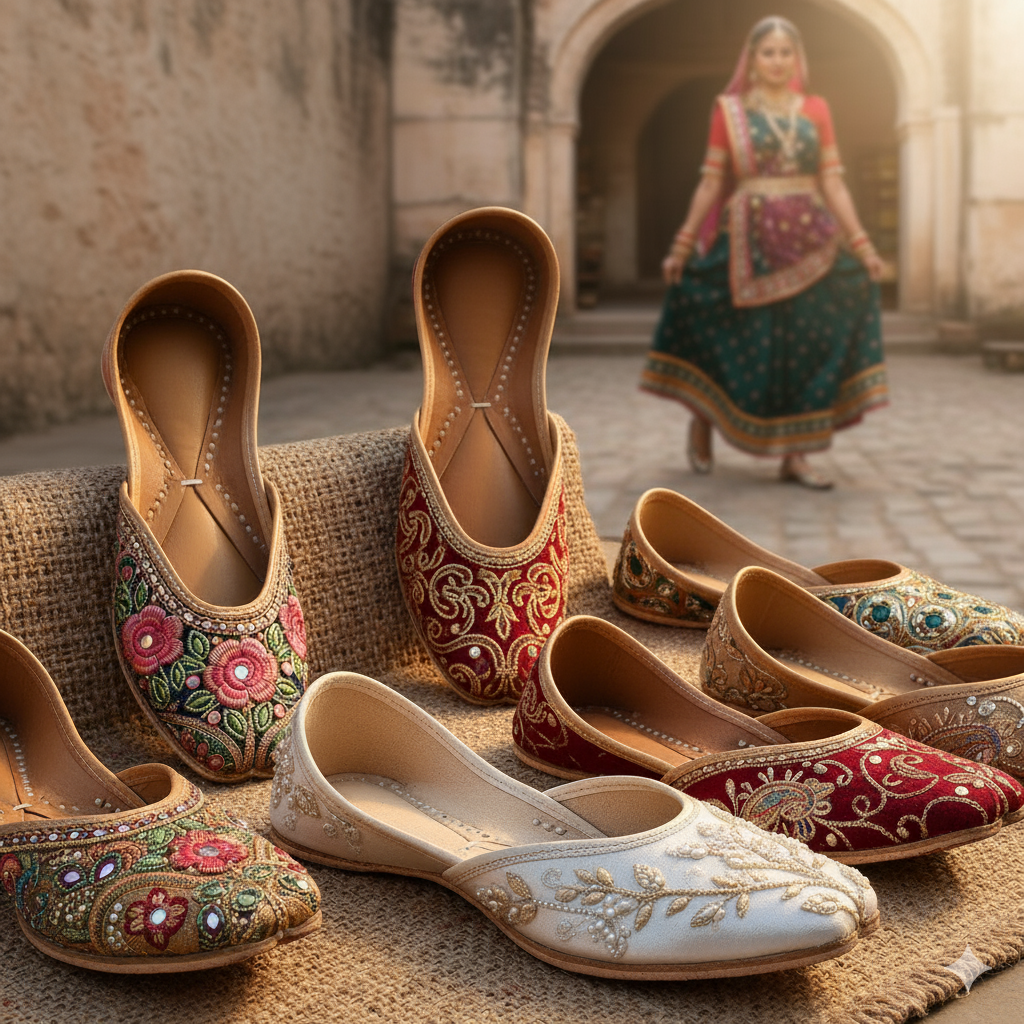
The Jaipuri jutti is a traditional flat shoe, admired for its vibrant colors, exquisite embroidery, and comfortable fit. Often crafted from leather, these slip-on shoes are a staple in Indian ethnic wear, worn during weddings, festivals, and everyday occasions. What sets them apart is the intricate handwork: floral motifs, geometric patterns, and embellishments using beads, mirrors, threads, and sometimes even precious metals.
Culturally, juttis are more than mere footwear. They symbolize celebration, heritage, and artisanal excellence. Wearing a pair connects one to a rich tradition, making them a piece of wearable art that carries centuries of Indian history into modern wardrobes.
History and Origin
The story of juttis traces back to the Mughal era, when royal patronage fueled the growth of various crafts. While several regions in India developed unique styles, Jaipur in Rajasthan became a key hub for this footwear.
Key highlights of their history:
The opulent designs reflect influences from Mughal courts and Rajput royalty.
Originally, juttis were exclusive to the elite, symbolizing wealth and status.
Over centuries, the craft became accessible to the wider public while retaining its artistry.
Jaipur artisans perfected the craft, passing down skills through generations, establishing the city as the heart of jutti-making.
Traditional Making Process
Creating a pair of Jaipuri juttis is a labor-intensive process that requires skill, precision, and creativity. Here’s a step-by-step look:
Materials Used:
High-quality leather (camel, buffalo, or goat) for durability and suppleness.
Luxurious fabrics such as silk, velvet, or brocade for the upper part.
Step-by-Step Process:
Cutting and Shaping: Leather is cut into precise patterns for the upper (Panna), sole (Talla), and back (Adda) of the jutti, then shaped carefully.
Embroidery and Embellishment: The upper is sent to skilled embroiderers. Common techniques include:
Zardozi – gold and silver thread embroidery
Dabka – fine wire embroidery
Gota patti – gold ribbon appliqué work
Mirror and bead embellishments
Joining and Finishing: Embroidered components are stitched to the leather lining and sole using strong cotton threads. Edges are finished, and juttis are polished to perfection.
Sustainability:
The process relies on natural materials and minimal machinery, supporting eco-friendly and traditional craftsmanship.
Global Appeal and Recognition
Jaipuri juttis have captivated audiences worldwide due to their:
Unique Handcraftsmanship: Each pair is individually made, offering exclusivity and authenticity.
Cultural Richness: They provide a tangible connection to India’s diverse heritage.
Versatility: Modern designs allow pairing with Western outfits for a stylish bohemian look.
Sustainable and Ethical Production: Purchasing juttis supports local artisan communities and eco-conscious practices.
Export Reach:
Popular in North America, Europe, the Middle East, and Southeast Asia.
Featured in boutiques and online stores that specialize in artisanal products.
Brand Spotlight: Needledust
One brand that has successfully brought Jaipuri juttis to a global audience is Needledust:
Overview: Redefines traditional footwear with contemporary designs.
Founder: Shirin Mann Sangha
Year Established: 2014
Market Presence: Recognized in luxury jutti segment internationally, with strong online sales and fashion magazine features.
Needledust demonstrates how traditional products, when blended with modern aesthetics, can appeal globally while retaining cultural authenticity.
Conclusion
Jaipuri juttis are more than shoes—they are living heritage, telling a story of artisanship, culture, and timeless style. Each pair reflects centuries of dedication, creativity, and skill passed down through generations.
For international buyers, these handcrafted shoes are not only a product but a piece of authentic Indian heritage, blending tradition with modern appeal. Representing “Proudly Made in India,” Jaipuri juttis continue to enchant the world, embodying elegance, artistry, and the enduring charm of Rajasthan’s rich craft legacy.