Instant Noodles for Fast & Convenient Meals
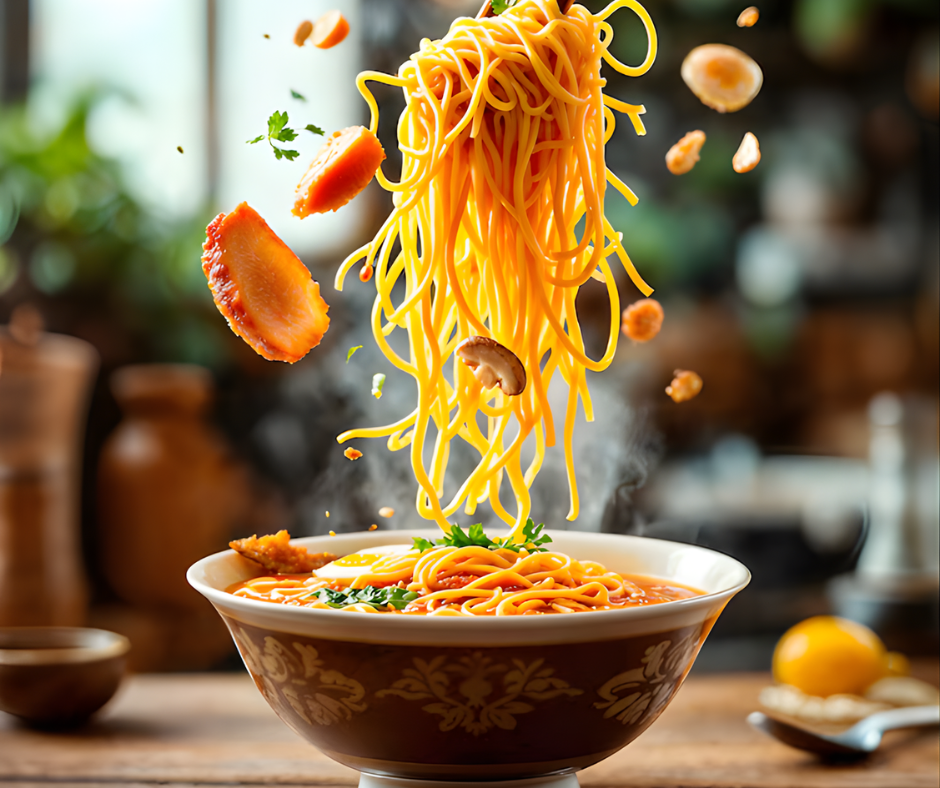
Rapid urbanisation, busy lifestyles and changing food‑preferences in India have propelled the instant/packaged noodle industry into a key segment of the food processing sector. This article focuses exclusively on the Indian context — manufacturing, domestic market, export activity and trends.
Origin & Identity (India context)
| Aspect | Details |
|---|---|
| Alternative Name | Instant Noodles / Packaged Noodles |
| Product Type | Convenience Food / Ready‑to‑cook Food |
| Main Ingredients | Pre‑cooked / Dried Noodle + Seasoning Packets or Sauces |
| Indian Market Entry | 1980s–90s (for example the brand Maggi entered in 1983) Tridge+2Financial Express+2 |
| Manufacturing Hubs (India) | States such as Gujarat, West Bengal, Maharashtra, Tamil Nadu, Haryana, Karnataka Verified Market Research+2magazinebbm.com+2 |
| Export Recognition | India exports instant noodle products (including cup noodles) to certain overseas markets Volza+1 |
Manufacturing in India
Indian noodle manufacturers operate multiple plants across the country, deploying modern automated lines. For example, a factory by CG Foods India Pvt Ltd (brand Wai Wai) in Bihar has capacity to produce 15 million packs per month. magazinebbm.com
Production processes typically include: mixing flour/dough, shaping noodles, pre‑cooking/steaming, dehydration (frying or air‑drying), seasoning/packing in hygienic facilities.
Manufacturers are investing in capacity expansions: e.g., Capital Foods Pvt Ltd announced a ₹200 crore expansion of its instant noodle production facility in Gujarat in January 2024. Verified Market Research
The domestic market is large and growing: The Indian instant noodles market was valued at ~ USD 1.59 billion in 2025 with forecasts to ~USD 2.98 billion by 2030 at ~13.4% CAGR. Mordor Intelligence
Another estimate: valued at USD 1.76 billion in 2023 and projected to USD 4.64 billion by 2030 at ~15% CAGR. BlueWeave Consulting
Export Activity of Indian Instant Noodles
Exports exist, though India is more dominant as a consumption‑market than as a major global exporter.
According to trade‑data (Oct 2023‑Sep 2024) India’s instant noodle export shipments were growing: ~2,821 export shipments in the period, growth rate ~18%. Volza
In the category “Instant Cup Noodles”, from May 2024‑Apr 2025 India exported to countries such as Malaysia (38% of shipments), Vietnam (25%) and Australia (13%). Volza
The export value numbers are less frequently published; reflecting that export volumes are smaller than domestic production/consumption.
Key Trends & Insights
- Domestic demand is driven by urbanisation, increasing number of working professionals, quick‑meal convenience, expanding distribution (even into Tier 2/3 cities). StatLedger+1
Flavour innovation: Traditional masala flavours dominate, but newer flavour formats (e.g., Korean‑spicy) are growing fastest. Mordor Intelligence+1
Packaging/format innovation: Single‑serve packets still dominant; cup/bowl formats are rising. Mordor Intelligence
Export opportunities: Indian manufacturers are leveraging domestic manufacturing strength to serve overseas niche markets (esp Indian diaspora, neighbouring countries). However, export scale is modest compared to domestic market.
Manufacturing investments: Capacity expansions and modern plants in states such as Gujarat, Bihar, etc. show serious investment.
Manufacturing & Export Hubs in India (Selected States)
| State | Notable Activity |
|---|---|
| Gujarat | New capacity expansions (e.g., Capital Foods). |
| Bihar | CG Foods plant manufacturing millions of packs monthly. magazinebbm.com |
| West Bengal & Eastern UP | Distribution and manufacturing activity targeting eastern markets. |
| Maharashtra & Tamil Nadu | Established manufacturing base and access to large domestic consumption. |
Conclusion
The Indian packaged/instant noodle sector is firmly established on a robust manufacturing base, supported by multiple modern plants, strong domestic demand and ongoing investment. While the domestic market remains the primary driver, exports of packaged noodles from India are steadily growing and offer meaningful opportunities for manufacturers who can meet international standards and differentiate through flavour, packaging and price.
For India to capture a larger export share, emphasis on export‑readiness, adherence to global food‑safety and packaging norms, targeting overseas markets with Indian flavours and building brand visibility will be key. As domestic consumption continues its upward trajectory, the export channel can act as a strategic growth lever for the Indian instant noodles industry.