Ikat Handloom Fabric – A Timeless Expression of Precision, Heritage & Elegance
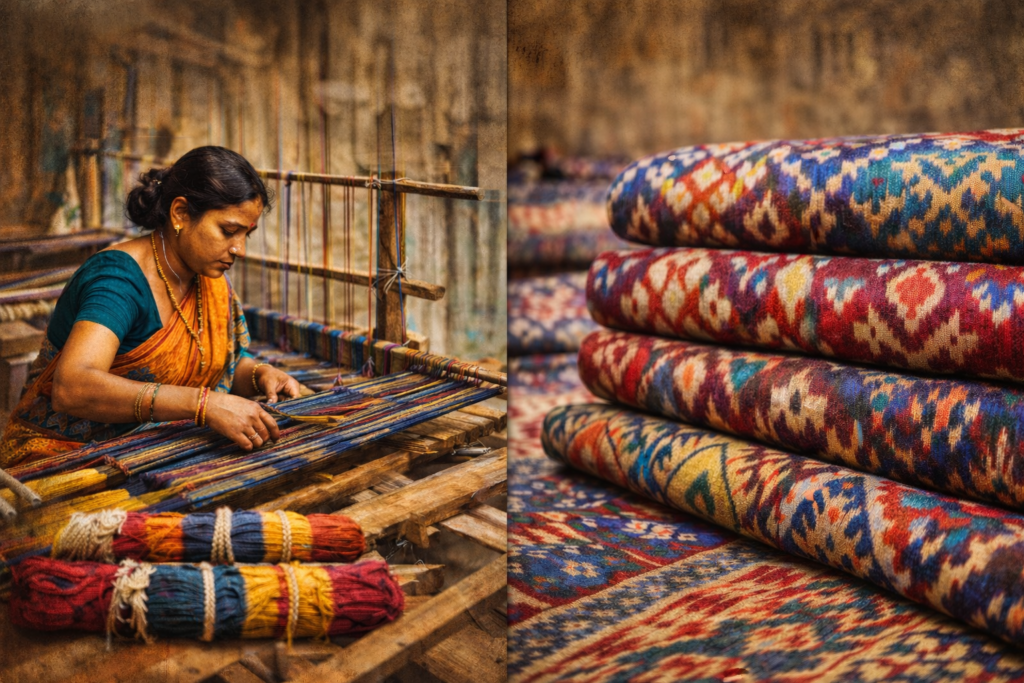
Ikat handloom fabric is among the most refined and visually captivating textile traditions of the world. Celebrated for its complex patterns, rich color blends, and exceptional craftsmanship, Ikat represents an advanced resist-dyeing and weaving technique that demands remarkable skill, patience, and artistic precision. Deeply embedded in India’s cultural heritage, Ikat continues to enjoy global admiration for its authenticity, beauty, and timeless sophistication.
Basic Overview
| Field | Details |
|---|---|
| Known Name | Ikat – Traditional weaving identity |
| Tie & Dye Handloom – International market reference | |
| Resist Dyed Fabric – Technical textile term | |
| Origin Period | Ancient India (5th Century onwards) |
| Region | Odisha, Telangana, Gujarat, Andhra Pradesh, India |
| Raw Material | Cotton, Silk, Wool, blended yarns |
| Weaving Technique | Pre-dyed yarn weaving (Resist-dye technique) |
| Artisan Community | Skilled traditional handloom weavers |
| Global Recognition | Exported worldwide as a premium handcrafted textile |
What is Ikat Handloom Fabric?
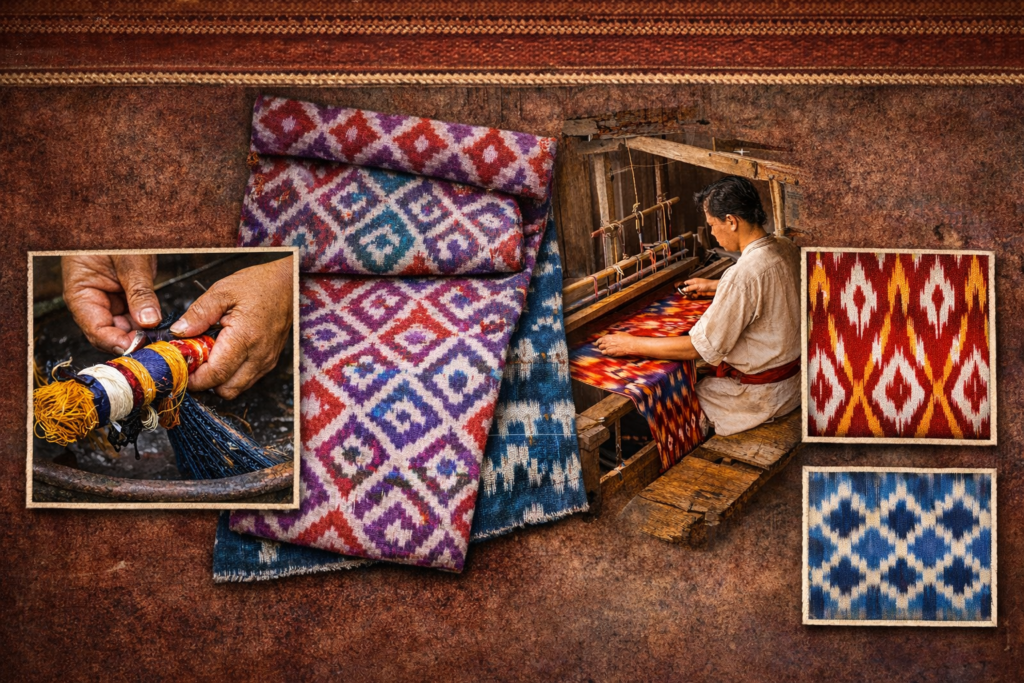
Ikat is a distinctive dyeing and weaving process in which the yarns are carefully dyed before the weaving begins, unlike conventional textile methods where dyeing is done after fabric formation. Specific sections of the warp threads, weft threads, or both are tightly bound and dyed following a planned design pattern. Once dyed, these yarns are meticulously aligned on the loom to form intricate motifs, resulting in the signature slightly blurred patterns that define authentic Ikat textiles.
Types of Ikat Fabric
Based on the yarn-dyeing technique, Ikat is broadly classified into three categories:
1. Single Ikat
In this method, either the warp or the weft yarns are resist-dyed prior to weaving. It is comparatively less complex and is widely practiced in regions such as Odisha, Telangana, and Gujarat.
2. Double Ikat
This is the most intricate form of Ikat, where both warp and weft yarns are dyed before weaving. The precision required in aligning both dyed yarn sets makes it exceptionally labor-intensive. Patola of Gujarat and Pochampally Ikat of Telangana are globally renowned examples of double Ikat craftsmanship.
3. Combined Ikat
A fusion of various Ikat techniques, combined Ikat allows for layered, elaborate, and highly artistic designs.
Key Features of Ikat Handloom Fabric
- Intricate Patterns: Distinctive geometric, floral, and abstract motifs
Vibrant Color Harmony: Rich, naturally inspired color combinations
Artisanal Craftsmanship: Entirely handcrafted using traditional looms
Soft Texture & Comfort: Lightweight, breathable, and season-friendly
Cultural Authenticity: Deep-rooted heritage reflected in every weave
Major Ikat Weaving Regions in India
Odisha (Sambalpuri Ikat): Known for traditional motifs, bold patterns, and vibrant borders
Telangana (Pochampally Ikat): Internationally acclaimed for intricate double Ikat designs
Gujarat (Patola): Famous for luxurious silk double Ikat textiles
Andhra Pradesh: Renowned for fine cotton and silk Ikat weaving traditions
Uses of Ikat Handloom Fabric
Why Ikat is Considered a Luxury Handloom Fabric
The artistic complexity, skilled craftsmanship, and time-intensive production process elevate Ikat to the status of a luxury textile. Each fabric undergoes careful planning, precise resist-dyeing, and meticulous hand weaving, often requiring weeks or even months to complete. The rarity of the technique and the high level of manual involvement make Ikat a symbol of exclusivity, authenticity, and refined elegance.
Sustainability & Eco-Friendly Value
Traditional Ikat weaving practices rely heavily on natural fibers, vegetable dyes, and manual processes, making it an environmentally responsible textile choice. By supporting Ikat handloom, consumers contribute to sustainable fashion, preservation of rural livelihoods, and protection of age-old artisan knowledge passed down through generations.
Manufacturer & Top Brands
| Brand Name | Founded | Founder / Promoter | Business Type | Export Markets | Owner | Origin |
|---|---|---|---|---|---|---|
| Sambalpuri Bastralaya | 1980 | Govt. of Odisha | Sambalpuri Ikat Handloom | USA, Europe, Japan | Govt. of Odisha | Odisha, India |
| Pochampally Handloom Park | 1976 | Weaver Cooperatives | Double Ikat Textiles | Europe, USA, UAE | Cooperative Society | Telangana, India |
| Patan Patola Heritage | 1940 | Salvi Family | Double Ikat Silk Patola | Europe, Japan, USA | Salvi Family | Gujarat, India |
| Boyanika | 1958 | Govt. of Odisha | Odisha Handloom & Ikat | Global | Govt. of Odisha | Odisha, India |
| Tantuja | 1974 | Govt. of Telangana | Handloom & Ikat Fabrics | Global | Govt. of Telangana | Telangana, India |
| Jaypore | 2012 | Adil Gauhar | Luxury Indian Handloom Textiles | Global | Adil Gauhar Group | India |
| GoCoop | 2012 | GK Sahu | Ethical Handloom Marketplace | Global | GoCoop Pvt. Ltd. | India |
| iTokri | 2012 | GK Sahu | Handmade Craft Textiles | Global | iTokri Crafts Pvt. Ltd. | India |
Conclusion
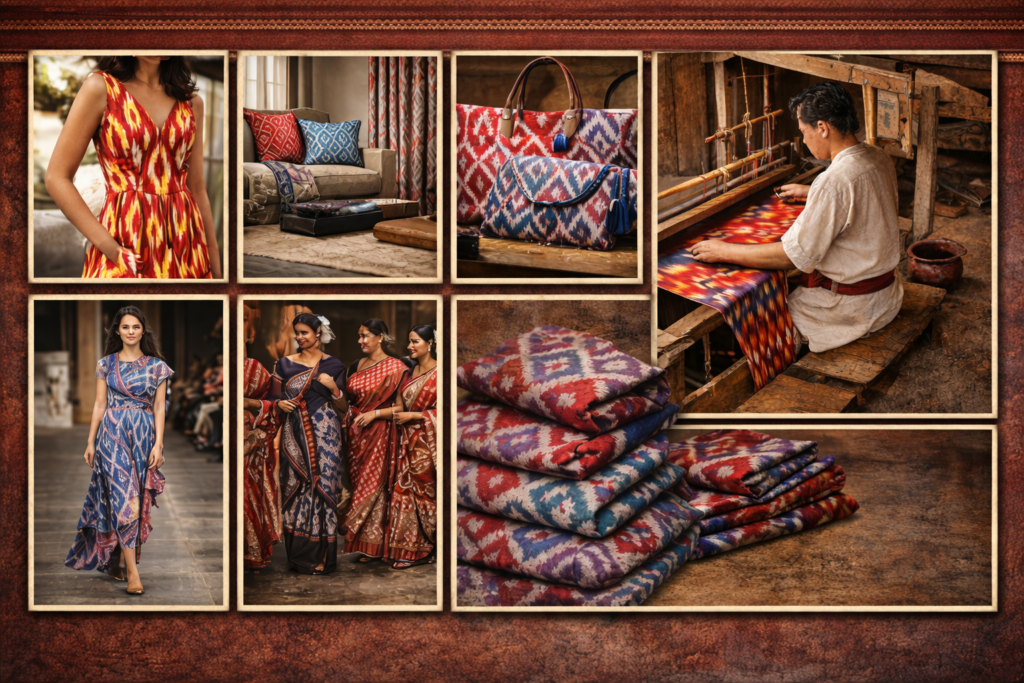
Ikat handloom fabric stands as a timeless celebration of India’s extraordinary textile heritage. Its captivating patterns, superior craftsmanship, and growing global appeal continue to position Ikat as a treasured fabric across cultures. Whether in traditional attire, modern fashion, or premium home décor, Ikat remains a powerful symbol of elegance, authenticity, and sustainable luxury in today’s world.