Goan Cashew Feni – Tradition, Aroma & the Soul of Goa
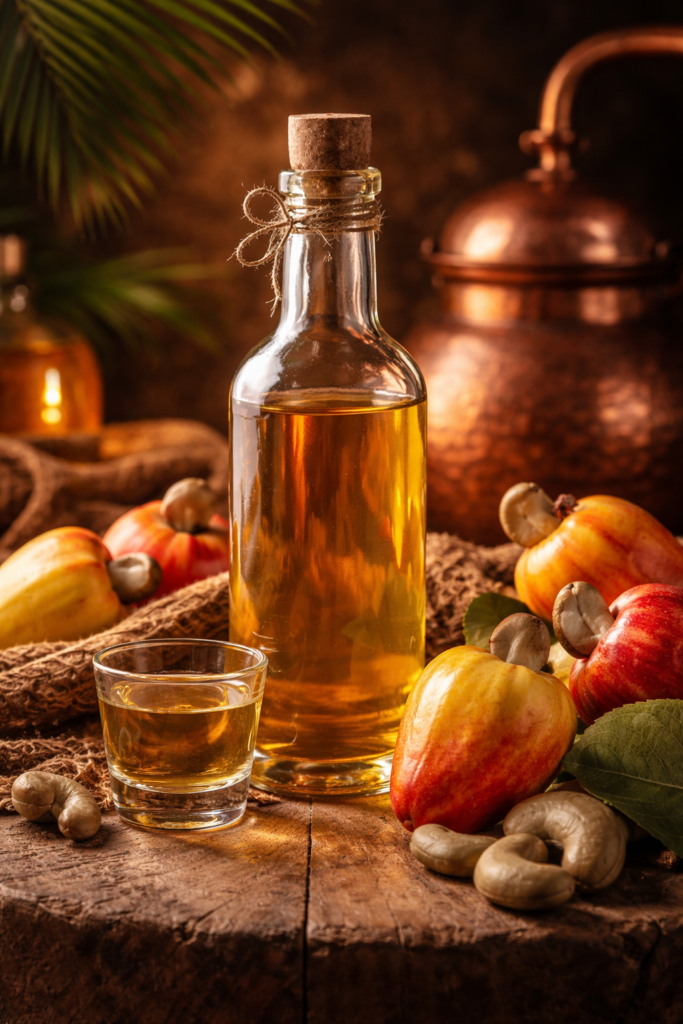
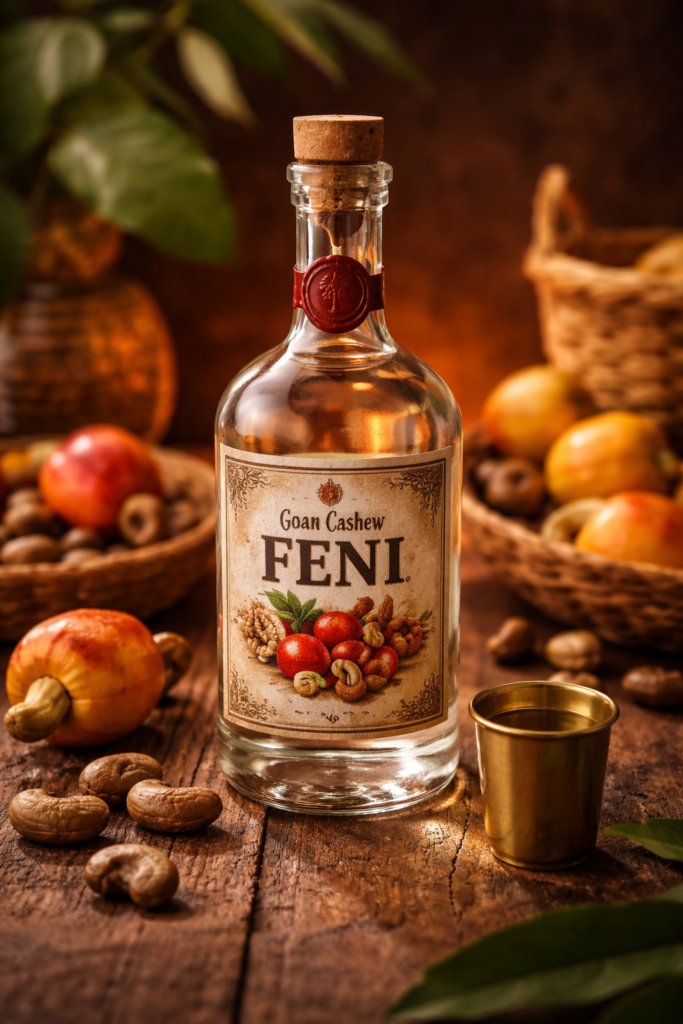
From the sun-kissed beaches and vibrant festivals of Goa emerges a drink that captures the very essence of its people — Goan Cashew Feni. More than just a beverage, Feni represents centuries of craftsmanship, local ingenuity, and the joyful spirit of India’s smallest state. Distilled from the juice of cashew apples, this traditional liquor holds a Geographical Indication (GI) tag, recognizing it as a unique ethnic product deeply rooted in Goan culture.
Celebrated in local feasts, ceremonies, and casual gatherings alike, Feni has transcended its humble origins to become a symbol of Goa’s identity and hospitality. Its distinct aroma, fruity notes, and artisanal production process make it a cultural ambassador of India’s coastal heritage, admired by connoisseurs across the globe.
Basic Overview
| Field | Details |
|---|---|
| Traditional Identity | Heritage Cashew Apple Distilled Spirit |
| Alternative Names | Feni, Cashew Feni, Goa Feni |
| Product Type | Traditional Alcoholic Beverage / Distilled Spirit |
| Artisan Community | Local Goan Distillers (Battkars) |
| Region | North & South Goa |
| Country | India |
| Primary Ingredient | Cashew Apple Juice |
| Flavor Profile | Fruity, Earthy, Strong Tropical Aroma |
| Alcohol Content | 40–45% (Approx.) |
| Distillation Tool | Copper Pot Still (Bhatti) |
| Cultural Role | Festive, Ceremonial & Social Drink |
| GI Status | Goa Cashew Feni – 2009 |
History & Cultural Legacy
The history of Goan Cashew Feni begins in the 16th century when Portuguese colonizers introduced the cashew tree to Goa from Brazil. Initially planted to prevent soil erosion, the cashew tree soon became central to Goan agriculture. Locals discovered that the fleshy cashew apple — often discarded elsewhere — could be naturally fermented and distilled into a strong aromatic spirit.
By the 18th century, Feni had become an essential part of Goan social and religious life. It was served at feasts, offered to guests as a sign of goodwill, and even used as a home remedy for minor ailments. Passed down through generations, the craft of Feni-making preserved its authenticity and traditional methods, turning it into a proud symbol of Goa’s fusion of Indian and Portuguese heritage.
Origin Region – The Soul of Goa
Cashew Feni is produced exclusively in Goa, especially in the districts of Bardez, Pernem, and Bicholim, where climate and soil create ideal conditions for cashew cultivation. The harvesting season from March to May marks the beginning of traditional distillation activities led by local artisans known as Battkars.
Traditional Making Technique
Harvesting – Naturally fallen ripe cashew apples are hand-collected.
Juice Extraction – Apples are crushed in a stone basin (colmbi) to produce sweet juice (neero).
Natural Fermentation – Juice ferments for 3–4 days using wild yeast without additives.
Distillation – Fermented liquid is distilled in copper pot stills (bhatti) through multiple stages producing urrack, cazulo, and finally feni.
Aging & Bottling – Some batches are aged in clay pots or wooden barrels for smoother taste.
Global Appeal & Recognition
Step 1: Harvesting the Cashew Apples
The cashew fruit, known as the cashew apple, is handpicked once it ripens and falls naturally from the tree.
Only the juiciest and most aromatic apples are selected to ensure a rich base for fermentation.
Step 2: Juicing the Cashew Apples
The fruit is hand-crushed in a traditional basin known as a colmbi to extract the sweet juice called neero.
The first extraction (neero) is often consumed as a refreshing drink, while subsequent pressings are collected for fermentation.
Step 3: Natural Fermentation
The extracted juice is transferred into large earthen or wooden vats and left to ferment naturally for 3–4 days.
No artificial yeast or additives are used; the local wild yeast in the air initiates the fermentation, lending Feni its characteristic earthy aroma.
Step 4: Distillation
The fermented liquid (todap) is distilled in a traditional copper pot still called a bhatti.
Distillation is done in two or three stages:
The first distillate, known as urrack, is light and mildly alcoholic.
The second distillation produces cazulo, a stronger version.
The final distillate yields Feni, a potent spirit with an alcohol content of around 40–45%.
Step 5: Aging and Bottling
Some producers age Feni in clay pots or wooden barrels to enhance its smoothness and complexity.
The result is a clear, fruity, and aromatic liquor that embodies the tropical soul of Goa.
This entire process is manual and eco-friendly, reflecting the sustainable ethos of traditional Indian craftsmanship.
Global Appeal and Recognition
Once a local delicacy, Goan Cashew Feni has now earned international acclaim for its authenticity and distinct flavor profile. Its GI tag (awarded in 2009) officially recognizes it as a unique Goan heritage product, safeguarding its identity from imitation.
Globally, Feni is appreciated for its:
Artisanal Craftsmanship: Each bottle represents a handcrafted spirit, untouched by industrial mass production.
Exotic Flavor: The fruity, tropical aroma appeals to spirit enthusiasts who seek bold and unconventional flavors.
Cultural Heritage: As a traditional Indian liquor with a GI tag, Feni represents a fusion of culture, agriculture, and craftsmanship.
In recent years, Feni has gained visibility in premium bars and spirit festivals across Europe, Japan, and the United States, where mixologists use it in creative cocktails. Exports, though still limited due to its niche appeal, are growing steadily as global consumers develop a taste for authentic, heritage-driven beverages.
Brand Spotlight: Cazulo Premium Feni
Overview
Among the few brands that have brought Goan Feni onto the international stage, Cazulo Premium Feni stands out as a pioneer. Founded by Mac Vaz, Cazulo has redefined how the world perceives this traditional spirit — transforming it from a rustic local drink into a premium handcrafted beverage worthy of global recognition.
Founder and Vision
Founder: Mac Vaz
Year Established: 2013
Headquarters: South Goa, India
Vaz, a Goan entrepreneur and Feni enthusiast, envisioned elevating Feni’s image while preserving its authenticity. His brand focuses on small-batch production, sustainable sourcing, and modern packaging that appeals to international buyers.
Achievements and Global Reach
Cazulo is the first Feni brand to be featured at international spirit festivals, including in London and Singapore.
It exports to select markets such as the UK, Japan, and the Middle East.
The brand has collaborated with luxury resorts and craft cocktail bars worldwide to promote Feni as a premium Indian spirit.
While its annual turnover is not publicly disclosed, Cazulo represents a major share of Goa’s premium Feni exports and has significantly enhanced the product’s global image.
Through Cazulo’s efforts, Feni has gained a modern identity — refined, respected, and proudly Goan.
Brand Spotlight – Cazulo Premium Feni
| Cluster / Institution | Founded | Promoter | Product Type | Market Reach | Ownership | Origin |
|---|---|---|---|---|---|---|
| Traditional Battkar Distiller Families | Ancient | Hereditary Distillers | Handmade Cashew Feni | Local / Regional | Community-based | Goa |
| Goa Village Bhatti Clusters | Traditional | Local Artisan Communities | Artisanal Distilled Feni | National | Community | Goa |
| Cazulo Premium Feni | 2013 | Mac Vaz | Premium Small-Batch Cashew Feni | International | Private | South Goa |
| Government-Supported Distillery Units | 1980s–90s | Govt. Bodies | Heritage Spirit Promotion | National | Government | India |
| Craft Beverage Startups & NGOs | 2000s | Private / NGOs | Cultural Spirit Preservation | Global Niche | Private / Non-Profit | India |
Conclusion
Goan Cashew Feni is not merely an alcoholic drink — it is a liquid expression of India’s coastal heritage, artisanal wisdom, and communal joy. From humble orchard beginnings to international appreciation, Feni carries the fragrance of cashew groves, the warmth of Goan hospitality, and the pride of traditional knowledge passed through centuries.