Dabur Red Toothpaste- Is It Good? Benefits, Ingredients & Honest Review
Dabur Red Toothpaste disrupted India’s oral care market in 2001. It arrived bold, bright red in colour, sharp in flavour, and rooted in Ayurvedic science. Moreover, in a market dominated by chemical-based white pastes, it stood apart from day one.
Dabur had set a conservative first-year target of just ₹5 crore. However, the brand clocked ₹15 crore in its very first year. By 2020, it had grown into a ₹1,000 crore powerhouse one of the most remarkable success stories in Indian FMCG history.
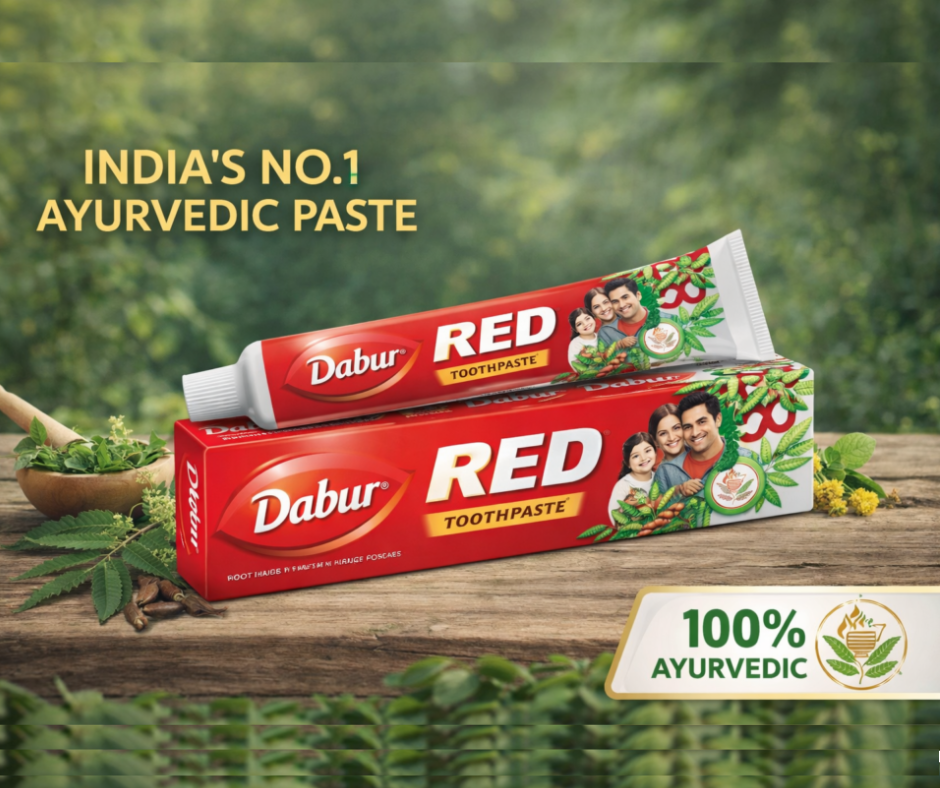
Today, Dabur Red Toothpaste holds the title of India’s No. 1 Ayurvedic, fluoride-free toothpaste. It serves millions of consumers across urban and rural India alike.
Brand Overview at a Glance
| Field | Details |
|---|---|
| Brand Name | Dabur Red Toothpaste |
| Launched | 2001 |
| Parent Company | Dabur India Limited |
| Dabur Founded | 1884 |
| Headquarters | Ghaziabad, Uttar Pradesh |
| Product Type | Ayurvedic, Fluoride-Free Toothpaste |
| Key Ingredients | Laung, Pudina, Tomar, Sunthi + 9 more |
| Dental Problems Addressed | 7 |
| Revenue Milestone | ₹1,000 crore by 2020 |
| Market Presence | India + 100+ countries |
The Dabur Legacy Behind the Brand
To understand Dabur Red Toothpaste, you must first understand Dabur India. Dr. S.K. Burman founded the company in 1884 in Kolkata. Since then, it has grown as a trusted Ayurvedic brand.
Dabur’s oral care journey started long before Dabur Red Toothpaste arrived. In 1930, Dabur launched Lal Dant Manjan an Ayurvedic red tooth powder. As a result, it quickly earned a loyal following, especially in rural India.
By the late 1990s, toothpaste was replacing toothpowder across the country. Colgate dominated the paste market. At that time, a global consultancy firm warned Dabur plainly: “Your rival will bleed you to death.” However, Dabur responded with something unexpected.
How Dabur Turned Powder Into Paste
Rather than launching a standard white toothpaste, Dabur converted its beloved red powder into a red-coloured paste. Interestingly, the launch message was simple and direct: “Aapka manjan ab paste mein aaya” your powder now comes in paste form.
This message spoke directly to millions of loyal Lal Dant Manjan users. Therefore, it helped users transition easily to toothpaste while retaining Ayurvedic benefits. Dabur Red Toothpaste gave them exactly that.
The brand tripled its internal sales target in year one. Consequently, that achievement set the tone for everything that followed.
Key Milestones in Dabur Red's Growth Journey
Dabur Red Toothpaste grew steadily over two decades. Here is a quick look at its journey:
- 1884 — Dabur India founded by Dr. S.K. Burman in Kolkata
- 1930 — Dabur Lal Dant Manjan launched; oral care journey begins
- 2001 — Dabur Red Toothpaste launched
- 2007 — Brand crosses ₹100 crore
- 2009–10 — 17.4% growth recorded
- 2010–11 — 3.7% market share achieved
- 2013–14 — Market share rises to 4.6%
- 2017 — Dabur Red Gel launched
- 2020 — ₹1,000 crore milestone achieved
What’s Inside Dabur Red Toothpaste
Dabur Red Toothpaste is clinically tested. It claims to protect against seven dental problems. These include:
- Toothache
- Pyria (gum disease)
- Cavities
- Bad breath
- Plaque
- Tooth sensitivity
- Germ infection
The brand also claims 35% better improvement in oral hygiene index compared to regular toothpaste. Overall, this is a strong claim backed by clinical testing.
How Patanjali Actually Helped Dabur Red Grow
Interestingly, Patanjali’s entry into oral care looked like a major threat. However, it turned out to be a growth driver.
Before Patanjali launched Dant Kanti, only about 2% of India’s toothpaste market was herbal. After its entry, the segment expanded rapidly to nearly 30%.
Colgate and HUL struggled due to limited Ayurvedic offerings. Meanwhile, Dabur Red Toothpaste, already well-established, benefited the most.
In Odisha and Andhra Pradesh, Dabur Red now leads ahead of Colgate. Additionally, while the category grew at 2.6% in FY2021, Dabur Red grew at 8.1%.
The Complete Dabur Red Product Range
Dabur Red Toothpaste has evolved into a full oral care family. The range includes:
- Dabur Red Paste — The flagship product
- Dabur Red Gel — A modern gel format
- Dabur Lal Dant Manjan — The original toothpowder
- Dabur Meswak — Miswak-based toothpaste
- Dabur Babool — Neem-based affordable toothpaste
Why Dabur Red Toothpaste Leads the Ayurvedic Category
Dabur Red continues to dominate due to several strong factors:
- India’s No.1 Ayurvedic, fluoride-free toothpaste
- ₹1,000 crore revenue milestone
- 140+ years of Ayurvedic legacy
- 13 active Ayurvedic ingredients
- Addresses 7 dental problems
- Strong presence in South & East India
- Available in 100+ countries
- Offered in paste, gel, and powder formats
FAQs
When was Dabur Red Toothpaste launched?
Dabur Red Toothpaste was launched in 2001 by Dabur India Limited as a paste version of the iconic Dabur Lal Dant Manjan toothpowder.
How many Ayurvedic ingredients are in Dabur Red Toothpaste?
Dabur Red Toothpaste contains 13 active Ayurvedic ingredients, including Laung (Clove), Pudina (Mint), Tomar, Sunthi (Ginger), and Pippali, all scientifically tested for oral care efficacy.
Is Dabur Red Toothpaste fluoride-free?
Yes. Dabur Red is India’s No.1 Ayurvedic fluoride-free toothpaste, making it a preferred choice for consumers seeking a natural alternative to conventional fluoride-based pastes.
Which dental problems does Dabur Red Toothpaste address?
Dabur Red protects against 7 dental problems: toothache, pyria (gum disease), cavities, bad breath, plaque, tooth sensitivity, and harmful germs.
When did Dabur Red become a ₹1,000 crore brand?
Dabur Red Toothpaste crossed the ₹1,000 crore revenue mark in 2020, having first crossed ₹100 crore in under six years of its 2001 launch.
Who founded Dabur India?
Dabur India Limited was founded in 1884 by Dr. S.K. Burman in Kolkata as an Ayurvedic medicines company. It is now headquartered in Ghaziabad, Uttar Pradesh.
Is Dabur Red Toothpaste available outside India?
Yes. Dabur Red is available across 100+ countries, including SAARC nations, the Middle East, Africa, Russia, Europe, and the United States.
What is the difference between Dabur Red Paste and Dabur Red Gel?
Dabur Red Paste is the original ayurvedic toothpaste with 13 herbal ingredients in a traditional paste format. Dabur Red Gel, launched in 2017, offers the same Ayurvedic benefits in a modern gel format with added freshness.
Conclusion
The rise of Dabur Red Toothpaste from a polarising red paste with a ₹5 crore target to a ₹1,000 crore Ayurvedic powerhouse is one of India’s great FMCG brand stories. Rooted in a 140-year Ayurvedic legacy and built on a scientifically validated herbal formulation, Dabur Red proved that tradition and innovation can coexist and win.
As India’s love for natural, chemical-free oral care continues to grow, Dabur Red Toothpaste is not just keeping pace it is leading the way.