Banarasi Sarees: Proudly Made in India, A Timeless Symbol of Craftsmanship
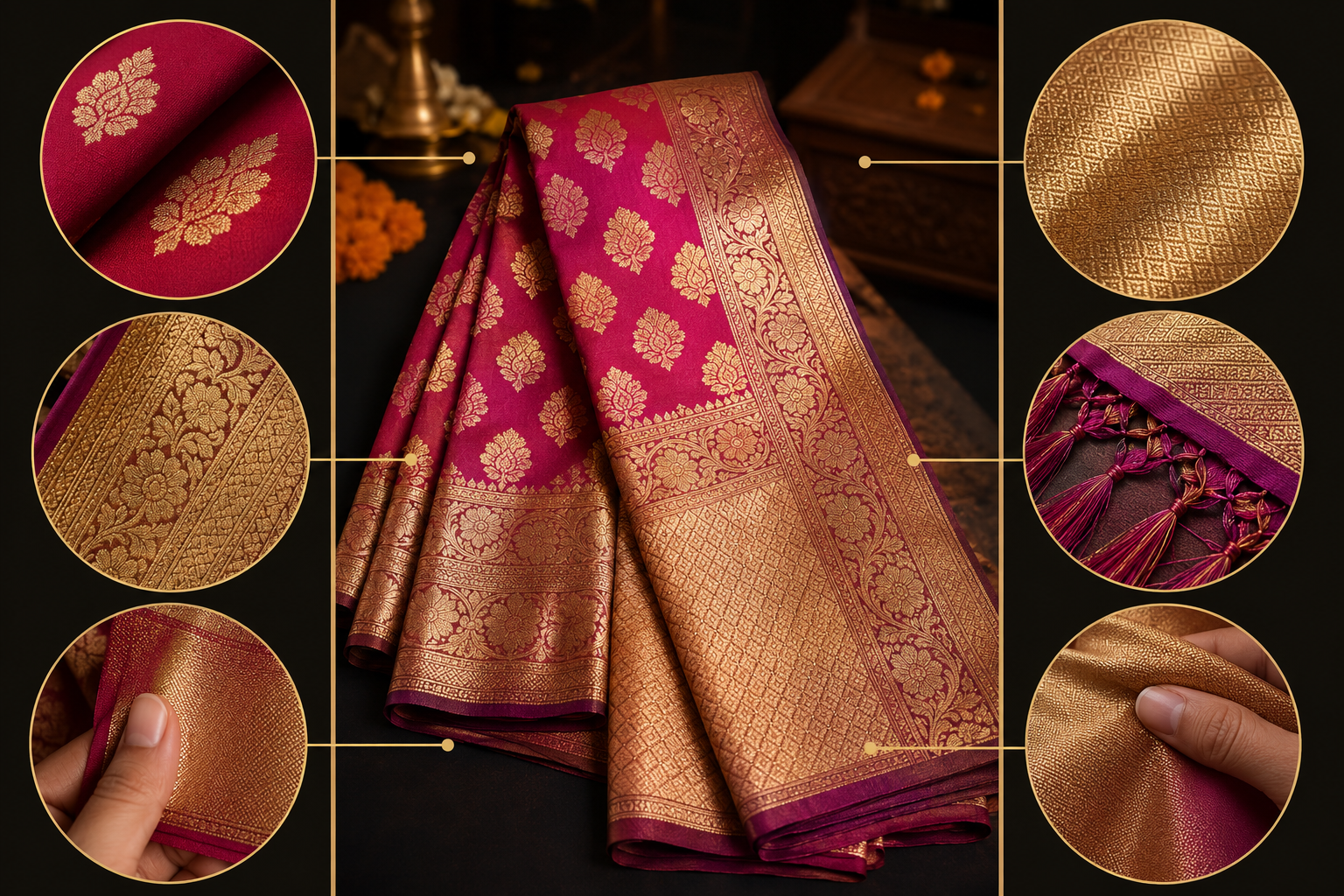
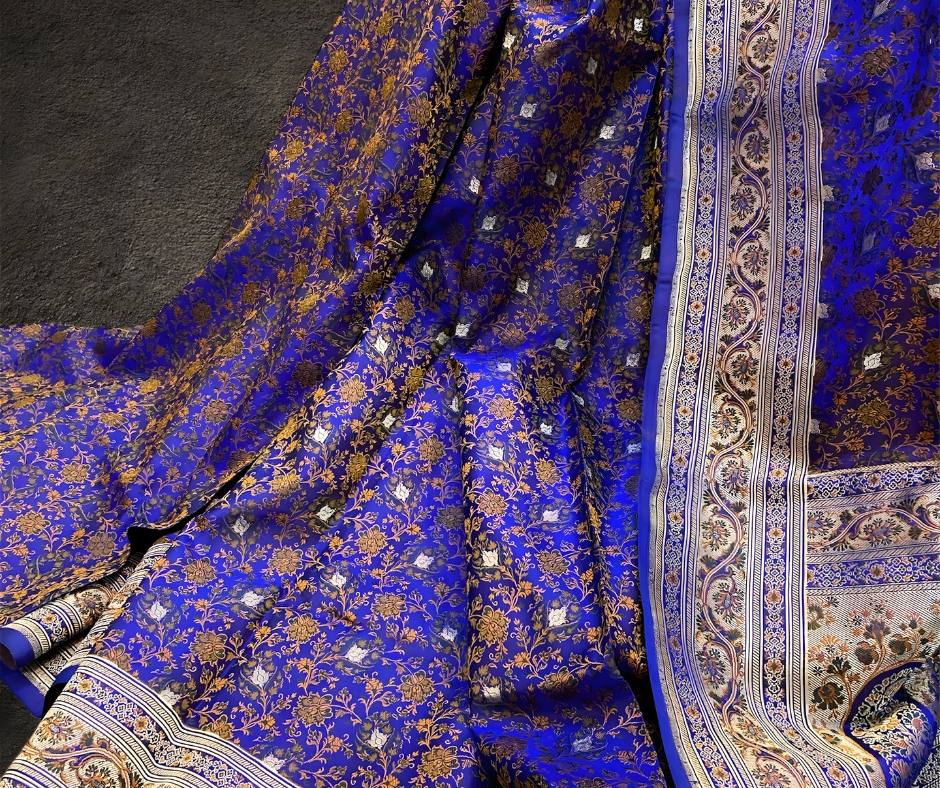
Banarasi Sarees are among India’s most iconic handwoven textiles, originating from Varanasi (Banaras), Uttar Pradesh. Renowned for their luxurious silk, intricate brocade weaving, and exquisite gold and silver zari work, they have long been a symbol of Indian craftsmanship and are highly cherished for weddings, festivals, and special occasions.
Established as a celebrated weaving tradition since the Mughal era (16th century), authentic Banarasi Sarees are handcrafted by skilled artisans using techniques passed down through generations. Protected under the Geographical Indication (GI) tag, they continue to preserve India’s rich textile heritage while earning recognition in luxury markets across the world.
History & Heritage
The history of Banarasi Sarees dates back to the Mughal era (16th century), when Persian artistic influences blended with India’s traditional weaving techniques. Mughal emperors encouraged skilled artisans to create luxurious silk fabrics decorated with intricate floral motifs, paisleys, and rich brocade patterns using pure gold and silver zari.
Over the centuries, the weaving tradition flourished in Varanasi, where generations of artisan families preserved the craft through handloom weaving. Today, Banarasi sarees remain one of India’s most prestigious textile traditions and are treasured as heirloom garments passed from one generation to another.
Manufacturing Process
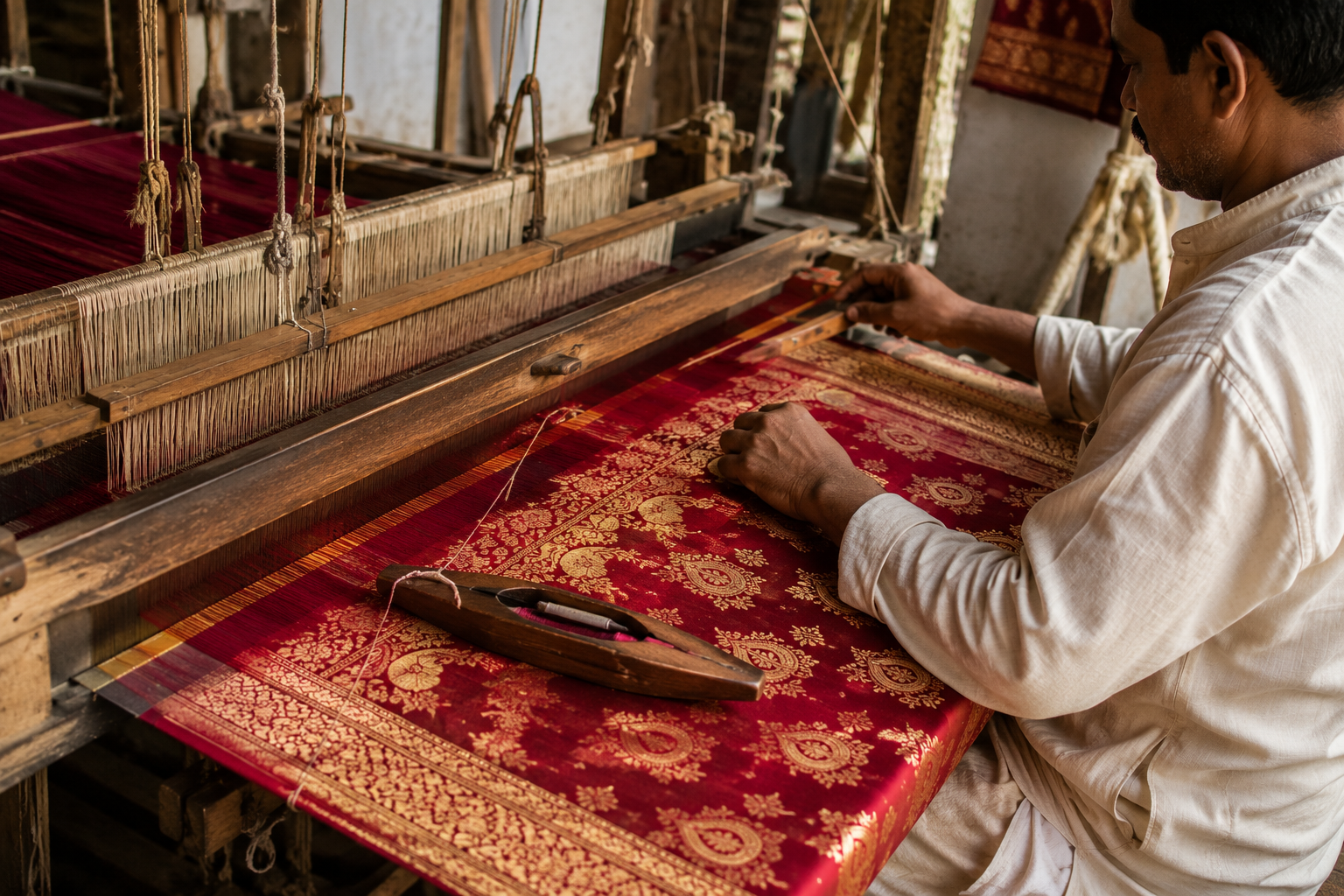
Every authentic Banarasi Saree is handcrafted through a detailed weaving process that requires exceptional skill and patience.
The production begins with premium silk yarn, followed by the preparation of intricate patterns that are woven on traditional handlooms. Skilled artisans create elaborate zari borders, floral motifs, jaal work, and brocade designs using fine gold or silver metallic threads. Depending on the complexity of the design, a single saree may take several weeks or even months to complete.
Types of Banarasi Sarees
Some of the most popular varieties include:
- Pure Silk Banarasi Sarees
- Katan Silk Banarasi Sarees
- Organza (Kora) Banarasi Sarees
- Georgette Banarasi Sarees
- Shattir Banarasi Sarees
- Tissue Banarasi Sarees
Each style showcases unique weaving techniques, textures, and artistic patterns suitable for different occasions.
Global Recognition
Banarasi Sarees are admired worldwide for their exceptional craftsmanship and cultural significance.
Today, authentic Banarasi sarees are exported to the United States, the United Kingdom, Canada, Australia, Singapore, the UAE, and several European countries, making them one of India’s most celebrated handloom exports.
Quality & Certifications
Authentic Banarasi Sarees are protected by the Geographical Indication (GI) tag, helping buyers identify genuine products woven in the Varanasi region.
Many manufacturers and weaving cooperatives also follow quality standards promoted by:
- GI Certification
- Silk Mark Certification
- Handloom Mark
- Weaver Cooperative Societies
- Government of India Handloom Development Programmes
These certifications help preserve authenticity and support traditional artisans.
Sustainability & Artisan Empowerment
Banarasi weaving is one of India’s largest traditional handloom industries, supporting thousands of artisan families across Varanasi and nearby regions.
The industry promotes:
- Traditional handloom weaving
- Sustainable silk production
- Artisan employment
- Cultural preservation
- Eco-friendly production practices
By purchasing authentic handwoven products, consumers directly contribute to preserving India’s textile heritage.
Leading Indian Banarasi Saree Brands
1. Nalli Silks
Founded in 1928, Nalli Silks is one of India’s oldest and most trusted silk retailers. The company offers premium Banarasi, Kanchipuram, and Mysore silk sarees through an extensive retail network in India and overseas.
2. Manyavar Mohey
Established in 1999, Manyavar Mohey has become one of India’s leading ethnic fashion brands. Its Banarasi bridal collections combine traditional craftsmanship with contemporary styling, making them popular among modern consumers in India and international markets.
Comparison of Leading Brands
| Feature | Nalli Silks | Manyavar Mohey |
|---|---|---|
| Founded | 1928 | 1999 |
| Specialty | Traditional Silk Sarees | Bridal & Designer Wear |
| Style | Classic Heritage | Contemporary Luxury |
| Retail Presence | India & Overseas | India & International |
| Primary Focus | Handwoven Silk Sarees | Wedding Fashion |
Why Buyers Trust Banarasi Sarees
Authentic Banarasi Sarees continue to be preferred because of:
- GI-certified authenticity
- Premium silk quality
- Handwoven craftsmanship
- Rich zari work
- Cultural significance
- Long-lasting durability
- Luxury bridal appeal
- Global recognition
Conclusion
We have also published detailed articles on the Best Indian Saree Brands, Kota Doria Saree, Maheshwari Saree, and Uppada Jamdani Saree, which you may find useful if you are interested in exploring India’s rich handloom traditions, regional saree weaves, and textile craftsmanship.
FAQs
What makes Banarasi Saree unique?
Banarasi Saree is renowned for its luxurious silk fabric, intricate brocade weaving, and exquisite gold and silver zari work, making it one of India’s finest handloom creations.
Where is this traditional craft practiced?
It is primarily practiced in Varanasi (Banaras), Uttar Pradesh, where skilled artisans continue to preserve centuries-old weaving techniques.
What is the significance of the GI tag?
The Geographical Indication (GI) tag certifies authenticity and ensures that the product is woven using traditional methods in its recognized geographical region.
Which fabrics are commonly used?
The craft mainly uses pure silk, Katan silk, Organza (Kora), Georgette, and Tissue silk, depending on the design and style.
Why is it popular for weddings and special occasions?
Its elegant craftsmanship, rich zari work, luxurious appearance, and cultural significance make it a preferred choice for bridal and festive wear.