Banaras Gulabi Meenakari: Timeless Pink Enamel Craftsmanship from Varanasi
Banaras (Varanasi), one of the world’s oldest living cities, is a cradle of Indian arts and crafts. Among its many celebrated traditions, Banaras Gulabi Meenakari stands out as one of the rarest and most exquisite forms of enamel workmanship in India. Distinguished by its signature rose-pink enamel on silver, Gulabi Meenakari reflects refined craftsmanship, Mughal-Persian influence, and centuries of artistic evolution.
Basic Overview
| Feature | Details |
|---|---|
| Craft Type | Handicraft / Ceramic Art |
| Location | Khurja, Bulandshahr, Uttar Pradesh, India |
| Raw Materials | Refined Clay blended with Quartz & Feldspar |
| GI Registration | Yes – 2008–2009 |
| Product Range | Blue Pottery, Glazed Ceramics, Terracotta Items, Decorative Wares, Tiles, Sanitary Ware |
| Identity Title | “Ceramic City of India” |
Historical Origins
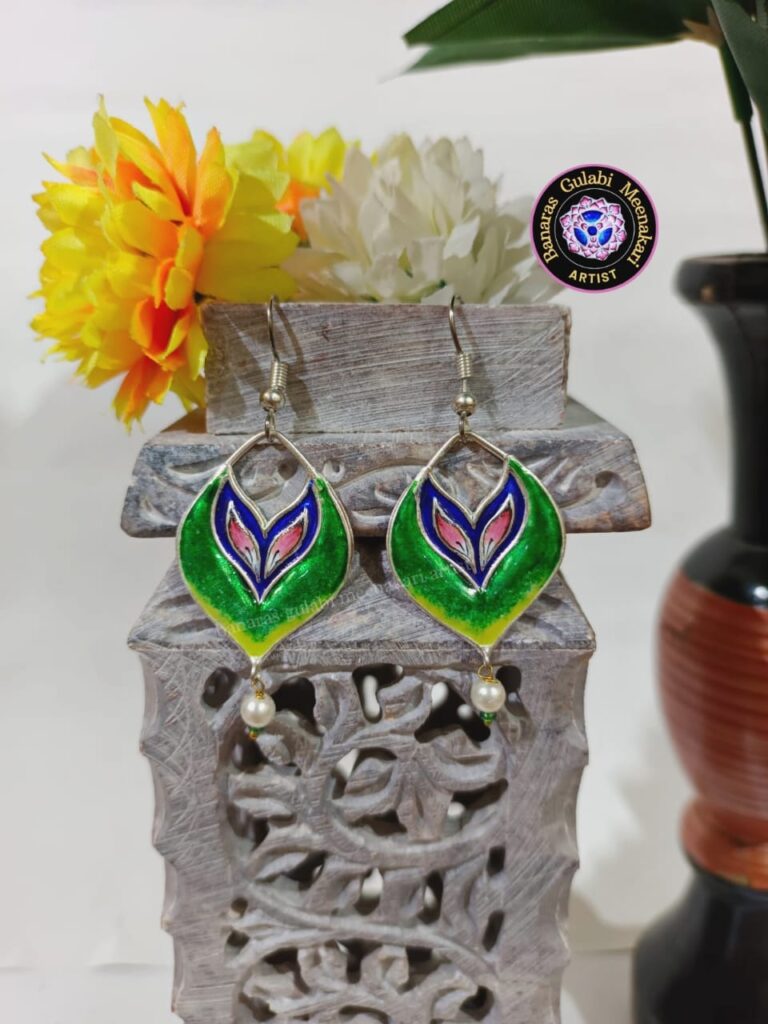
Gulabi Meenakari in Banaras traces its origin to the early 17th century, when Persian craftsmen migrated to India during the Mughal period. While enamelling existed in Jaipur, Delhi, and Lahore, the unique “Gulabi” (pink) style developed exclusively in Varanasi.
Artisans in Banaras perfected:
A white enamel base
Soft rose-pink strokes
Motifs inspired by Indian flora, fauna, and everyday cultural life
Over generations, the technique was passed down within artisan families, making it a treasured hereditary craft.
GI Tag & Government Recognition
Banaras Gulabi Meenakari was granted the Geographical Indication (GI) Tag on 23 March 2015, ensuring official protection and authenticity.
It is also recognized under:
-
ODOP (One District One Product) – Promoting global visibility
-
Town of Export Excellence (Kashi) – Supporting export-linked handicrafts
-
National & International Exhibitions – Increasing awareness and demand
These recognitions have played a key role in reviving the craft and protecting artisans from cheap, machine-made imitations.
Craftsmanship: The Soul of Gulabi Meenakari
Gulabi Meenakari is a slow, meticulous, multi-step artistic process:
1. Preparing the Metal Base
Traditionally gold was used, but today silver is the primary metal due to affordability.
2. Engraving
Skilled craftsmen carve intricate floral and geometric patterns using delicate chisels.
3. Enamel Application
A mixture of mineral oxide-based powdered enamel is filled into the engraved grooves.
The signature Banaras touch:
White enamel foundation
Rose-pink detailing layered over it
4. Furnace Firing
The piece is fired in a kiln to fuse the enamel permanently.
5. Polishing & Finishing
A mirror-like glossy finish completes the piece.
Each artwork—whether jewellery or décor—can take hours to days to complete.
Motifs & Artistic Language
Gulabi Meenakari commonly features:
-
Lotus and floral vines
-
Birds such as peacocks, parrots
-
Mughal-inspired geometric designs
-
Traditional jewellery patterns
-
Religious and ceremonial symbols
Every motif carries symbolism of purity, elegance, and prosperity.
Artisan Clusters in Varanasi
Major production hubs include:
-
Gayghat (Lal Ghat)
-
Kalbhairav locality
-
Pakka Mahal
-
Chowk and surrounding lanes
Around 250–300 artisans (including nearly 30% women) continue to preserve this heritage.
Manufacturing & Export Table (With Sources)
| Aspect | Details | Source URL |
|---|---|---|
| Established / Origin | Early 17th century, Mughal Era | — |
| Manufacturing Locations | Gayghat, Kalbhairav, Pakka Mahal, Old Varanasi Lanes | https://timesofindia.indiatimes.com/city/varanasi/gulabi-meenakari-from-varanasi-expands-in-domestic-and-international-markets/amp_articleshow/120760834.cms |
| Number of Artisans | 250–300 artisans | Same as above |
| Women Artisans | Approx. 30% | Same as above |
| Annual Business | ₹12–15 crore (approx.) | Same as above |
| Products Manufactured | Necklaces, rings, earrings, anklets, boxes, trays, religious artefacts, wedding gifts, décor items | Same as above |
| Export Destinations | Europe, USA, Gulf countries | https://timesofindia.indiatimes.com/city/varanasi/varanasi-emerges-as-a-hub-of-gi-products/articleshow/46959699.cms |
| Export Promotion Support | Kashi declared “Town of Export Excellence” for GI crafts | https://timesofindia.indiatimes.com/city/varanasi/in-boost-to-gi-tagged-goods-kashi-among-towns-of-export-excellence/articleshow/99163545.cms |
Global Reach & Exports
Banaras Gulabi Meenakari is exported to:
-
USA, UK, Germany
-
Japan, Singapore
-
UAE, Saudi Arabia, Qatar
-
Australia and other European markets
Rising demand for handmade luxury products makes this craft a growing segment in international jewellery and gift markets.
Challenges to the Craft
Despite its beauty, the craft faced challenges:
-
Rising raw material costs
-
Machine-made imitations
-
Declining young artisans
-
Low income and unorganized market structure
However, government support, e-commerce platforms, and global recognition have revived its strength.
Cultural & Artistic Importance
Banaras Gulabi Meenakari symbolizes:
-
Mughal–Persian artistic fusion
-
Generational craftsmanship
-
The luxury craft heritage of India
-
Varanasi’s cultural identity
Masterpieces are showcased in major museums including:
-
National Museum, New Delhi
-
Bharat Kala Bhavan, BHU
Manufacturer & Top Brands
| Brand / Organization | Location | Known For | Market Reach | Type |
|---|---|---|---|---|
| Shivam Meenakari Kala Kendra | Varanasi, Uttar Pradesh | Traditional Gulabi Meenakari jewellery, pendants, earrings | Domestic & Export | Family-Run Artisan Workshop |
| Banaras Meenakar Handicrafts | Varanasi, Uttar Pradesh | Silver pink-enamel décor items, gift articles | International | Private Manufacturer / Exporter |
| Kashi Gulabi Meenakari Udyog | Varanasi, Uttar Pradesh | Bridal jewellery sets, customised meenakari work | Domestic | Artisan Cooperative / Cluster |
| Royal Banaras Meenakari Arts | Varanasi, Uttar Pradesh | Luxury enamel boxes, trays, religious artefacts | Global Boutique Markets | Private Craft Brand |
| Varanasi Meenakari Exports | Uttar Pradesh | Designer lifestyle décor & jewellery collections | Global | Export House / Online Brand |
Conclusion
Banaras Gulabi Meenakari is far more than a decorative art—it is a living legacy of Varanasi. Rooted in the Mughal era and nurtured by generations of devoted artisans, the craft stands today as a symbol of India’s artistic resilience and refined aesthetic culture. With its GI status, global demand, and rising digital presence, Gulabi Meenakari is experiencing a renaissance that promises long-term sustainability and growth.