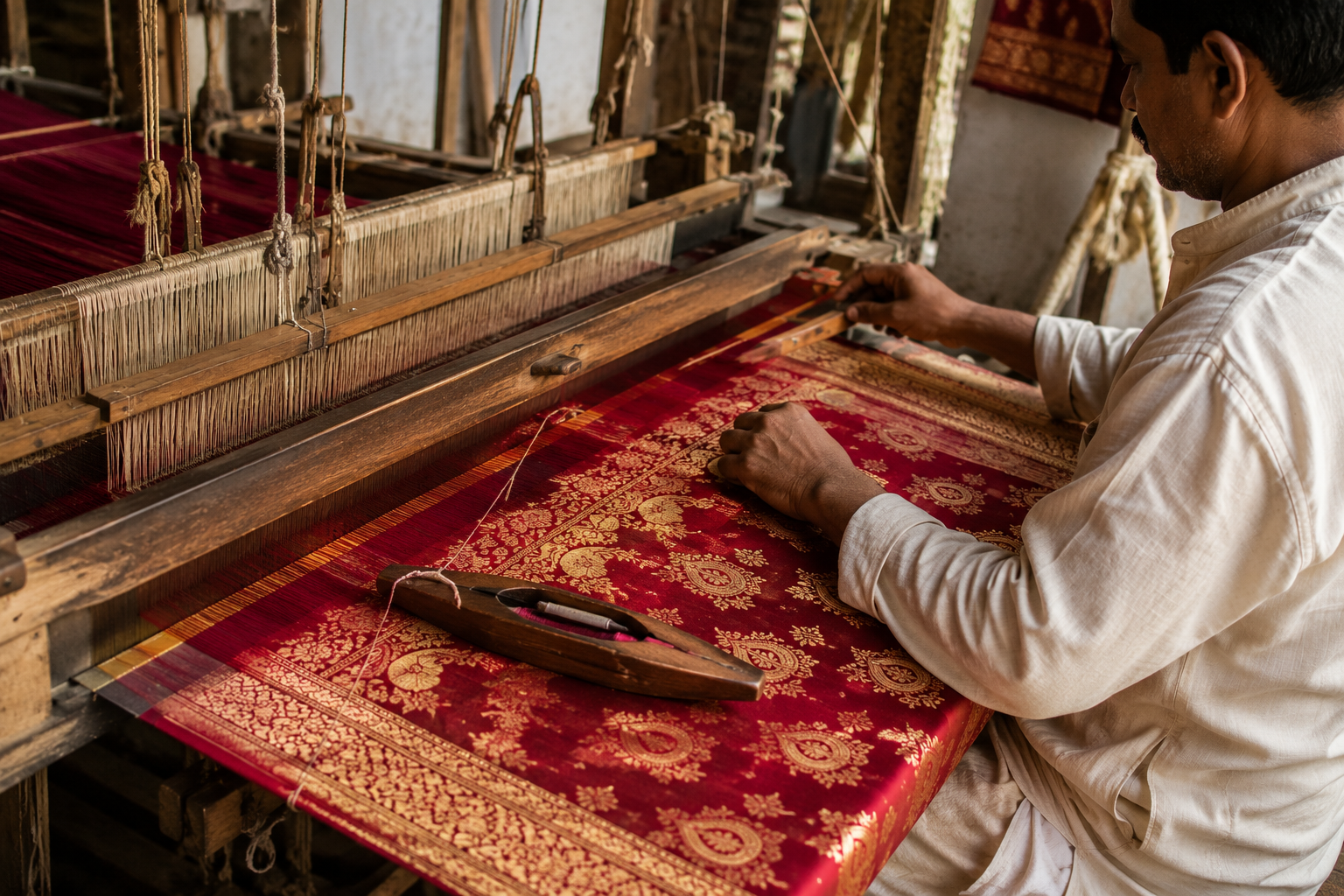
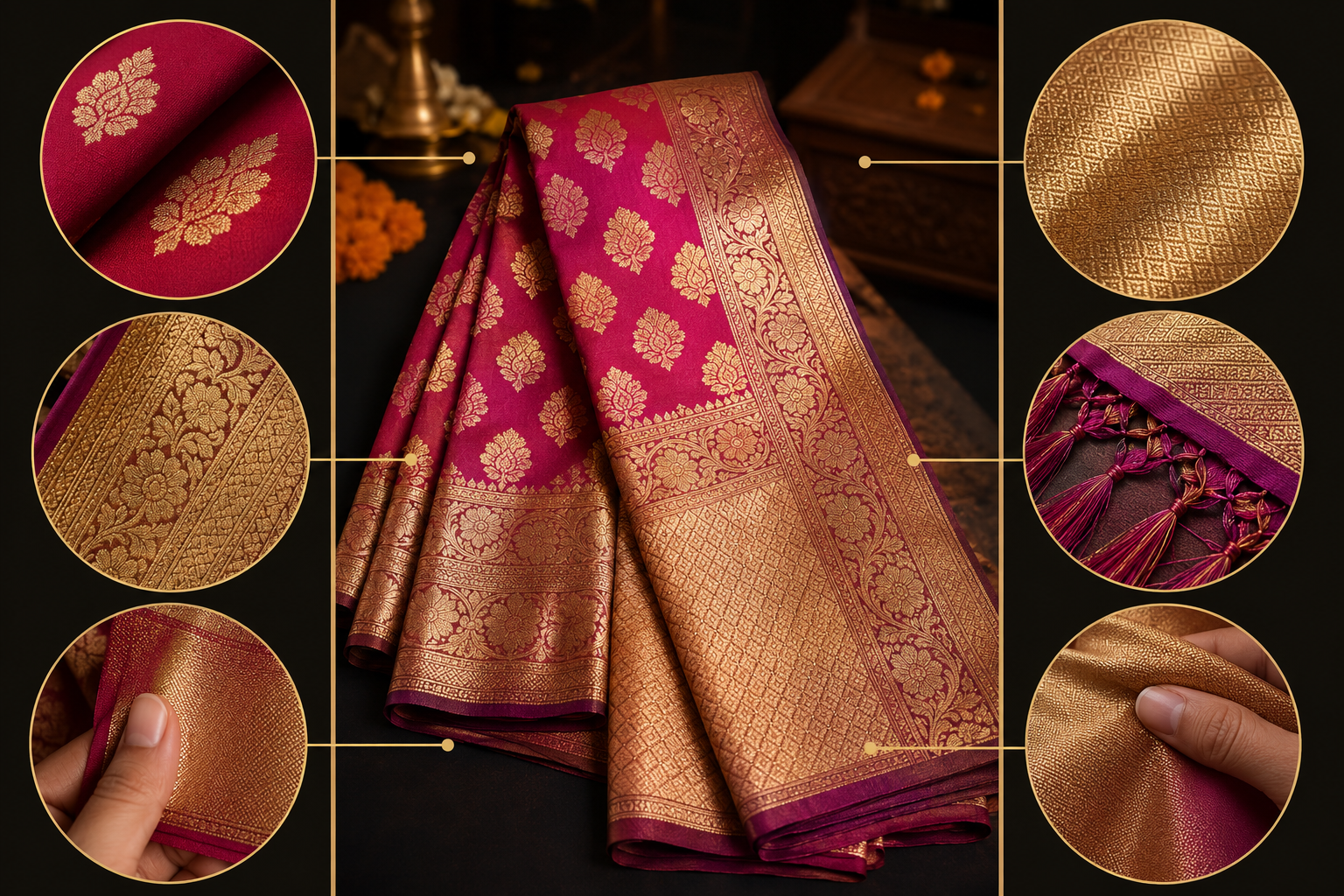
Madurai Sungudi: The Dotted Legacy of Tamil Nadu
Soft, breathable, and bursting with intricate hand-tied patterns — Madurai Sungudi is more than just fabric; it is a living heritage of Tamil Nadu’s textile tradition. Crafted from fine cotton and decorated through a meticulous tie-and-dye process, this art form represents the grace, devotion, and creativity of the artisans of Madurai.
Rooted in centuries of history, Madurai Sungudi continues to be cherished by women across India and the world for its elegance, comfort, and vibrant charm.
Madurai Handloom: Pride of Indian Textile Craft
| Aspect | Details |
|---|---|
| Alternative Names | Sungudi Saree, Sungudi Cotton |
| Type | Handicraft (Textile Art) |
| Area | Madurai District, Tamil Nadu |
| Country | India |
| Registered | 2005–06 |
| Material | Pure cotton fabric with traditional tie-and-dye technique |
History and Origin
The origin of Madurai Sungudi dates back over 400 years, when the Saurashtrian community migrated from Gujarat to Tamil Nadu. They brought with them the art of bandhani (tie-and-dye), which they beautifully merged with the South Indian aesthetic, giving birth to the Sungudi tradition in Madurai.
The name “Sungudi” is derived from the Sanskrit word “Sunnam”, meaning “round,” referring to the thousands of tiny dots that decorate each fabric. Historically, Sungudi sarees were worn by royal and aristocratic women and were considered a mark of purity and simplicity.
Art of Creation
The making of a Sungudi fabric is a labor-intensive and spiritual process that reflects both patience and precision:
| Step | Process | Details |
|---|---|---|
| 1️⃣ Preparing the Cloth | Bleached cotton cloth is washed and dried under the sun to prepare for dyeing. | |
| 2️⃣ Tying the Knots | The artisans tie thousands of tiny dots using threads to resist the dye. Each saree may contain up to 20,000–30,000 dots. | |
| 3️⃣ Dyeing | The tied fabric is dyed in natural or synthetic colors — traditionally in reds, indigos, and yellows. | |
| 4️⃣ Washing & Drying | After dyeing, the fabric is washed in river water and sun-dried to fix the colors permanently. | |
| 5️⃣ Finishing Touches | Borders and pallu designs are hand-printed or block-printed, often featuring peacocks, temples, and floral motifs. |
Design and Features
Madurai Sungudi sarees are renowned for:
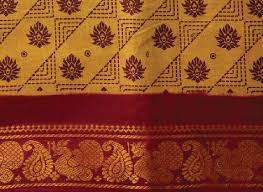
Tiny white dots (puttas) formed through resist-tie techniques.
Bright, contrasting borders with traditional motifs.
Lightweight and airy texture, ideal for South Indian climates.
Natural vegetable dyes and eco-friendly processes.
Iconic “raindrop effect” pattern spread across the body of the saree.
Every Sungudi saree is unique, as it is fully handcrafted — no two pieces are identical.
Manufacture and Export
| Aspect | Details |
|---|---|
| Manufacturing Centres | Madurai, Dindigul, and surrounding villages in Tamil Nadu |
| Artisan Communities | Predominantly women artisans from the Saurashtrian community |
| Production Method | Hand-tied and hand-dyed on pure cotton |
| Domestic Market | Widely sold in Tamil Nadu, Kerala, and Andhra Pradesh |
| Export Destinations | Sri Lanka, Malaysia, Singapore, United Arab Emirates, and Europe |
| Government Support | Recognized under the Geographical Indication (GI) system and promoted through cooperative societies like the Madurai Sungudi Weavers’ Cooperative |
Madurai Sungudi’s revival has been supported by the Tamil Nadu Handloom Department and various NGOs, ensuring the artisans get fair wages and training to adapt traditional designs to modern fashion needs.
Cultural and Economic Significance
- Worn during festivals, temple ceremonies, and weddings, Sungudi sarees symbolize purity and elegance.
The craft sustains thousands of families, especially women, in Madurai’s weaving clusters.
Designers now incorporate Sungudi motifs into contemporary wear, home décor, and accessories, giving this traditional art a modern edge.
Global Recognition
Madurai Sungudi’s simple charm has crossed borders — featuring in Indian diaspora fashion shows, boutique collections, and heritage textile exhibitions globally. Its GI tag not only preserves its authenticity but also honors the craftsmanship that has kept this art form alive through changing times.
Conclusion
The Madurai Sungudi stands as a proud testament to India’s textile heritage — a story woven in cotton, color, and care. Every dot, knot, and hue tells a tale of tradition, devotion, and artistry passed down through generations. In preserving this craft, we preserve a vibrant thread of Tamil Nadu’s cultural identity — timeless, graceful, and truly Indian.
Would you like me to add an image section (with captions suggestion) for this article —