Bomkai Saree: The Loomed Legacy of Odisha
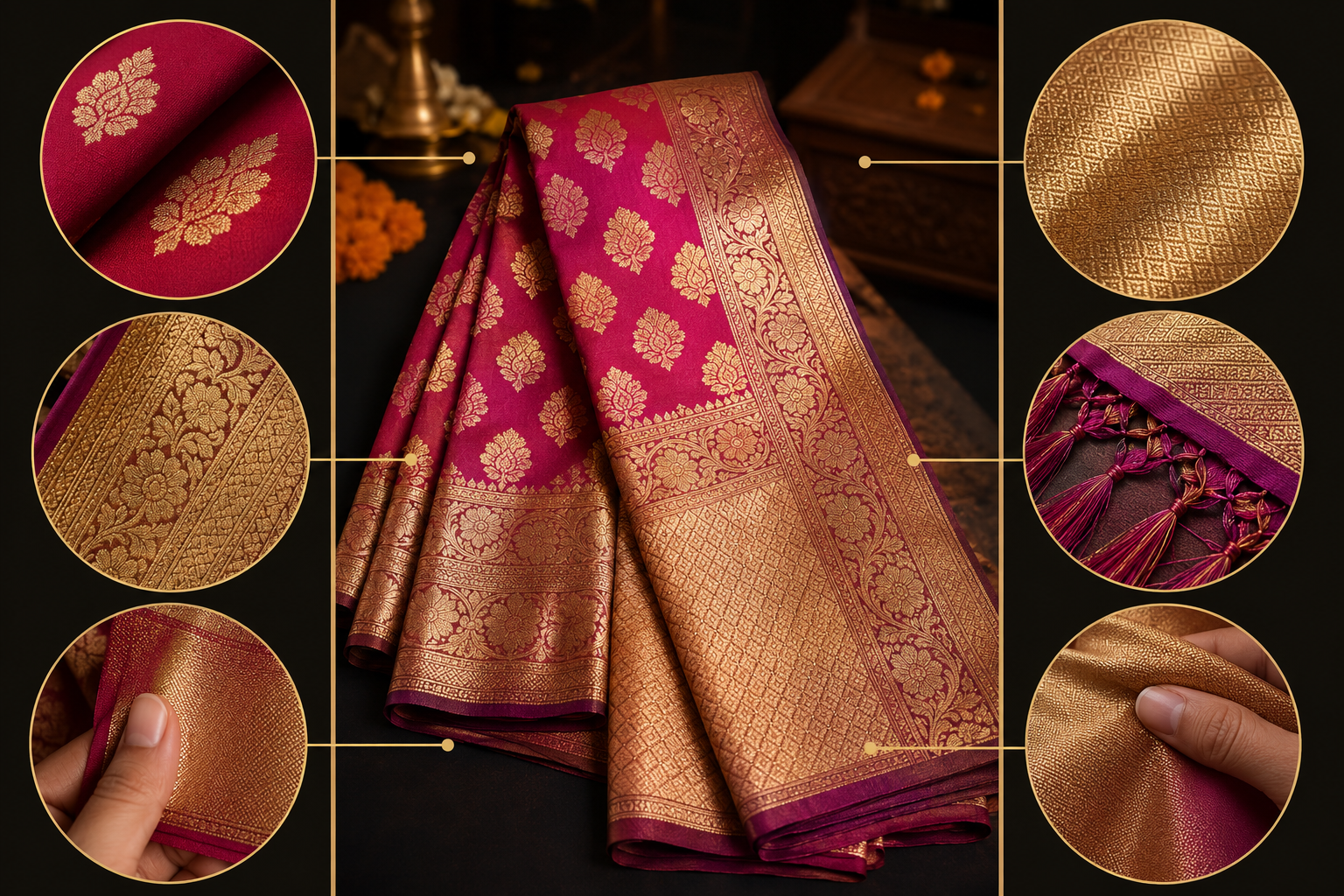
Grace, tradition, and artistry intertwine in the Bomkai Saree, one of Odisha’s most exquisite handwoven textiles. Also known as Sonepuri Saree, it is a symbol of cultural identity and timeless beauty, admired for its intricate motifs, contrasting borders, and the perfect blend of tribal and classical aesthetics.
Geographical Indication
| Aspect | Details |
|---|---|
| Alternative names | Sonepuri Saree, Bomkai Patta |
| Type | Handloom Textile |
| Area | Bomkai village, Ganjam district; Sonepur region, Odisha |
| Country | India |
| Material | Cotton, Silk |
| Registered | 2009–10 (GI Tag) |
Artistic and Cultural Significance
The Bomkai saree is a masterpiece of Odishan weaving, combining Ikat (tie-dye) techniques with extra weft designs on the border and pallu. Originally woven for the royal families and temple deities, it has now become a favorite among women for festive and formal occasions. The motifs — such as fish, lotus, peacock, and temple spires — are deeply symbolic, representing prosperity, beauty, and spirituality.
Each saree carries the essence of tribal life and rural heritage, where every thread narrates a story of devotion and craftsmanship.
Manufacture and Weaving Process
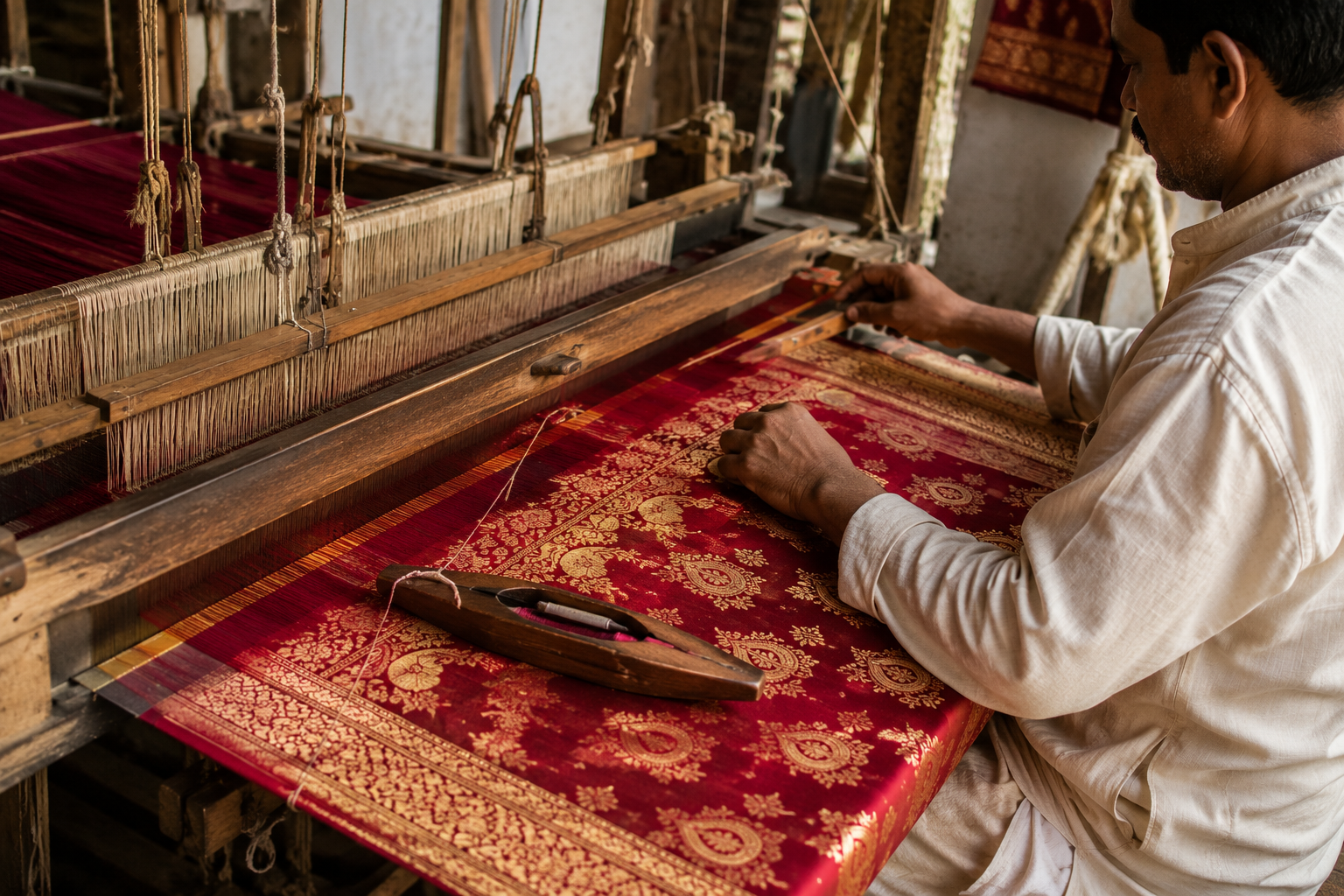
The making of a Bomkai saree is a labor-intensive process performed by traditional weavers, mainly from the Bhulia community. The steps include:
Yarn Preparation: Cotton or silk threads are washed, dyed, and sun-dried.
Design Planning: Intricate patterns are drawn on graph paper, especially for the border and pallu.
Weaving: Using traditional pit looms, weavers blend the Ikat (tie-dye) technique for the body and extra-weft method for motifs.
Dyeing: Natural dyes and vibrant colors are applied meticulously to create durable shades.
Finishing: After weaving, sarees are washed and pressed to enhance the sheen and texture.
A single saree may take 10 to 20 days to complete depending on its complexity.
Manufacture and Export
| Stage | Description |
|---|---|
| Weaving Centers | Bomkai (Ganjam), Sonepur, Bargarh, and Subarnapur districts of Odisha |
| Production Units | Traditional handloom clusters supported by Odisha Handloom and Textile Department |
| Export Markets | USA, UK, France, Japan, Singapore, and Middle East countries |
| Support Organizations | Boyanika, Sambalpuri Bastralaya, Utkalika, and private cooperatives |
| Demand | High demand during Indian festivals, international fashion weeks, and heritage exhibitions |
Odisha’s Bomkai sarees are increasingly recognized for their eco-friendly weaving methods and sustainable production, making them popular among global consumers seeking authentic handmade textiles.
Conclusion
The Bomkai Saree stands as a shining symbol of Odisha’s rich weaving legacy — an art that bridges ancient tradition with modern elegance. Its motifs, colors, and craftsmanship celebrate not just fabric, but the very soul of Odishan culture. Worn by queens and commoners alike, the Bomkai continues to weave stories of heritage, pride, and grace that transcend generations.