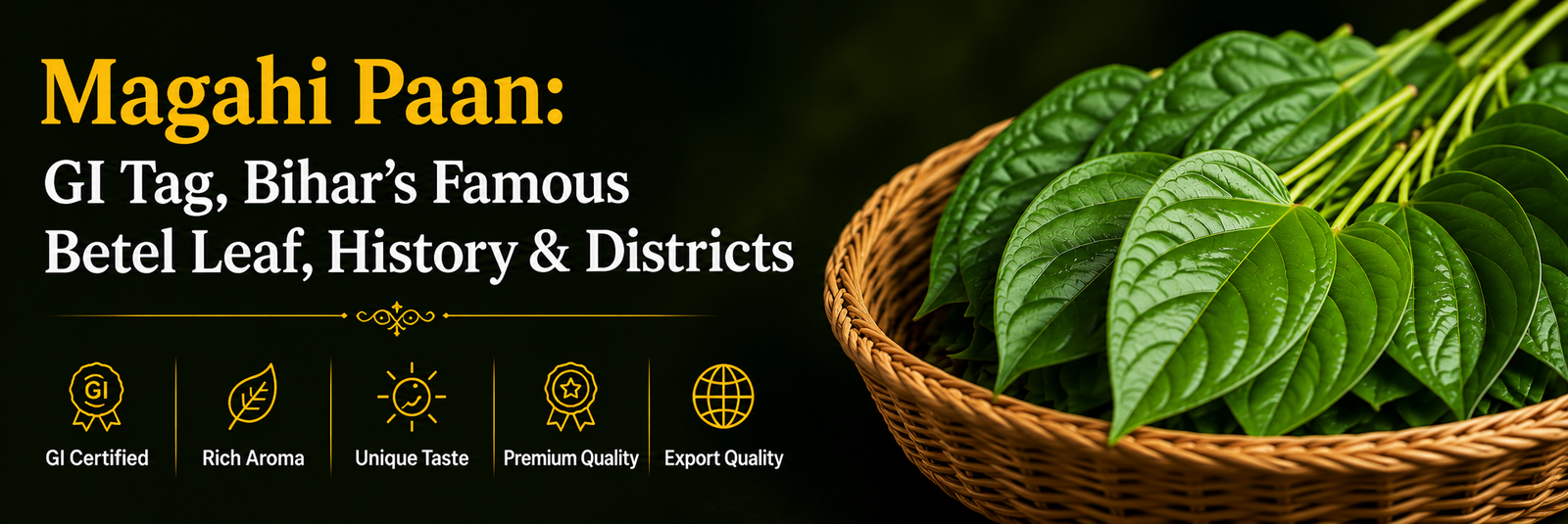
Walk into any old paan shop in Banaras or Patna and ask the owner which paan he considers the finest. Chances are, he’ll say “Magahi” without a second thought and then tell you about how the real stuff melts on your tongue.
That reputation didn’t come from marketing. It came from over a thousand years of farming in the clay-loam fields of southern Bihar, in a region that was once the heart of the Magadh Empire.
Quick Facts
Detail | Information |
|---|---|
| Product Name | Magahi Paan |
| Type | Agricultural Produce — Betel Leaf |
| Growing Region | Nawada, Nalanda, Gaya, Aurangabad (Bihar) |
| GI Registration Date | 28 March 2018 |
| GI Registration Number | 331 |
| Registered By | Magahi Paan Utpadak Sangh, Aurangabad |
| Supporting Body | Department of Agriculture, Government of Bihar |
| Research Partner | ICAR — All India Coordinated Research Project on Medicinal and Aromatic Plants & Betelvine |
What is Magahi Paan?
Magahi Paan is Bihar’s pride and one of India’s most famous Gl-tagged betel leaves. Known for its rich aroma, unique taste and long-lasting freshness, it is loved across the world.
History & Origin
Magahi Paan comes from the Magadh division of Bihar. This isn’t accidental. The geography matters enormously.
The fertile alluvial soil of this belt, enriched over centuries by river systems, creates the exact growing conditions the betel vine needs: moisture retention without waterlogging, and consistent warmth throughout the year. The tropical climate of southern Bihar, with its reliable rainfall and humid summers, keeps the vines thriving under the shade structures that farmers carefully construct.
You can’t take a cutting to Delhi or Pune and grow the same leaf. The terroir, much like wine grapes, is inseparable from the product.
GI Tag Details
On 28 March 2018, Magahi Paan received its Geographical Indication (GI) tag from the GI Registry in Chennai, making it the second betel leaf variety in all of India to earn this recognition, and the 11th product from Bihar overall.
The application was filed in June 2016 by the Magahi Paan Utpadak Sangh (Magahi Paan Growers’ Association) based in Aurangabad, supported by the Bihar government’s Department of Agriculture and research from ICAR.
What a GI tag actually does:
- It legally protects the name “Magahi Paan” no one outside the designated growing region can sell their betel leaves under that label
- It gives farmers a verified premium product that commands better prices in the market
- It provides a framework for quality standards and traceability
- It opens doors to export certification and institutional buyers
Before the GI tag, fake or inferior leaves were routinely sold as “Magahi Paan” in markets across the country. Farmers were undercut. The tag changed that.
The Land Behind the Leaf: Districts Where Magahi Paan is Grown
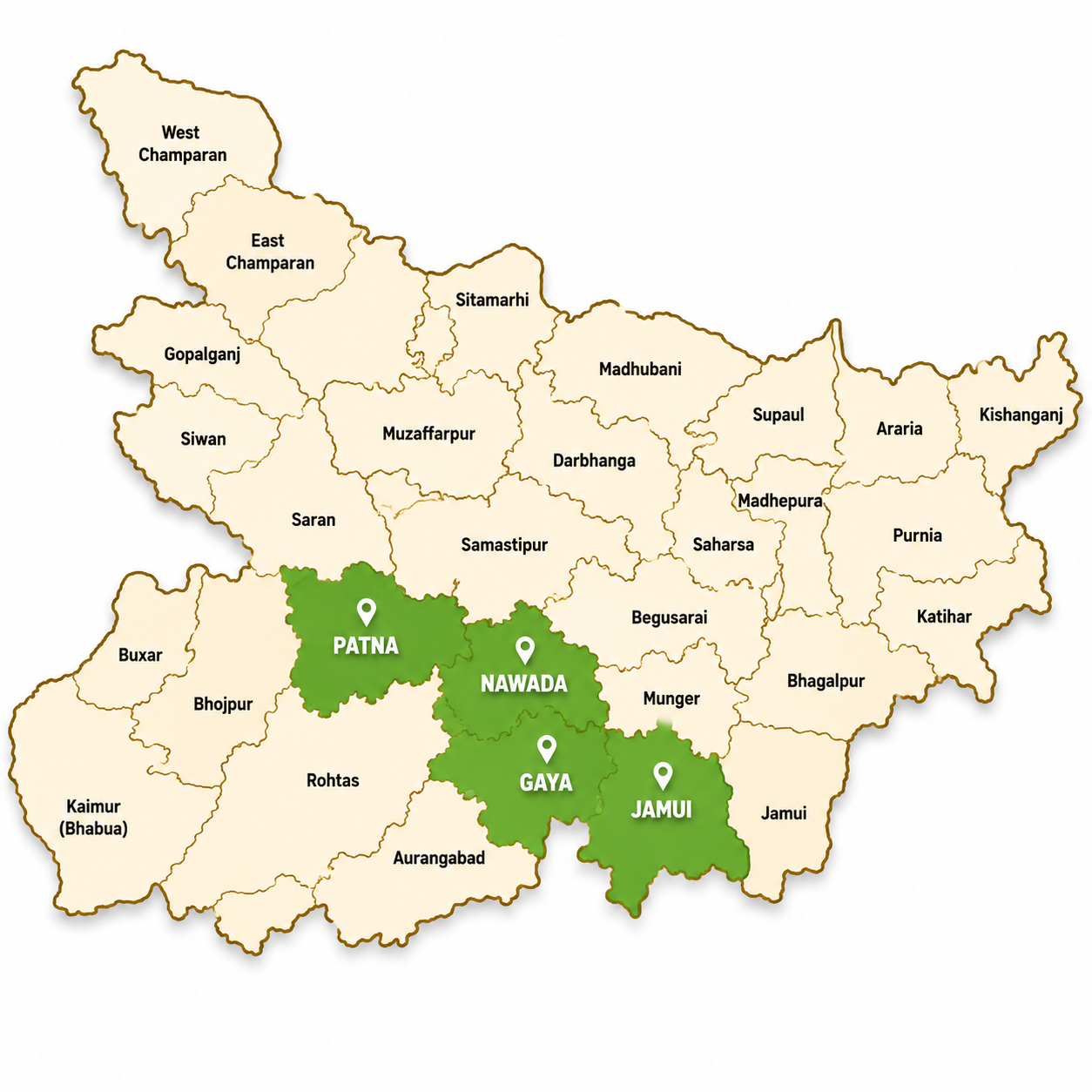
Main Growing Areas:
- Gaya
- Nawada
- Aurangabad
- Jehanabad
- Nalanda
- Patna
- Lakhisarai
- Sheikhpura
Types/ Varieties
- Desi Magahi
- Bangla Magahi
- Kalkatiya Magahi
- Bihar Magahi
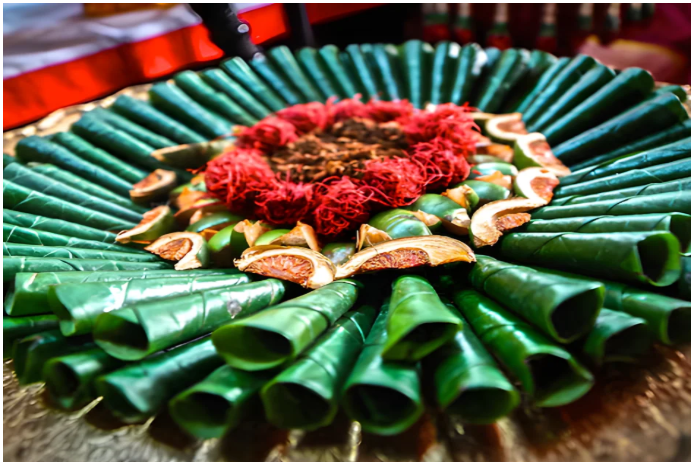
Love the True Taste of Bihar?
Buy Original GI Tagged Magahi Paan Today?
Who Grows It: The Chaurasia Community
For centuries, Magahi Paan has been the livelihood of the Chaurasia community, a farming caste whose identity is deeply tied to betel vine cultivation. This isn’t a crop managed by agribusiness — it’s a family affair, with each member of the household playing a specific role across the growing season.
Vines are planted from cuttings during the monsoon months, shaded with bamboo and leaf structures called borejas to protect them from direct sun. The plants are watered frequently but lightly. After three to four months, leaves are handpicked in the early morning — always manually, because machine harvesting would damage the delicate surface of the leaf.
After harvest, leaves are sorted by size and quality, then bundled and wrapped in banana leaves to stay fresh during transport. It’s an entirely hands-on process, start to finish.
Across Bihar, approximately 20.8 lakh rural people depend directly or indirectly on betel vine farming — through cultivation, processing, transport, and trade.
Can Magahi Paan Reach Global Markets?
It already has a quiet export presence. The Indian diaspora in the Middle East, Southeast Asia, UK, and USA has long sought out quality betel leaves, and Magahi Paan with its GI backing is positioned to capture premium segments of that demand.
There’s also growing interest from the Ayurvedic and herbal products industry. Betel leaf extract has documented antimicrobial and digestive properties, and the certified quality of Magahi Paan makes it a preferred source material for herbal formulations.
The bigger challenge isn’t demand it’s shelf life. Fresh betel leaves are perishable, and cold-chain logistics for export need investment. Value-added formats like processed extracts, dried powder, and ready-to-serve flavored paan offer a longer shelf-life pathway into global markets.
Are You a Grower or Exporter
List your business on PMII and connect with serious buyers from India and around the world.
Proudly Made in India
FAQs
What is Magahi Paan?
Magahi Paan is a premium betel leaf grown mainly in Bihar. It is known for its soft texture, mild sweetness, rich aroma, and is protected with a Geographical Indication (GI) Tag.
Which district is famous for Magahi Paan?
Magahi Paan is primarily grown in districts such as Gaya, Nalanda, Nawada, Aurangabad, Jehanabad, Patna, Lakhisarai, and Sheikhpura in Bihar.
When was Magahi Paan given GI Tag?
Magahi Paan received the GI Tag on 12 February 2022, recognizing its unique quality, traditional cultivation, and regional identity.
Why is Magahi Paan famous?
Magahi Paan is famous for its delicate taste, natural aroma, thin and tender leaves, and centuries-old cultivation tradition in Bihar.
How can I buy original Magahi Paan?
You can purchase authentic Magahi Paan from verified growers, farmer groups, exporters, or trusted suppliers. Always confirm the source and GI authenticity before buying in bulk.
About This Guide
This guide has been prepared using information from publicly available Government of India sources, Geographical Indication (GI) registration records, agricultural and horticulture departments, research institutions, and industry references. It is designed to help buyers, importers, wholesalers, retailers, and businesses understand the unique characteristics of authentic Magahi Paan, including its GI Tag, growing regions, cultivation practices, quality standards, and sourcing considerations. Proudly Made in India regularly reviews and updates its sourcing guides to provide accurate, practical, and reliable information for domestic and international buyers.
To explore more authentic Indian GI products, you may also like:
- Nagpur Orange – India’s famous GI-tagged citrus fruit
- Banaganapalle Mangoes – Premium GI-tagged mangoes from Andhra Pradesh
- Khaw Tai Khamti Rice – Traditional GI rice from Arunachal Pradesh
- Uttarakhand Red Rice – Indigenous Himalayan rice variety
- Sujini Embroidery – Traditional GI embroidery of Bihar