Terracotta Crafts: Earth's Embrace in Indian Artistry
India, a land of unparalleled cultural richness, offers an incredible spectrum of artistic traditions, each reflecting the country’s deep heritage and creativity. Among these, terracotta crafts stand as one of the most timeless and soulful expressions of Indian artistry. Born from the very soil beneath our feet, these creations are not just art—they are a testament to human ingenuity, devotion, and connection with the earth. Their simple yet profound beauty has captivated hearts across India and around the world.
History and Origin
The origins of terracotta in India trace back to the Indus Valley Civilization (2500–1900 BCE). Archaeological discoveries at sites like Mohenjo-Daro and Harappa reveal a wide range of terracotta artifacts, including toys, figurines, pottery, and even drainage pipes. These objects highlight that terracotta craftsmanship was functional, religious, and artistic from the very beginning.
Over centuries, terracotta evolved with changing cultural and spiritual practices. Ancient Hindu and Buddhist texts frequently mention clay in rituals and idol-making. The Gupta period (320–550 CE), often hailed as the “Golden Age of India,” witnessed significant advancements in terracotta art, particularly in temple architecture. Artisans perfected intricate designs and expressive forms, which continue to inspire contemporary terracotta artists.
Terracotta carries deep cultural and spiritual significance in India:
Used in everyday life as cooking pots and storage containers.
Represented fertility, protection, and prosperity through figurines and idols.
Featured in festivals, often immersed in water bodies to symbolize life’s cyclical nature.
Origin City/Region: Bishnupur, West Bengal
While terracotta is made across India, Bishnupur in West Bengal is particularly famous for its terracotta artistry.
Historical Significance: Flourishing under the Malla dynasty (17th–18th century), Bishnupur became renowned for its terracotta temples. The Malla kings, devout Vaishnavites, commissioned temples entirely from terracotta.
Iconic Temples: Notable examples include Shyam Rai Temple, Jor-Bangla Temple, and Madan Mohan Temple, showcasing intricate relief work depicting Hindu epics, mythological figures, and daily life.
Distinctive Features: Reddish-brown hue and detailed carvings create a unique visual narrative. Techniques from these temples continue to influence modern terracotta artisans.
Traditional Making Process
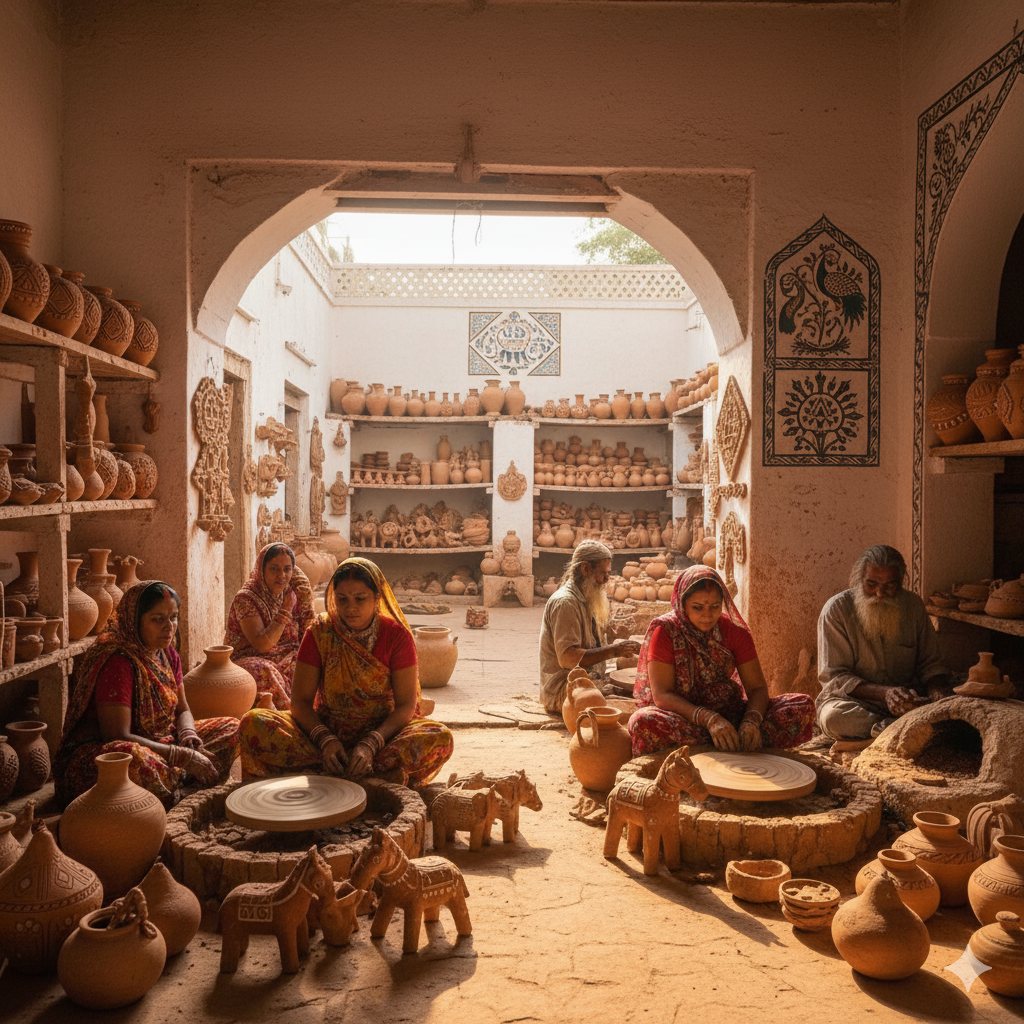
The creation of terracotta crafts involves skill, patience, and an intimate understanding of clay. The step-by-step process is as follows:
Clay Procurement and Preparation
High-quality clay is collected from riverbeds or ponds.
It is cleaned to remove impurities and kneaded (wedging) to achieve a smooth, pliable texture.
Shaping and Molding
Hand-building: Coiling, pinching, and slab construction for larger or intricate pieces.
Potter’s Wheel: Used for symmetrical items like pots and bowls.
Molding: Clay pressed into pre-made molds for figurines or repetitive designs.
Drying
Pieces are dried in the shade for days or weeks to prevent cracking.
Firing
Traditional kilns fired with wood, cow dung, or agricultural waste bake the clay at 600°C–1000°C.
The firing transforms clay into durable terracotta with its characteristic reddish-brown color.
Finishing (Optional)
Burnishing: Rubbing with a smooth stone for subtle sheen.
Painting/Glazing: Contemporary pieces may be painted or glazed, though traditional items often retain a natural look.
Global Appeal and Recognition
Terracotta crafts have gained recognition worldwide due to their beauty, sustainability, and cultural significance.
Key points of global appeal:
Eco-Friendly and Sustainable: Biodegradable, non-toxic, and made from natural clay.
Rustic Charm: Earthy texture and warm tones complement various interior styles—from bohemian to minimalist.
Cultural Authenticity: Each piece carries centuries of Indian heritage and skilled craftsmanship.
Diverse Product Range: From decorative figurines and wall hangings to functional items like planters and kitchenware.
Export Value: Popular in countries including the USA, UK, Germany, France, and Australia; significant for India’s handicraft exports.
Brand Spotlight: Terracotta by Poterie
While countless artisans keep the terracotta tradition alive, Terracotta by Poterie (illustrative) exemplifies a brand successfully merging traditional craftsmanship with global markets.
Overview: Design-led brand promoting Indian terracotta through contemporary products. Collaborates with artisans in West Bengal and Rajasthan, ensuring fair wages and sustainability.
Products: Home décor, garden pottery, figurines, and bespoke architectural elements—all handcrafted.
Founders: Ms. Ananya Sharma (design ethnographer) and Mr. Rajesh Kumar (ceramic engineer).
Established: 2005
Export Share: 60–70% of production exported to North America, Europe, and Southeast Asia.
The brand’s success highlights that traditional techniques can thrive globally when combined with design innovation while maintaining authenticity.
Inshort
Indian terracotta is far more than craft—it is heritage in tangible form, connecting us to the earth and our ancestors. Each piece reflects artistic mastery, spiritual depth, and ecological mindfulness.
In today’s world of mass production, handcrafted terracotta continues to stand out:
Authentic, sustainable, and culturally rich.
A symbol of India’s artistic legacy, appealing to global buyers and collectors.
Represents a harmonious balance between tradition and contemporary lifestyle.
Terracotta, with its timeless elegance, eco-conscious appeal, and deep cultural narrative, remains a proud ambassador of India to the world—an art form shaped by earth, fired by fire, and cherished everywhere.