Maheshwari Saree – Heritage Weaves to Contemporary Indian Elegance
Maheshwari Saree traces its origin to the historic town of Maheshwar, Madhya Pradesh, where it flourished under the patronage of Queen Ahilyabai Holkar in the 18th century. She invited skilled weavers from Gujarat and Surat to create a unique textile that reflected royal sophistication and cultural pride. The early sarees were woven primarily for the royal family and temple offerings, featuring fine cotton yarns and simple striped borders.
Over time, silk was introduced into the weave, giving rise to the signature silk-cotton blend that defines Maheshwari sarees today. The craft gradually expanded from royal wardrobes to public markets, becoming a symbol of lightweight luxury suitable for both daily wear and festive occasions. Today, Maheshwari sarees are recognized globally as a refined Indian handloom tradition admired for elegance and comfort.
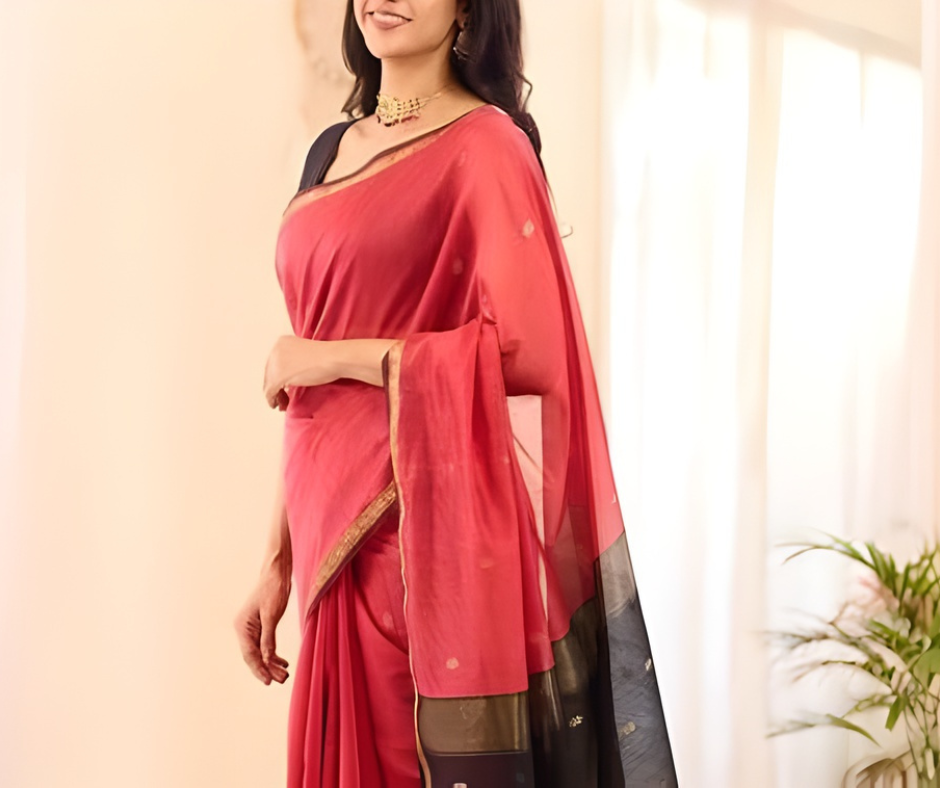
Basic Overview
| Field | Details |
|---|---|
| Craft Name | Maheshwari Saree |
| Origin Place | Maheshwar, Madhya Pradesh, India |
| Patron / Promoter | Queen Ahilyabai Holkar |
| Established Period | 18th Century |
| Fabric Type | Cotton & Silk-Cotton Blend |
| Weaving Style | Handloom |
| Key Features | Lightweight Texture, Striped Borders, Reversible Designs |
| Popular Motifs | Checks, Temple Borders, Floral & Geometric Patterns |
| Primary Use | Daily Wear, Festivals, Office & Ceremonies |
| Market Presence | Domestic & International |
| Artisan Base | Local Weaver Families of Maheshwar |
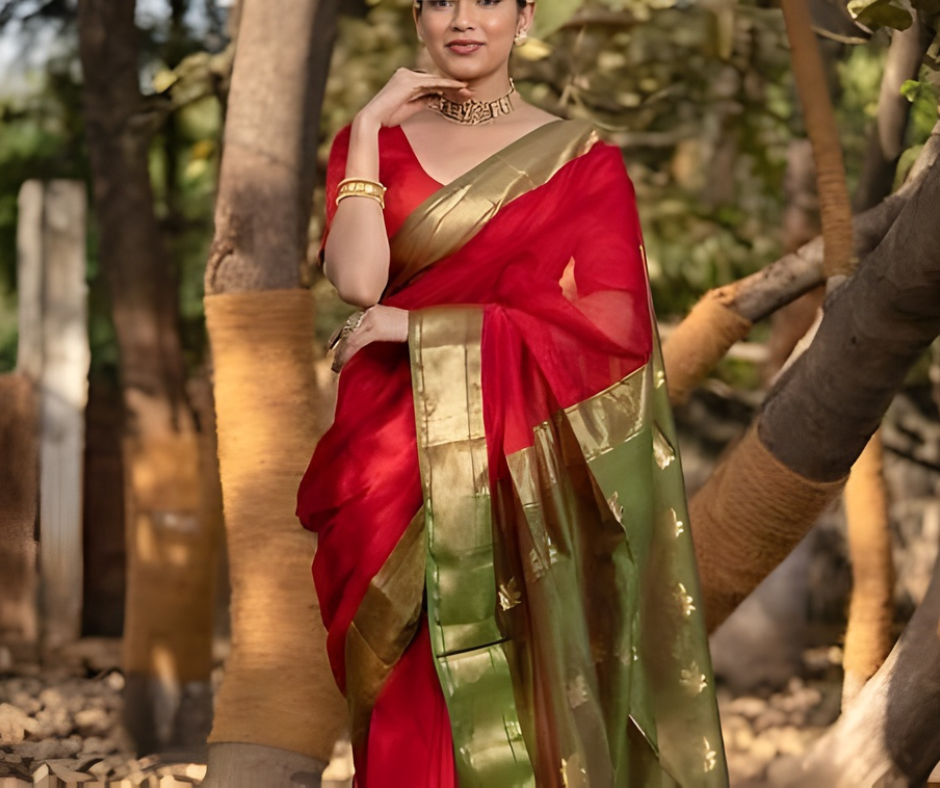
Maheshwari Saree – Tracing Its Origins & Craft Evolution
Maheshwari weaving began as a royal initiative to promote local craftsmanship and provide employment to artisans. The earliest sarees were woven using pure cotton with minimalistic borders inspired by palace architecture and temple carvings. As trade routes expanded, silk threads were incorporated, enhancing sheen and durability while preserving lightness.
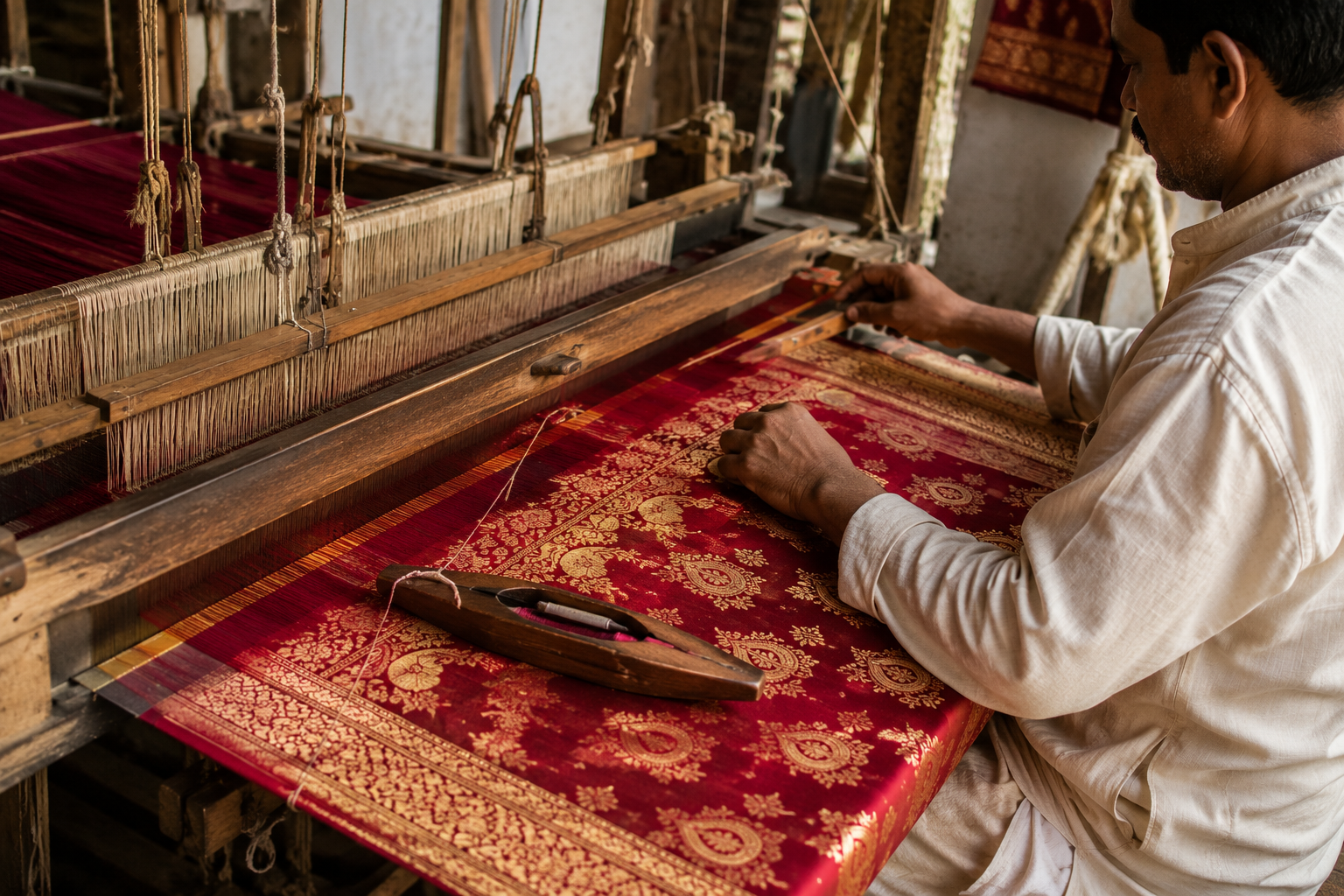
With modernization, design variations increased—introducing vibrant color palettes, zari borders, and reversible pallus. Despite technological advancements, traditional pit looms and hand-operated techniques remain central to production, ensuring authenticity and uniqueness in every piece.
Key Features & Craft Strengths
Lightweight Comfort
Easy to drape and ideal for long wear in warm climates.
Distinct Borders & Pallus
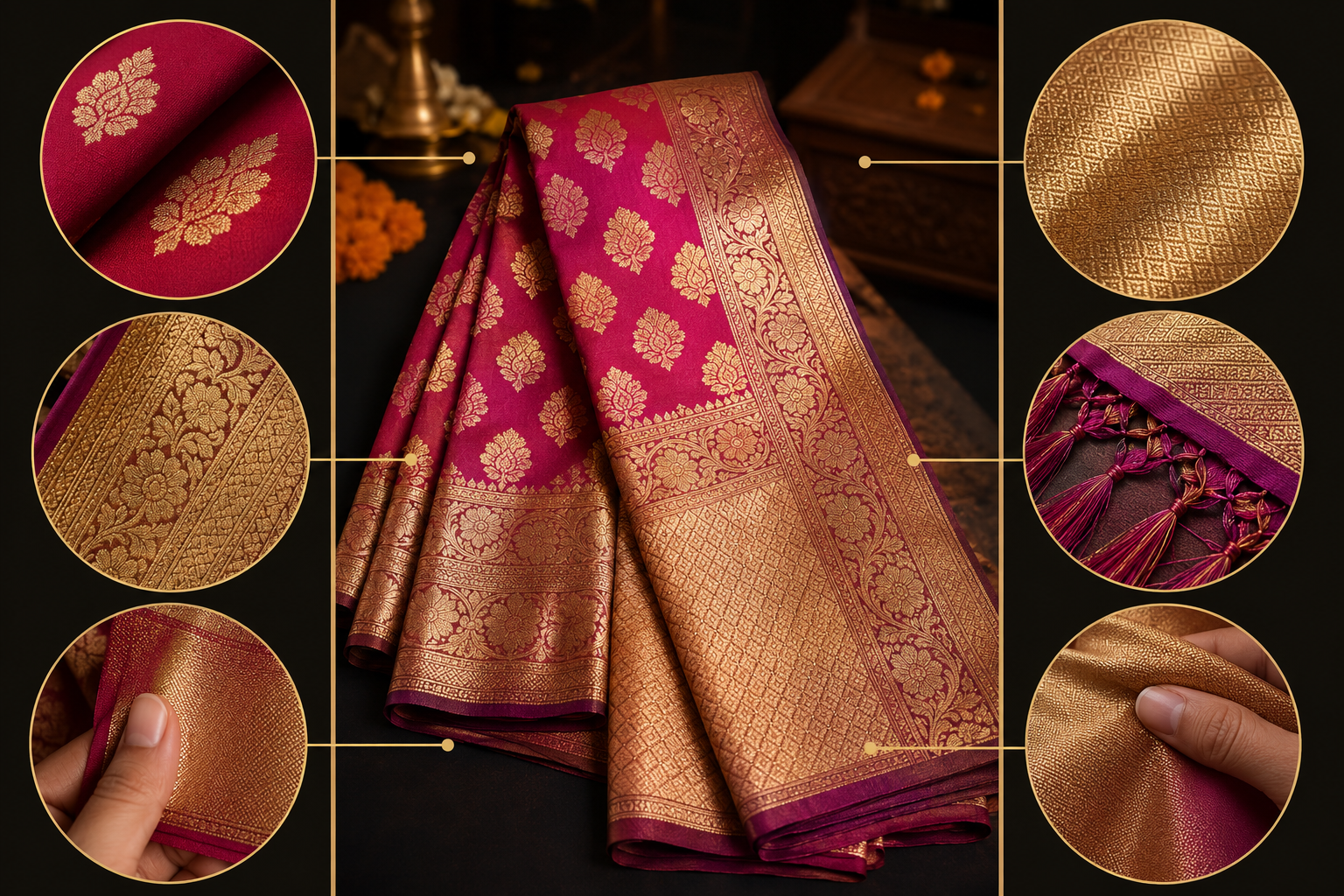
Recognized for striped, checked, and temple-inspired edge designs.
Silk-Cotton Blend
Combines the shine of silk with the breathability of cotton.
Reversible Weave
Many Maheshwari sarees can be worn from both sides.
Artisan Heritage
Craft preserved by generations of weaving families.
Versatile Styling
Suitable for office wear, festive gatherings, and formal events.
Eco-Friendly Craft
Handloom process consumes minimal electricity.
Cultural Identity
Represents Madhya Pradesh’s textile heritage.
Market Presence & Craft Identity
Strong demand in Indian metropolitan cities and ethnic fashion markets.
Appreciated globally for minimalist elegance and breathable fabric.
Frequently showcased in handloom exhibitions and cultural fairs.
Identified by fine stripes, subtle sheen, and neat geometric borders.
Positioned as an affordable luxury handloom textile.
Maheshwari Saree – Weaver Clusters & Organizations
| Cluster / Brand | Founded | Promoter | Business Type | Market Reach | Ownership | Origin | Official URL |
|---|---|---|---|---|---|---|---|
| Maheshwar Handloom Clusters | Traditional | Local Weaver Communities | Handloom Weaving | Domestic & Export | Community Based | India | https://maheshwarhandloom.com |
| Rehwa Society | 1978 | Richard & Sally Holkar | Craft Revival & Retail | International | Trust | Maheshwar, India | https://rehwasociety.org |
| MPTDC Mrignayani Emporium | 1960s+ | Govt. of Madhya Pradesh | Handloom Retail & Promotion | Domestic & Export | Government | Bhopal, India | https://mrignayani.org |
| WomenWeave | 2003 | Non-Profit Initiative | Artisan Development & Retail | International | NGO / Trust | Maheshwar, India | https://www.womenweave.org |
| Weavers of Maheshwar (WOM) | 2012 | Private Initiative | Handloom Production & Online Retail | Global | Private | Maheshwar, India | https://weaversofmaheshwar.com |
| State Handloom Emporiums | 1970s+ | Govt. Bodies | Retail & Promotion | Domestic | Government | India | https://www.indianhandloombrand.gov.in |
Conclusion
Maheshwari Saree – Timeless Weave of Royal Grace reflects how an 18th-century royal textile initiative transformed into a globally admired handloom tradition. Blending silk sheen with cotton comfort, Maheshwari sarees stand as a testament to India’s enduring weaving legacy. Sustained by artisan families and cultural patronage, this craft continues to symbolize elegance, heritage, and sustainable fashion across generations.