Baluchari Saree: Regal Silk Narratives & Timeless Cultural Masterpiece
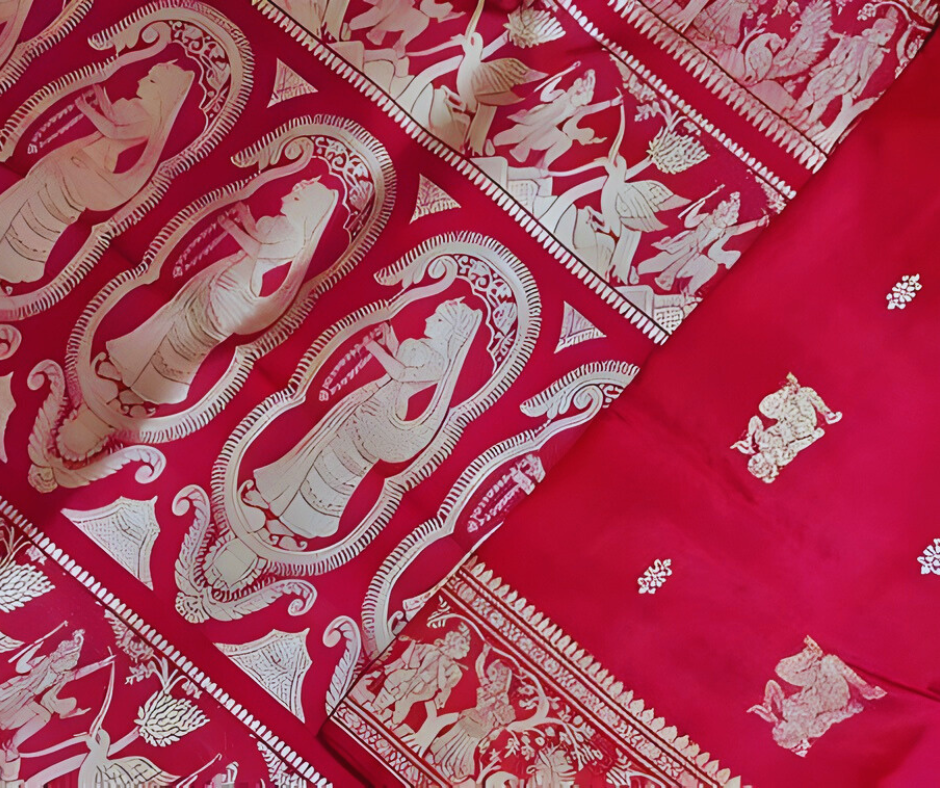
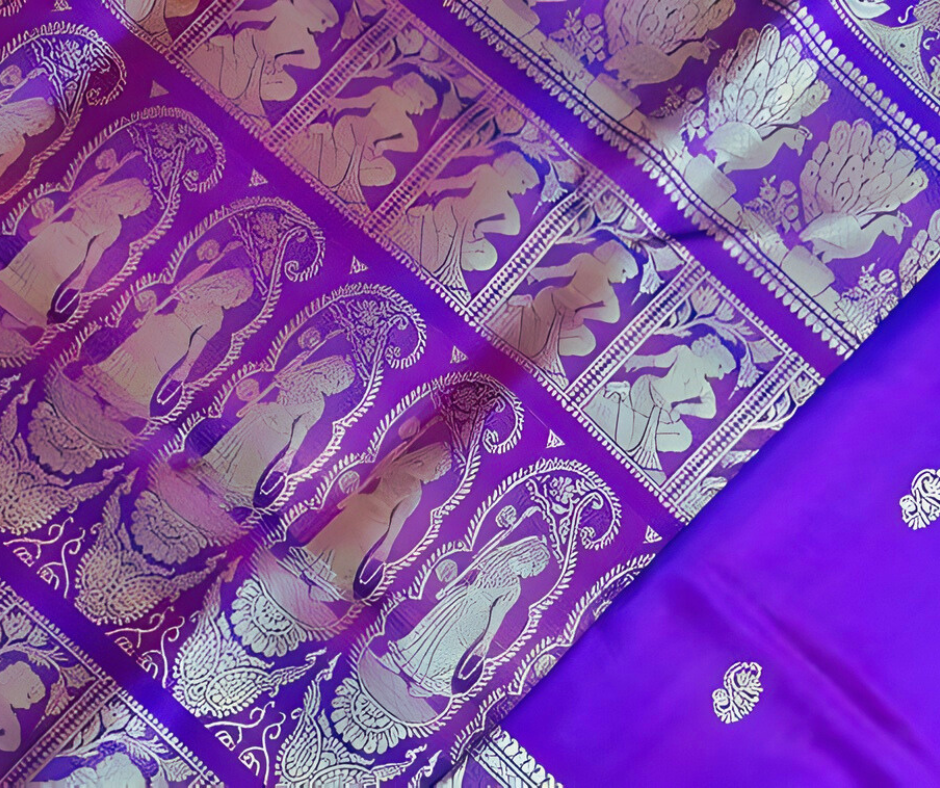
Baluchari Saree, originating in the 18th century in West Bengal, is one of India’s most artistic silk saree traditions. These sarees became famous for their elaborate mythological scenes and royal court depictions woven into the pallu. Initially patronized by nawabs and aristocrats, Baluchari sarees symbolized luxury, storytelling, and refined craftsmanship.
Over time, the weaving center shifted from Baluchar village to Bishnupur, where artisans revived and preserved the craft. Today, Baluchari sarees are worn during weddings, festivals, and cultural celebrations, admired for their heritage value and timeless elegance.
Basic Overview
| Field | Details |
|---|---|
| Craft Name | Baluchari Saree |
| Origin Period | 18th Century |
| Origin Place | Baluchar, West Bengal |
| Current Hub | Bishnupur, West Bengal |
| Fabric Type | Pure Silk (Mulberry Silk) |
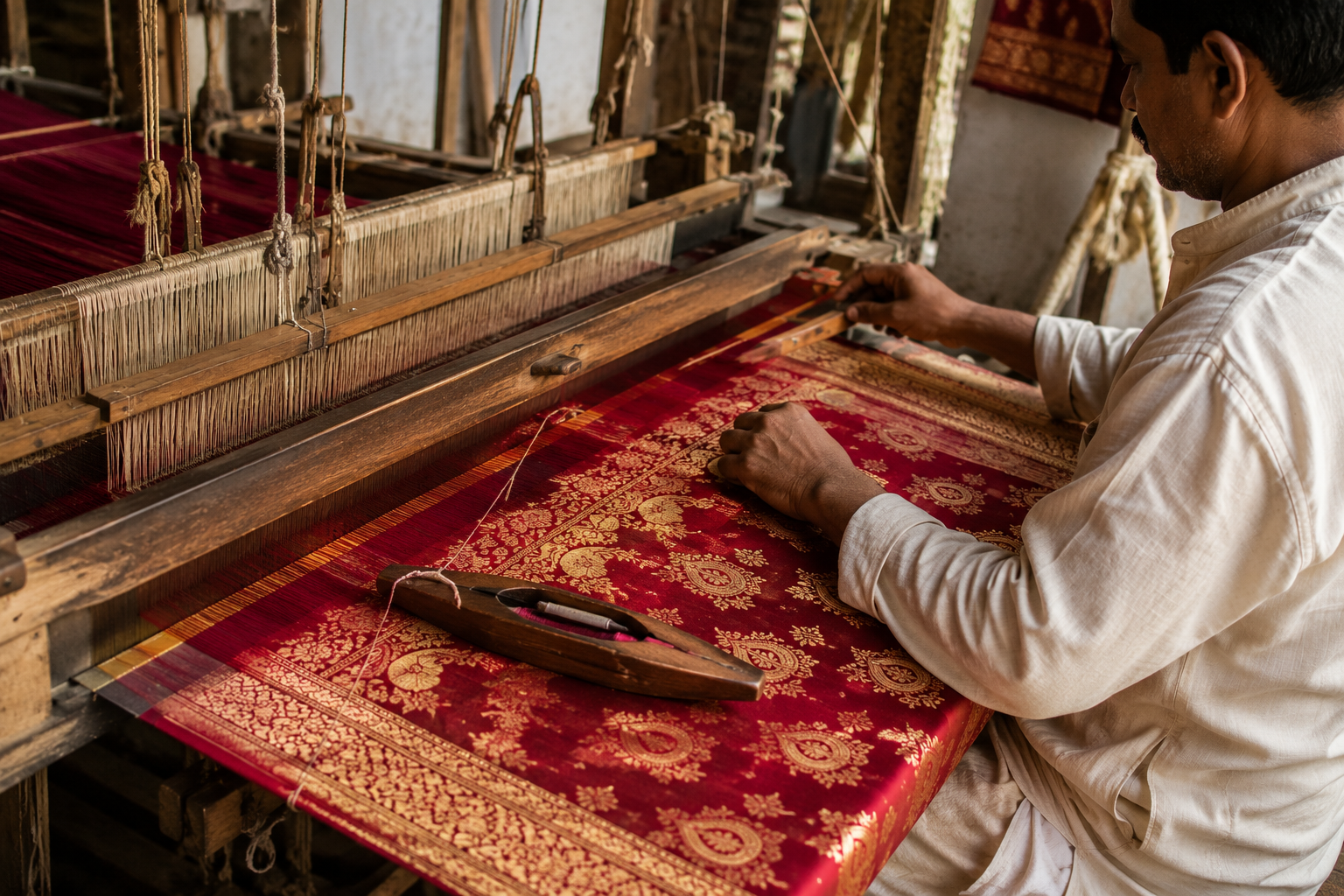
| Weaving Technique | Jacquard Handloom |
| Famous Motifs | Mythological Scenes, Royal Courts, Floral Borders |
| Usage | Weddings, Festivals, Cultural Events |
| Industry Type | Handloom & Textile Craft |
| Market Presence | Domestic & International |
Baluchari Saree – Origins & Craft Evolution
Baluchari weaving began as a royal textile craft supported by Bengal’s aristocracy. Early sarees showcased scenes from epics like Ramayana and Mahabharata, turning each piece into a wearable narrative artwork. Floods and economic decline once threatened the craft, but skilled weavers in Bishnupur restored its glory through dedication and innovation.
With time, artisans introduced lighter silks, new color palettes, and contemporary themes while maintaining the signature storytelling pallu. This balance of tradition and adaptation allowed Baluchari sarees to remain relevant in modern fashion.
Key Features & Craft Strengths
Narrative Designs
Detailed mythological and social scenes woven directly into the silk.
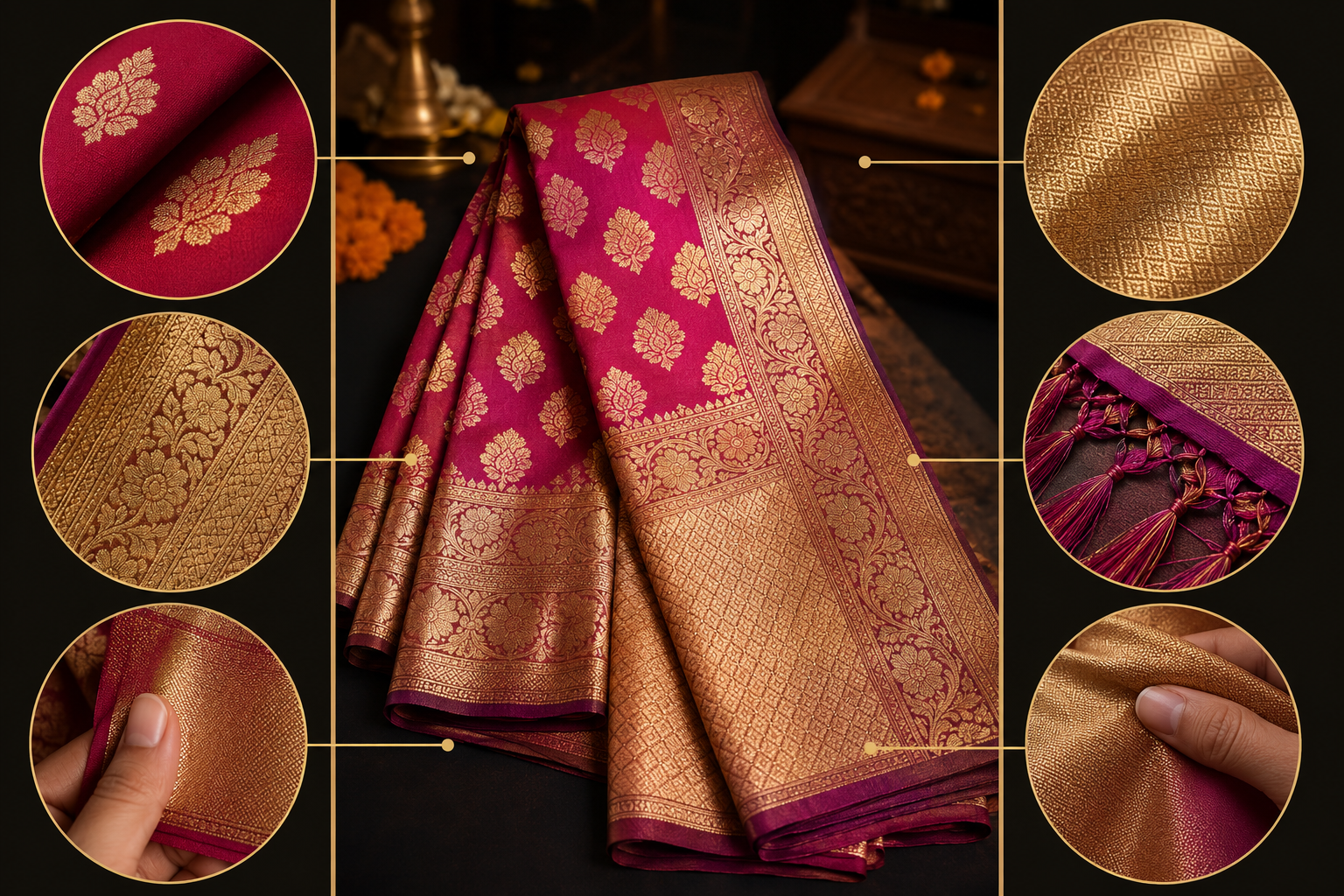
Luxurious Silk Texture
Smooth mulberry silk with a natural sheen and rich drape.
Intricate Borders
Floral vines, animals, and miniature royal figures.
Handloom Excellence
Each saree can take 1–3 weeks depending on complexity.
Cultural Symbolism
Represents Bengal’s artistic and literary heritage.
Color Richness
Traditional maroon, purple, indigo, deep blue, and emerald tones.
Artisan Skill
Requires years of loom training and pattern mastery.
Timeless Appeal
Blends classical storytelling with modern fashion needs.
Market Presence & Identity
Strong demand in West Bengal and major Indian wedding markets.
Appreciated globally among handloom and heritage textile collectors.
Recognized for detailed pallus rather than heavy embroidery.
Positioned as a premium cultural saree rather than mass-produced fashion.
Baluchari Saree – Top Brands
| Cluster / Brand | Founded | Promoter | Business Type | Market Reach | Ownership | Origin |
|---|---|---|---|---|---|---|
| Bishnupur Baluchari Weavers Association | Traditional | Local Artisan Families | Silk Saree Weaving & Sales | Domestic & Export | Community Based | India |
| Biswa Bangla | 2013 | Govt. of West Bengal | Handloom Retail & Promotion | National & International | State Govt. | India |
| Tantuja | 1990s | West Bengal State Handloom | Textile Retail & Distribution | National | Semi-Govt. | India |
| Manjusha Handloom | 1980s+ | Private Owners | Silk Saree Manufacturing & Retail | Domestic | Private | India |
| Independent Baluchari Silk Artisans | Traditional | Private Families | Custom Handloom Sarees | Niche Global | Private | India |
Conclusion
Baluchari Saree – Timeless Silk Storytelling Tradition reflects how a regional royal weave transformed into a nationally treasured handloom art. Through artisan dedication, cultural storytelling, and evolving design sensibilities, Baluchari sarees continue to represent India’s luxurious textile heritage. Even today, each saree stands as a woven canvas of mythology, history, and enduring craftsmanship.