Dakmanda Textile: Traditional Garo Weaving Heritage of Meghalaya
Dakmanda Textile is a vibrant handwoven fabric belonging to the Garo tribe of Meghalaya, Northeast India. Known for its bold stripes, geometric motifs, and rich cultural symbolism, Dakmanda is more than clothing — it is a reflection of tribal identity and ancestral craftsmanship passed down through generations of skilled women weavers.
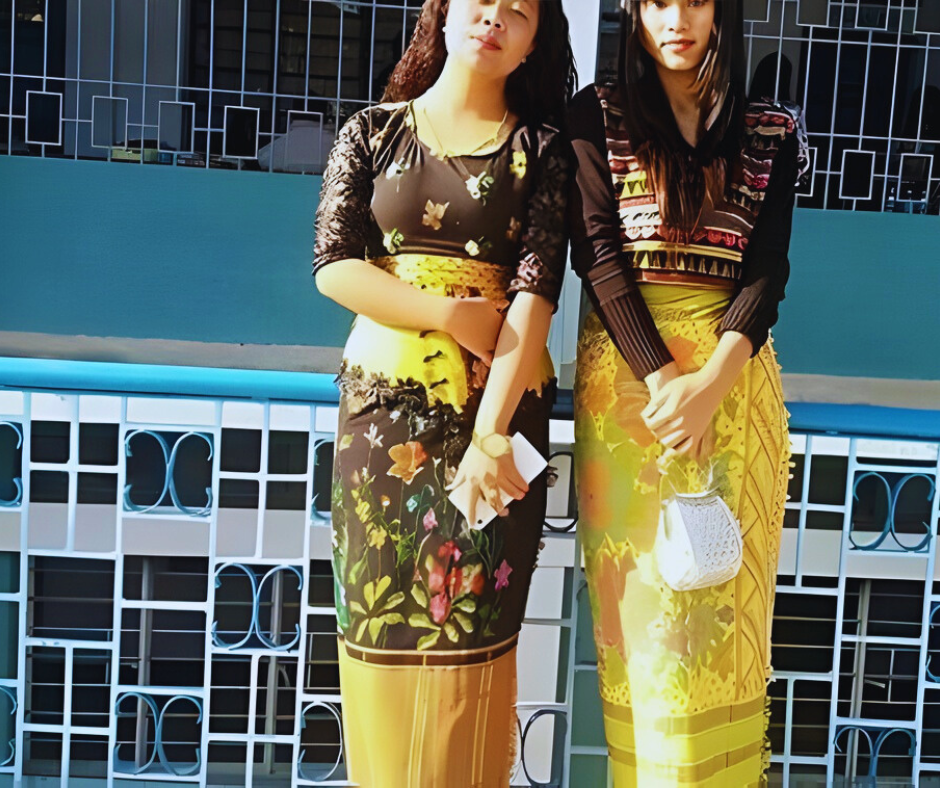
Traditionally worn as a wraparound garment, Dakmanda represents pride, dignity, and community values. Over time, this indigenous textile has gained appreciation beyond regional boundaries, finding space in contemporary fashion and ethnic décor collections.
Basic Overview
| Field | Details |
|---|---|
| Craft Name | Dakmanda Textile |
| Community | Garo Tribe |
| Region | Meghalaya, Northeast India |
| Craft Type | Handwoven Tribal Textile |
| Traditional Use | Women’s Wraparound Garment |
| Materials | Cotton Threads |
| Design Style | Geometric Patterns & Bold Stripes |
| Technique | Traditional Handloom Weaving |
| Market Reach | Regional & National Craft Markets |
| Cultural Value | Tribal Identity & Heritage |
Dakmanda – Tracing Its Origins & Craft Evolution
Dakmanda weaving originated centuries ago within the Garo tribal households where weaving skills were taught from mothers to daughters. The textile was historically produced for daily wear, rituals, and festivals, making it an integral part of social life.
With modernization, Dakmanda evolved from a purely functional garment into a recognized ethnic textile admired for its aesthetic beauty. Designers and craft promoters now adapt its traditional motifs into scarves, stoles, and home décor fabrics, expanding its cultural footprint while preserving authenticity.
Design Characteristics & Craftsmanship
Bold Patterns
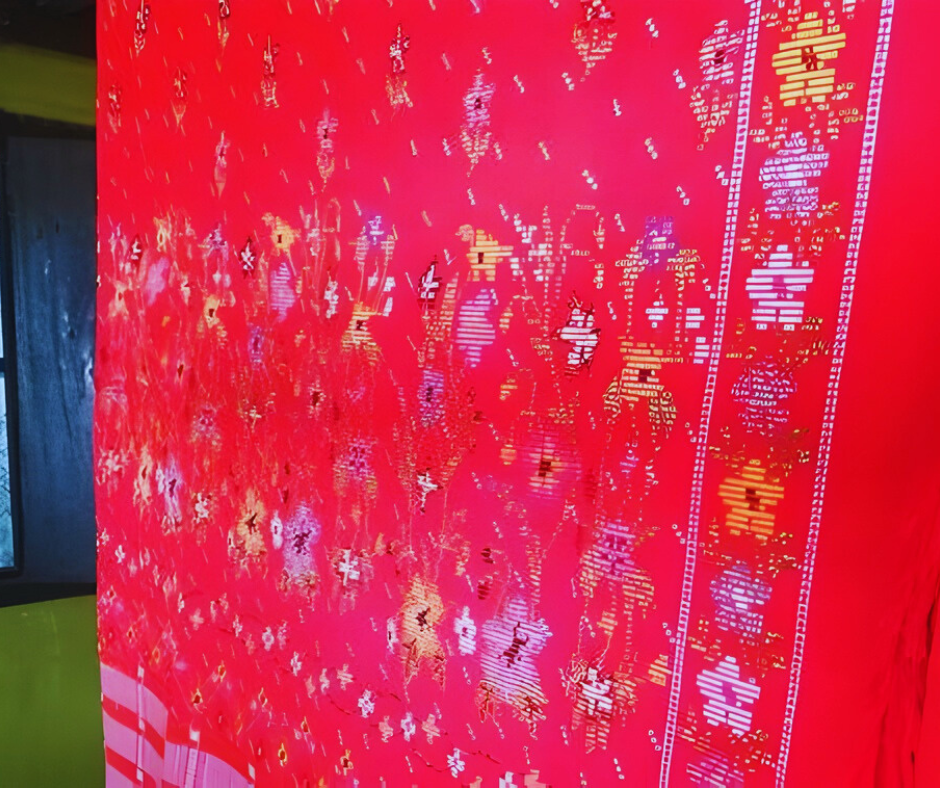
Distinct horizontal stripes and geometric motifs symbolize harmony and tribal storytelling.
Vibrant Colors
Common shades include red, black, yellow, and white reflecting nature and festive spirit.
Handloom Precision
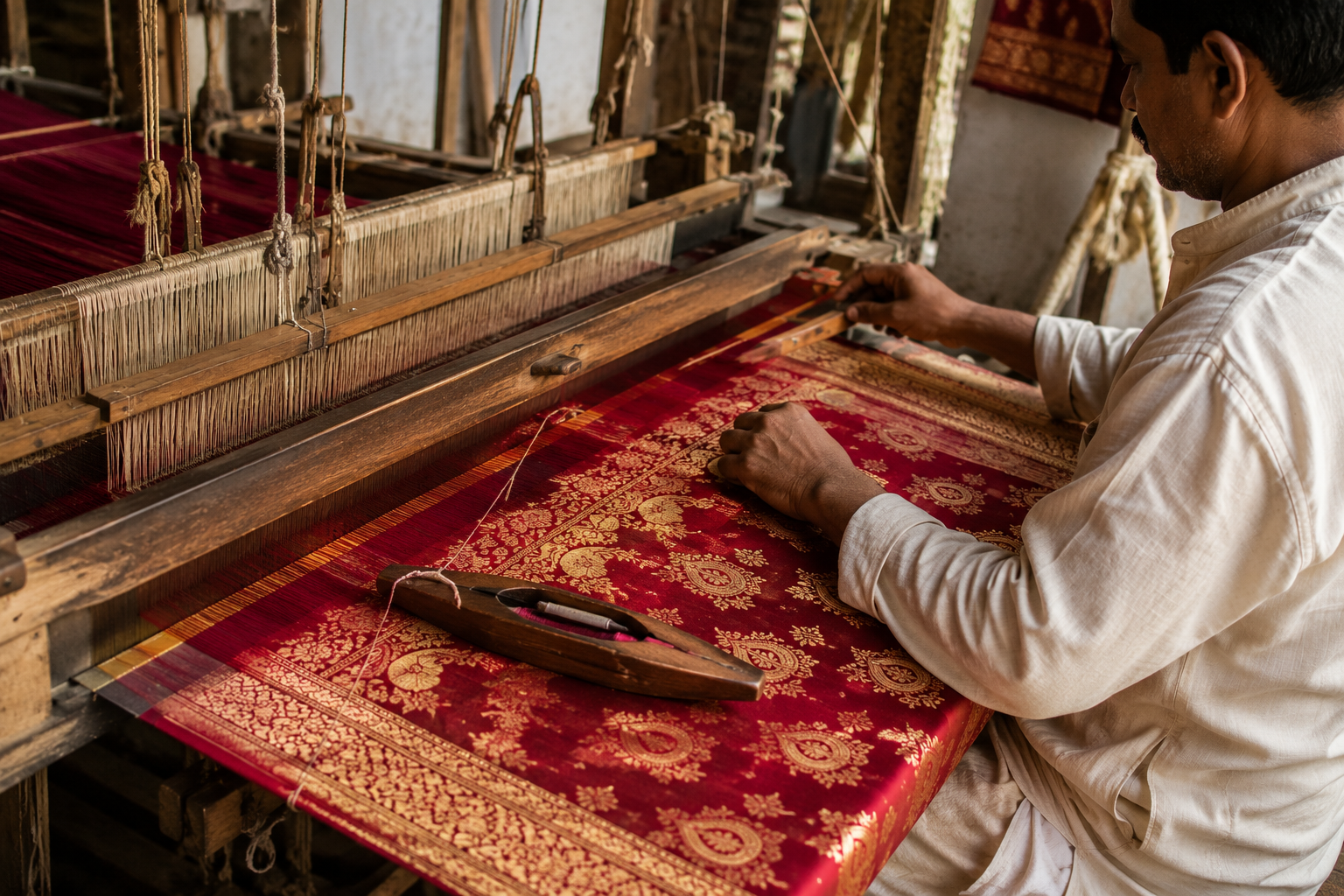
Each piece is woven manually, ensuring uniqueness and artisanal value.
Natural Comfort
Cotton-based weaving makes the fabric breathable and durable for everyday use.
Cultural Importance & Preservation
Dakmanda textiles are often worn during:
Traditional festivals
Community ceremonies
Cultural dances and rituals
Government bodies and artisan cooperatives actively promote Garo weaving through exhibitions, craft fairs, and training workshops to sustain this heritage art form for future generations.
Key Features & Craft Strengths
Heritage Legacy – Centuries-old tribal weaving tradition.
Handmade Authenticity – Every piece is uniquely crafted.
Eco-Friendly Materials – Predominantly cotton-based threads.
Cultural Symbolism – Patterns carry social meanings.
Versatile Usage – Apparel, stoles, and décor textiles.
Artisan Empowerment – Supports rural women weavers.
Growing Recognition – Increasing demand in ethnic fashion markets.
Timeless Appeal – Blends tradition with modern design adaptability.
Dakmanda Textile – Craft Cluster & Community
| Cluster / Craft | Region | Craft Type | Market Reach | Ownership | Origin |
|---|---|---|---|---|---|
| Dakmanda Weaving | Meghalaya | Tribal Handloom Textile | Regional / National | Community Artisans | India |
| Garo Women Weavers | Northeast India | Traditional Fabric Craft | Craft Exhibitions | Cooperative Groups | India |
Conclusion
Dakmanda Textile – A Living Symbol of Garo Tribal Artistry showcases how indigenous weaving traditions continue to thrive in modern India. From household looms to national craft platforms, Dakmanda reflects cultural pride, skilled craftsmanship, and sustainable artistry. Its vibrant patterns and authentic handwoven texture ensure that this tribal textile remains a timeless representation of India’s diverse handmade heritage.