Kashida-e-Sozni – Tracing Its Origins & Cultural Legacy
The origins of Kashida-e-Sozni date back several centuries to the Mughal era, when Persian artistic influences blended with Kashmiri textile traditions. Royal patronage encouraged artisans to refine needle techniques that produced extremely fine, almost invisible stitches. Initially crafted for nobility in shawls and royal garments, the embroidery later became a symbol of Kashmiri household artistry and ceremonial wear.
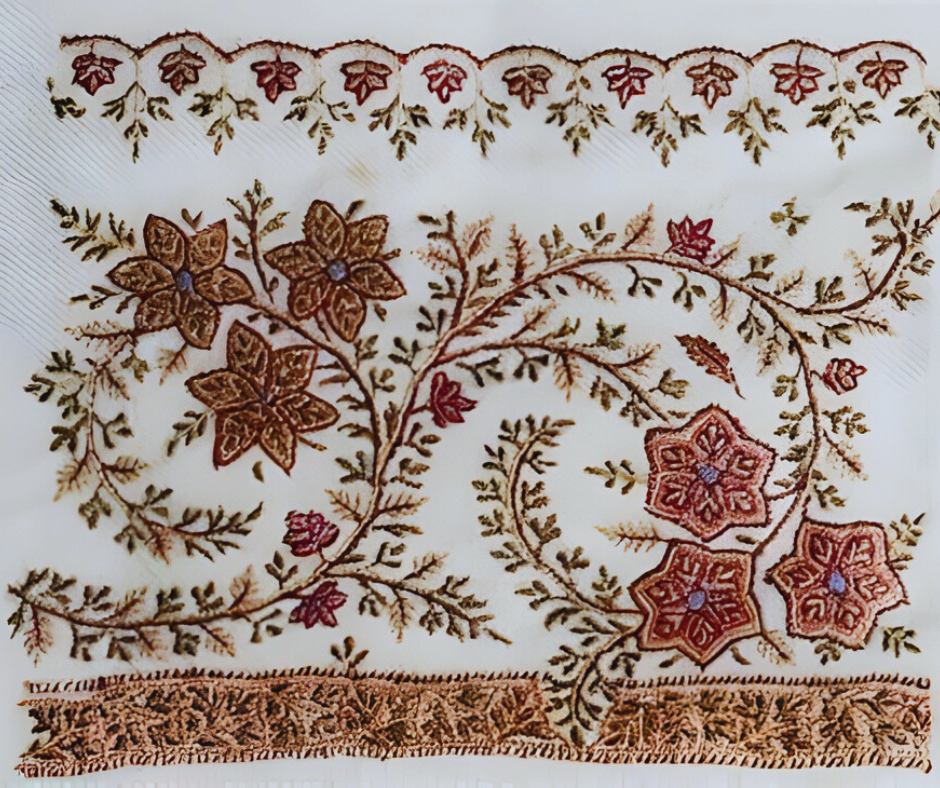
Artisans spend weeks or even months completing a single shawl, ensuring mirror-like precision on both sides of the fabric — a hallmark of authentic Sozni work. The motifs often draw inspiration from Kashmir’s natural beauty, including blooming flowers, almond blossoms, and chinar leaves. This craft preserves regional identity while reflecting sophistication and understated luxury.
Basic Overview
| Field | Details |
|---|---|
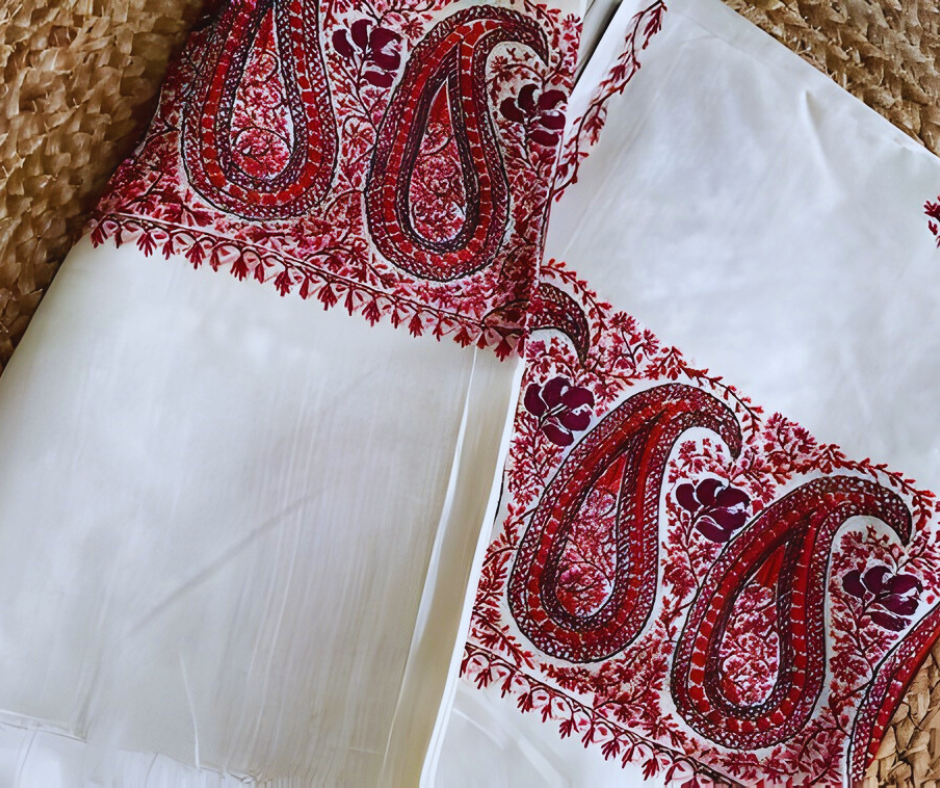
| Traditional Visual | Floral vines, paisleys, chinar leaves, elegant borders |
| Alternative Names | Sozni Embroidery, Kashmiri Sozni Work |
| Craft Type | Hand Embroidery & Textile Art |
| Area | Srinagar & Kashmir Valley |
| State | Jammu & Kashmir |
| Country | India |
| GI Registration | Yes – Kashmir Sozni Embroidery GI Tagged |
| Raw Material | Pashmina, Wool, Silk, Cotton, Fine Silk Threads |
| Main Products | Shawls, Stoles, Sarees, Kurtas, Cushion Covers |
| Registered Logo | GI Tag Mark / Handicraft Labels |
Kashida-e-Sozni – Tracing Its Origins & Cultural Legacy
The origins of Kashida-e-Sozni date back several centuries to the Mughal period, when Persian design influences blended with Kashmiri textile traditions. Royal patronage encouraged artisans to refine extremely fine needle techniques that produced near-invisible stitches. Initially reserved for nobility in shawls and ceremonial garments, the craft gradually became a cultural identity of Kashmiri households.
Artisans often spend weeks or months completing a single embroidered piece, ensuring mirror-like precision on both sides of the fabric — the true hallmark of authentic Sozni work. Motifs are inspired by Kashmir’s natural beauty such as blooming flowers, almond blossoms, and chinar leaves, preserving regional storytelling through thread artistry.
Global Appeal & Market Recognition
Valued for luxury hand embroidery
Popular in premium fashion & heritage textiles
High demand in shawls, stoles & designer wear
Exported to Europe, Middle East & North America
Preferred for bridal & ceremonial gifting
Recognized as Kashmir’s iconic embroidery identity
Exceptional Craftsmanship & Artistic Features
Ultra-Fine Needlework – Extremely thin needles create precise stitches.
Double-Sided Technique – Design appears identical on both sides.
Nature-Inspired Motifs – Flowers, vines, paisleys, chinar leaves.
Premium Fabrics – Commonly crafted on Pashmina & silk.
Soft Color Palette – Pastels, neutrals, and earthy tones.
Hand-Drawn Layouts – Patterns sketched before stitching.
Time-Intensive Process – One shawl may take months.
Eco-Friendly Craft – Mostly manual, minimal machinery.
Generational Skill – Techniques passed within artisan families.
Kashida-e-Sozni – Top Brands
| Cluster / Brand | Founded | Promoter | Business Type | Market Reach | Ownership | Origin |
|---|---|---|---|---|---|---|
| Kashmir Sozni Artisan Clusters | Traditional | Local Artisans | Hand Embroidery & Shawls | Domestic & Export | Community | Jammu & Kashmir |
| J&K Government Handicraft Emporiums | 1970s | Govt. of J&K | Craft Promotion & Retail | Global | Govt. | Jammu & Kashmir |
| Private Shawl Export Houses | 1990s | Manufacturers / Traders | Pashmina & Textile Export | International | Pvt. | India |
| Boutique Luxury Textile Brands | 2010s | Designers | Fashion Shawls & Apparel | International | Pvt. | India |
Conclusion
Kashida-e-Sozni – Elegant Needle Heritage of Kashmir represents the pinnacle of India’s refined textile embroidery traditions. With its double-sided finesse, intricate floral detailing, and luxurious fabric base, Sozni embroidery continues to attract global fashion houses, collectors, and heritage lovers. From graceful Pashmina shawls to finely embroidered apparel accents, this art form remains a timeless expression of Kashmir’s handcrafted elegance and India’s rich cultural legacy.