Sanjhi Paper Art – Sacred Paper-Cutting Tradition of Vrindavan
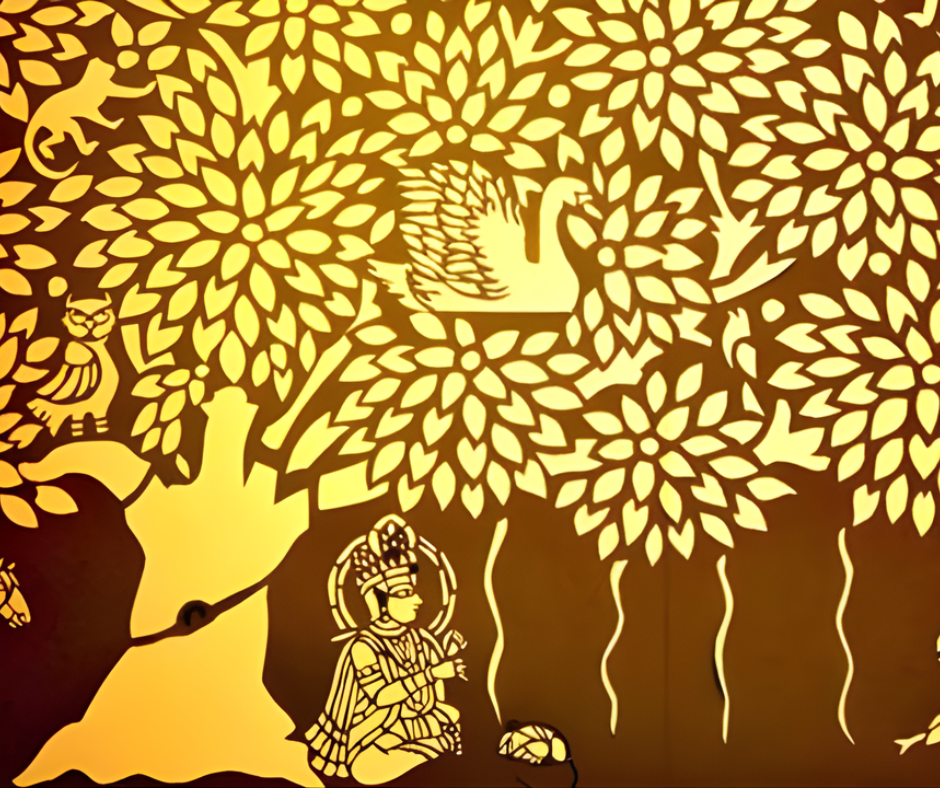
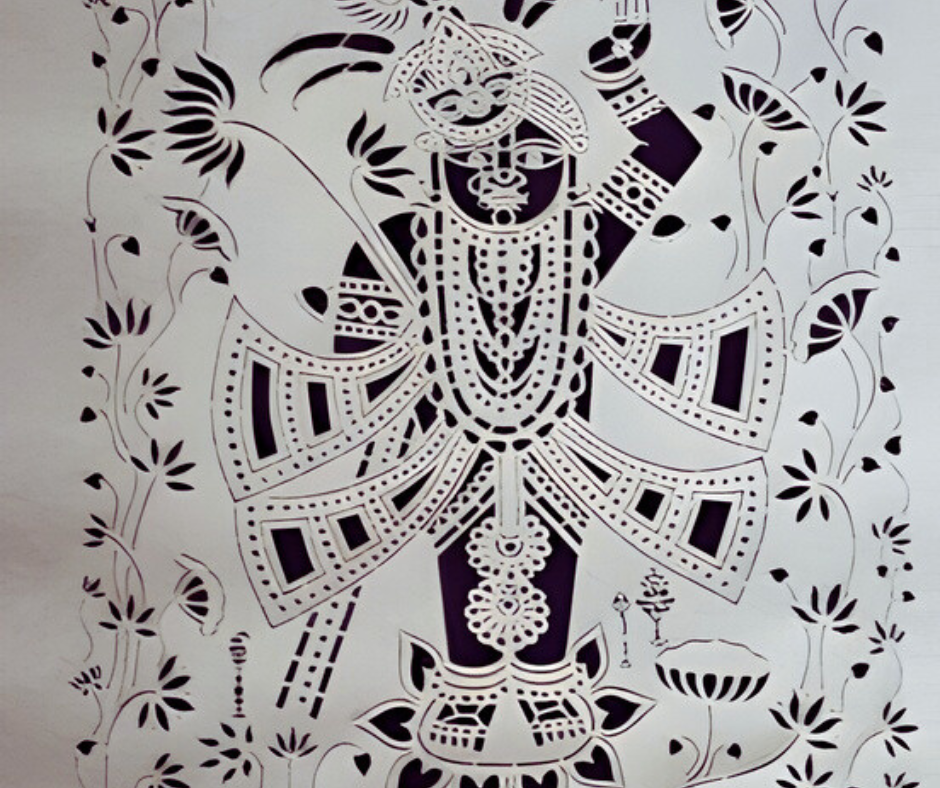
Sanjhi Paper Art is one of India’s most refined and spiritually rooted paper-cutting traditions, originating in the temple towns of Vrindavan and Mathura. Traditionally created as devotional stencils for Krishna worship, Sanjhi is not merely decorative—it is a sacred visual offering expressing bhakti (devotion), balance, and divine harmony. Crafted through precise folding and cutting of handmade paper, Sanjhi reflects deep mathematical symmetry, ritual purity, and Vaishnav philosophy.
Basic Overview
| Field | Details |
|---|---|
| Traditional Visual | Intricate symmetrical paper-cut motifs with Krishna, lotus, peacock & floral geometry |
| Alternative Names | Sanjhi Kala, Sanjhi Paper Cutting |
| Craft Type | Sacred Paper-Cutting & Stencil Art |
| Community | Temple artisans & Vaishnav devotees |
| Area | Vrindavan & Mathura – Uttar Pradesh |
| Country | India |
| Primary Deity | Lord Krishna |
| Art Surface | Handmade paper (Khadi / Wasli) |
| Tools Used | Fine blades, small scissors, needles |
| Colors & Materials | Natural white / dyed handmade paper |
| Cultural Status | Sacred & Ritualistic |
Sanjhi Paper Art – Origins & Cultural Legacy
Sanjhi Paper Art developed within Vaishnav temple traditions as a daily devotional practice. Historically, temple artists created fresh Sanjhi designs every evening as offerings to Lord Krishna. These stencils were placed against walls or illuminated surfaces, transforming light and shadow into sacred narratives.
Each Sanjhi composition followed strict spiritual discipline—artists observed ritual purity, calm concentration, and devotional chanting during creation. Over centuries, this practice evolved from temple ritual into a revered folk-classical art form, admired for its finesse and spiritual depth.
Symbolism & Iconography
Sanjhi Paper Art communicates devotion through a refined symbolic language:
Lotus motifs: Purity, divine birth, spiritual awakening
Peacock forms: Grace, love, Krishna’s divine play (leela)
Floral mandalas: Cosmic order and harmony
Radha-Krishna figures: Eternal love and devotion
Geometric symmetry: Balance between material and spiritual worlds
Traditional Materials & Technique
Sanjhi creation demands exceptional precision and patience:
Paper: Thin handmade paper (khadi/wasli), sometimes naturally dyed
Design Method: Paper is folded multiple times to achieve radial symmetry
Cutting Tools: Ultra-fine blades or scissors
Technique: Layered cutting without preliminary sketches in advanced works
Ritual Importance & Usage
Traditionally, Sanjhi artworks were created for:
Daily temple worship
Janmashtami celebrations
Kartik month rituals
Decorative sanctification of temple walls
The artwork was considered a sacred offering rather than a commodity, often dismantled after ritual completion, reinforcing the concept of impermanence and devotion.
Role of Temple Artists & Oral Tradition
Historically, only trained temple artisans and dedicated devotees were permitted to create Sanjhi. Knowledge passed orally through generations, emphasizing discipline, spiritual intent, and mastery of symmetry rather than commercial output.
Contemporary Presence
Today, Sanjhi Paper Art has found renewed relevance beyond temples:
Wall décor & framed art
Textile and surface design inspiration
Wedding invitations & festive installations
Art workshops and heritage education
While modern adaptations introduce color and mixed media, traditional Sanjhi remains rooted in white-paper purity and devotional symbolism.
Manufacturers & Top
| Cluster / Institution | Founded | Promoter | Art Type | Market Reach | Ownership | Origin |
|---|---|---|---|---|---|---|
| Traditional Temple Artisan Families | Ancient | Vaishnav Temple Artists | Ritual Sanjhi Paper Art | Local | Community-based | Vrindavan–Mathura |
| Vrindavan Sanjhi Artisans Cluster | Traditional | Local Artisan Groups | Devotional Paper-Cut Art | Domestic | Private | Uttar Pradesh |
| Cultural Trusts & Ashrams | 1900s | Religious Institutions | Sanjhi Preservation & Training | National | Non-Profit | India |
| Contemporary Craft Brands | 2000s | Designers / Social Enterprises | Decorative Sanjhi Wall Art | Global | Private | India |
Conclusion
Sanjhi Paper Art – Sacred Paper-Cutting Tradition of Vrindavan represents the union of devotion, discipline, and design. With its spiritual origins, flawless symmetry, and meditative process, Sanjhi stands as a luminous example of India’s intangible cultural heritage—quiet, precise, and profoundly meaningful. Truly Proudly Made in India.