Pithora Painting – Sacred Ritual Wall Art of Tribal India
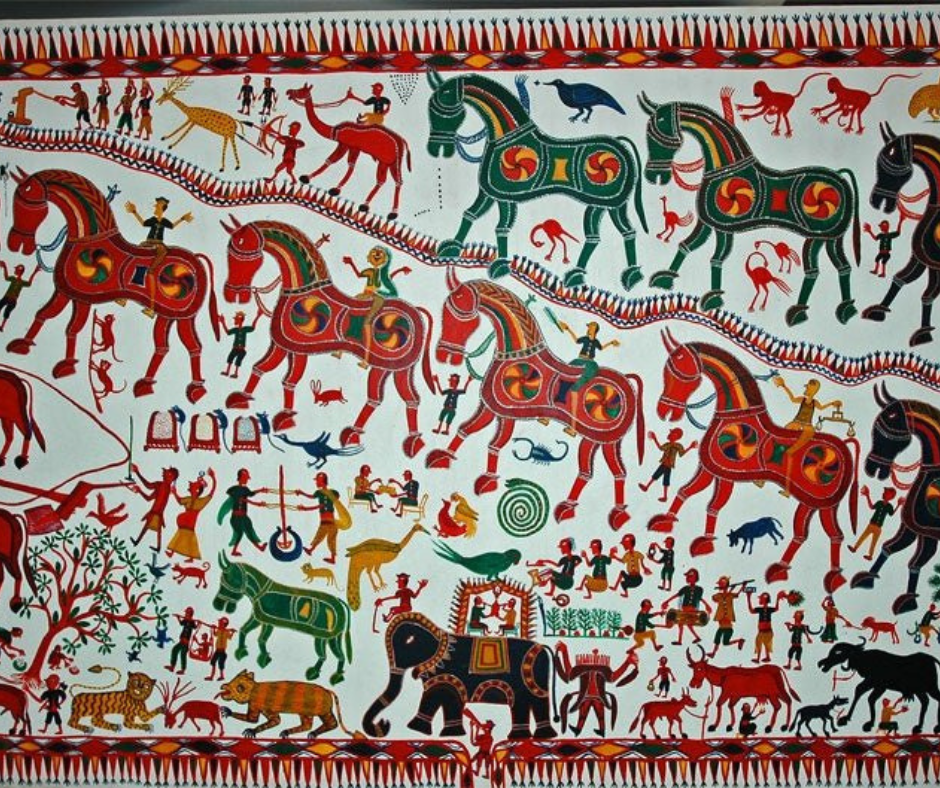
Pithora Painting is a sacred and ritualistic tribal wall art tradition of India, deeply rooted in mythology, spiritual belief, and community life. Traditionally created on the inner walls of homes, Pithora paintings are not merely decorative but are visual offerings made in honor of Baba Pithora, the principal tribal deity believed to bring prosperity, protection, and harmony. Executed using natural colors and symbolic imagery, this art form reflects the lived realities, faith systems, and collective memory of indigenous communities.
Basic Overview
| Field | Details |
|---|---|
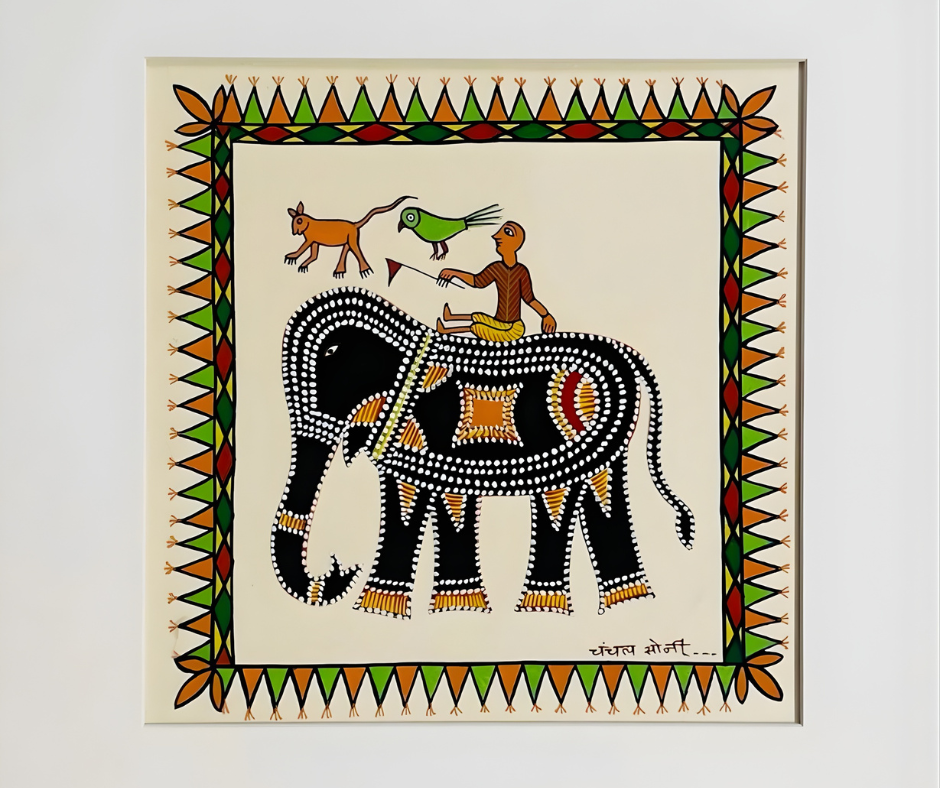
| Traditional Visual | Hand-painted ritual murals featuring horses, deities, sun & moon |
| Alternative Names | Pithora Art, Pithora Bhitti Chitra |
| Craft Type | Ritual Wall Painting & Tribal Folk Art |
| Major Region | Gujarat, Madhya Pradesh, Rajasthan |
| Country | India |
| Associated Communities | Rathwa, Bhilala, Bhil |
| Raw Materials | Natural pigments, cow dung, chuna (lime), mud walls |
| Tools Used | Handmade brushes from Tendu & Palash branches |
| Painted By | Male artists known as Lakhindra |
| Ritual Authority | Tribal priest (Bhadvo) |
| Cultural Status | Living ritual tradition |
Pithora Painting – Origins & Cultural Legacy
Historically, Pithora paintings began as cave, wall, and rock paintings, serving as sacred visual narratives of tribal belief systems. The art is intrinsically linked to ritual vows—paintings are commissioned after wishes such as recovery from illness, childbirth, or agricultural prosperity are fulfilled.
Practiced primarily by the Rathwa tribe and Bhilala tribe, Pithora painting has slowly evolved from a purely religious practice into a sustainable artistic occupation—without losing its spiritual essence.
Ritual Roles & Gender Traditions
Pithora painting is traditionally male-centric. The painters, called Lakhindra, are always men, as ritual purity governs participation. Women who are menstruating are excluded from the painting process. However, unmarried girls play an important preparatory role.
The ritual is overseen by a male shaman-priest known as the Bhadvo, who conducts ceremonies, chants invocations, and determines the symbolic order of the painting. This structured hierarchy reinforces the sacredness of the art.
Painting Process & Technique
The process begins with Lipai, where unmarried girls plaster the wall using a mixture of cow dung, water, and chuna to purify and prepare the surface.
Paintings are created using vivid natural colors—reds, greens, blues, oranges, and pinks—applied with brushes made from Tendu and Palash tree branches. The entire process follows ritual order and cannot be altered arbitrarily.
Symbolism & Visual Language
Sacred Horses – Central and most auspicious motif
Sun & Moon – Cosmic balance and continuity
Deities & Mythical Figures – Baba Pithora and local gods
Birds, animals, trees – Harmony with nature
Scenes of daily life – Farming, hunting, ploughing, festivals
Uniqueness & Contemporary Appeal
A defining feature of authentic Pithora art is that no two paintings are ever identical. Each mural varies in composition, color harmony, floral detailing, and symmetry—making originality its strongest artistic and commercial value.
Traditionally painted on white or cream backgrounds, modern adaptations may feature deep red or earthy mud tones, aligning with contemporary interior design trends. This has increased its appeal in urban homes and cultural spaces.
Traditional & Modern Applications
Ritual wall murals
Canvas & paper artworks
Home décor panels
Cultural exhibitions & museums
Tribal art galleries
Conclusion
Pithora Painting is a powerful fusion of ritual, mythology, and visual storytelling. From ancient cave walls to modern urban interiors, it continues to embody tribal faith, resilience, and creativity. Sacred yet evolving, Pithora stands as a living testament to India’s indigenous artistic heritage—where every mural tells a story of devotion, community, and life itself.