Rogan Painting – An Ancient Oil-Based Textile Art
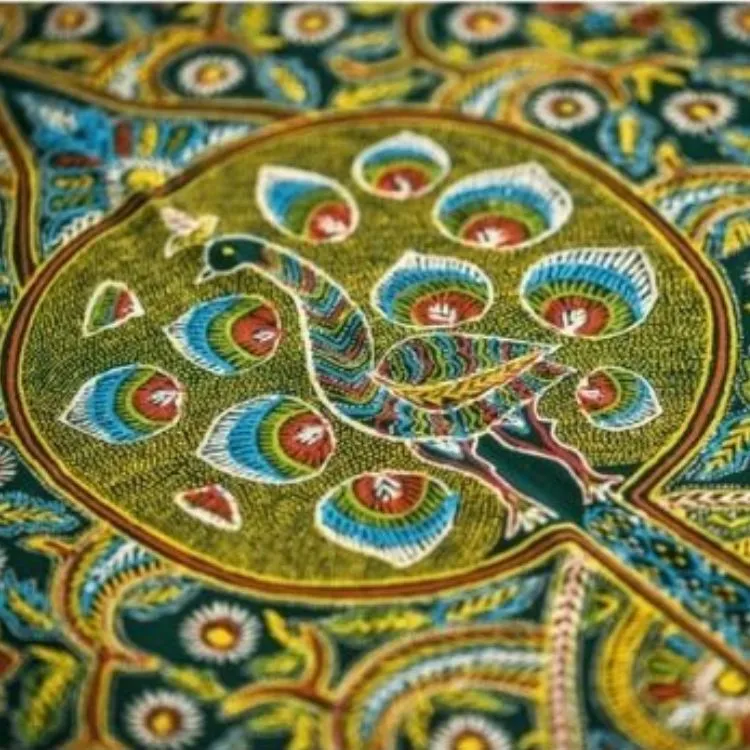
Rogan Painting is one of India’s rarest and most technically sophisticated textile arts, known for its distinctive oil-based painting technique executed freehand on fabric. Rooted in deep cultural memory and practiced by highly skilled artisans, Rogan Painting transforms cloth into a narrative canvas of symmetry, symbolism, and heritage. Created using boiled oil and natural dyes, this art form represents patience, precision, and generational knowledge.
Basic Overview
| Field | Details |
|---|---|
| Traditional Visual | Hand-painted symmetrical motifs on fabric using oil-based pigments |
| Alternative Names | Rogan Art, Drying Oil Textile Painting |
| Craft Type | Traditional Textile & Visual Folk Art |
| Major Region | Kutch, Gujarat |
| Country | India |
| GI Registration | Rogan Craft of Kutch (GI-tagged) |
| Raw Material | Castor oil, natural mineral & vegetable dyes, cotton & silk fabric |
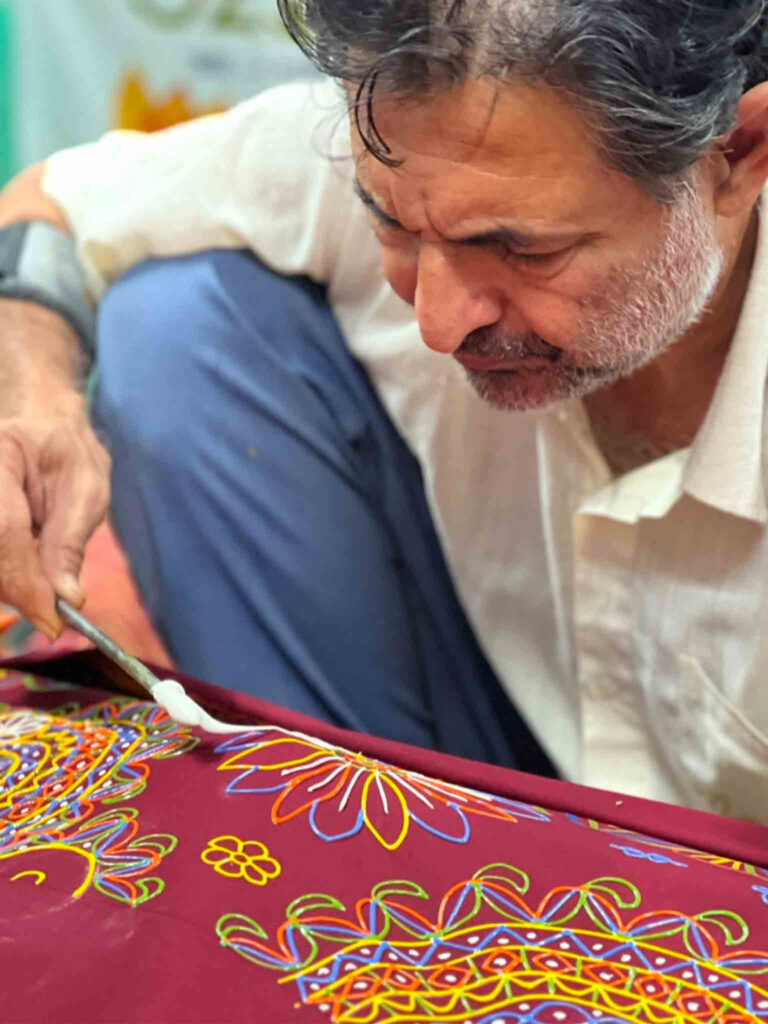
| Tools Used | Tulika (metal/wooden stylus), stretched fabric frame |
| Registered Logos | GI Tag, Handicraft Mark |
Rogan Painting – Tracing Origins & Cultural Legacy
The origins of Rogan Painting trace across a wide historical geography, spanning Patliputra (ancient Bihar), regions of Afghanistan, and western India. Research referenced by UNESCO (2008) links early Rogan-like oil painting techniques to 5th–6th century CE Buddhist textiles, identifying it as an early form of the drying oil painting method.
In India, the craft evolved and survived primarily in the Kutch region, traditionally practiced by the Hindu Khatri community. The knowledge was passed orally within families, making Rogan Painting a highly guarded and lineage-based tradition. The term Rogan is derived from the Sanskrit word “रङ्गन् (rangan)”, meaning to color or dye.
Rogan Painting Techniques
Rogan Painting encompasses three recognized stylistic techniques:
Rogan Art – Pure freehand painting with folded-fabric symmetry
Nirmika Rogan Art – Combines block printing with hand painting
Varnika Rogan Art – Features layered colors, embellishments, and complex detailing
Exceptional Craftsmanship & Artistic Features
Oil-Based Paint Preparation
Castor oil is boiled for hours to achieve a thick, viscous paste.Freehand Symmetry
Motifs are drawn without outlines and mirrored by folding the fabric.Symbolic Motifs
Tree of Life, florals, animals, birds, and geometric borders.Minimal Tools
No brushes—only a stylus and hand control.Natural Color Palette
Reds, blues, yellows, whites derived from natural sources.Time-Intensive Process
A single artwork can take several days to complete.Seasonal Craft Tradition
Historically linked to wedding seasons and ceremonial demand.Sustainable Practice
Low environmental impact using natural materials.
Traditional & Contemporary Applications
Wall hangings & textile panels
Sarees, dupattas & shawls
Cushion covers & home décor
Rogan Art Lehenga for weddings and festivals
Museum-grade textile artworks
Modern designers increasingly adapt Rogan motifs for contemporary interiors while preserving traditional methods.
Global Appeal & Market Recognition
Recognized as an endangered heritage craft
Admired for technical difficulty and symmetry
Exhibited in international museums & cultural forums
Sought after in luxury décor and art markets
Supported by GI protection and craft councils
Symbol of India’s indigenous textile innovation
Manufacturer & Top Brands
| Cluster / Institution | Founded | Promoter | Art Type | Market Reach | Ownership | Origin |
|---|---|---|---|---|---|---|
| Traditional Rogan Artisan Families | Ancient | Artisan Lineages | Rogan Textile Art | Global | Private | Kutch, India |
| Rogan Art Clusters | Traditional | Local Communities | Oil-Based Painting | Export | Community | Gujarat |
| State Handicraft Bodies | 1950s–70s | State Govt. | Craft Promotion | Global | Govt. | India |
| Craft NGOs & Trusts | 1990s | NGOs | Artisan Support | Global | Non-Profit | India |
| Contemporary Craft Brands | 2000s | Designers / SMEs | Modern Rogan Art | Export | Private | India |
Conclusion
Rogan Painting stands as a living testament to India’s artistic ingenuity—where oil, cloth, and imagination merge into timeless symmetry. Rare, labor-intensive, and culturally profound, this oil-based textile art from Kutch embodies sustainability, heritage, and human skill in its purest form.