Kosa Silk – Timeless Tribal Legacy of Chhattisgarh
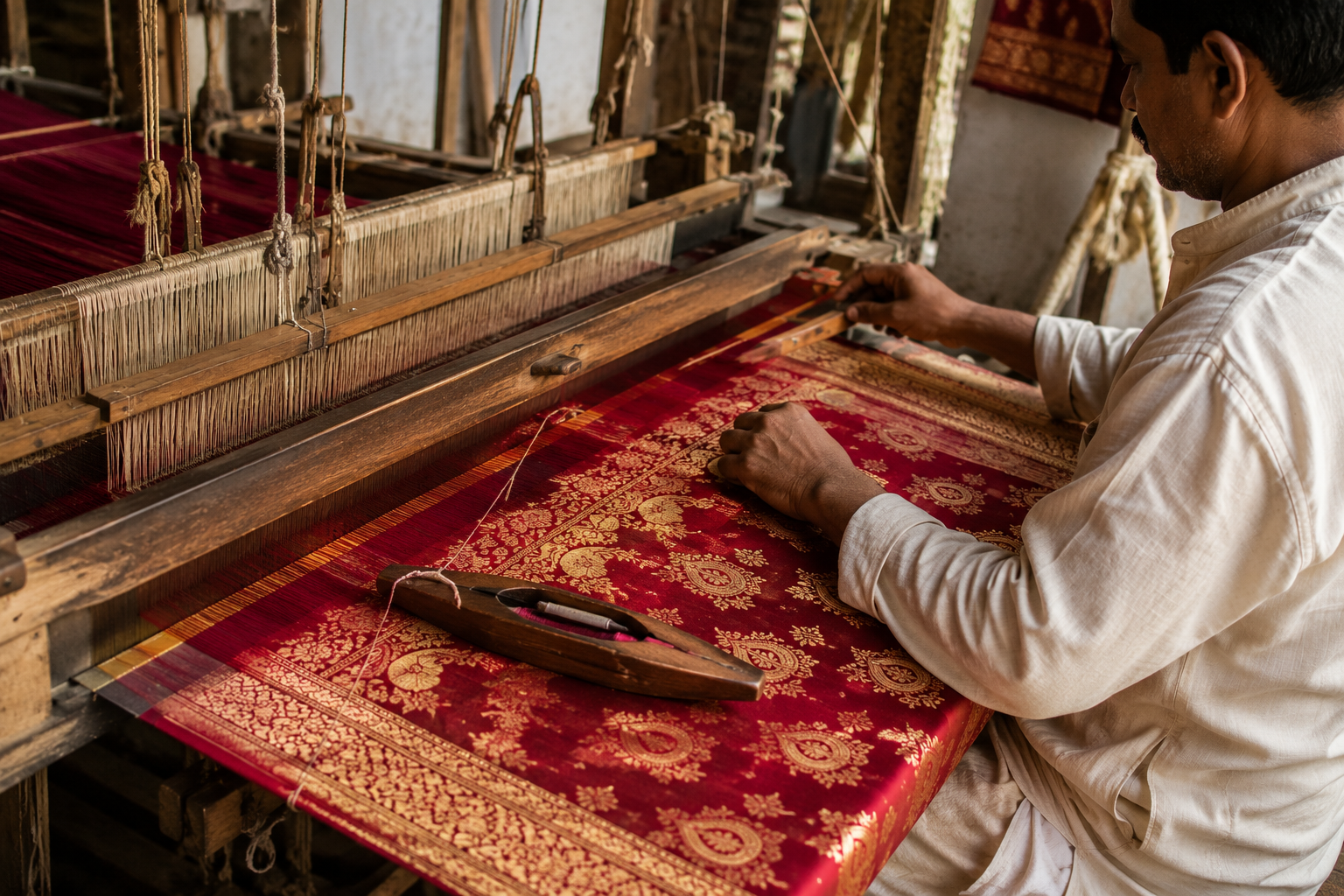
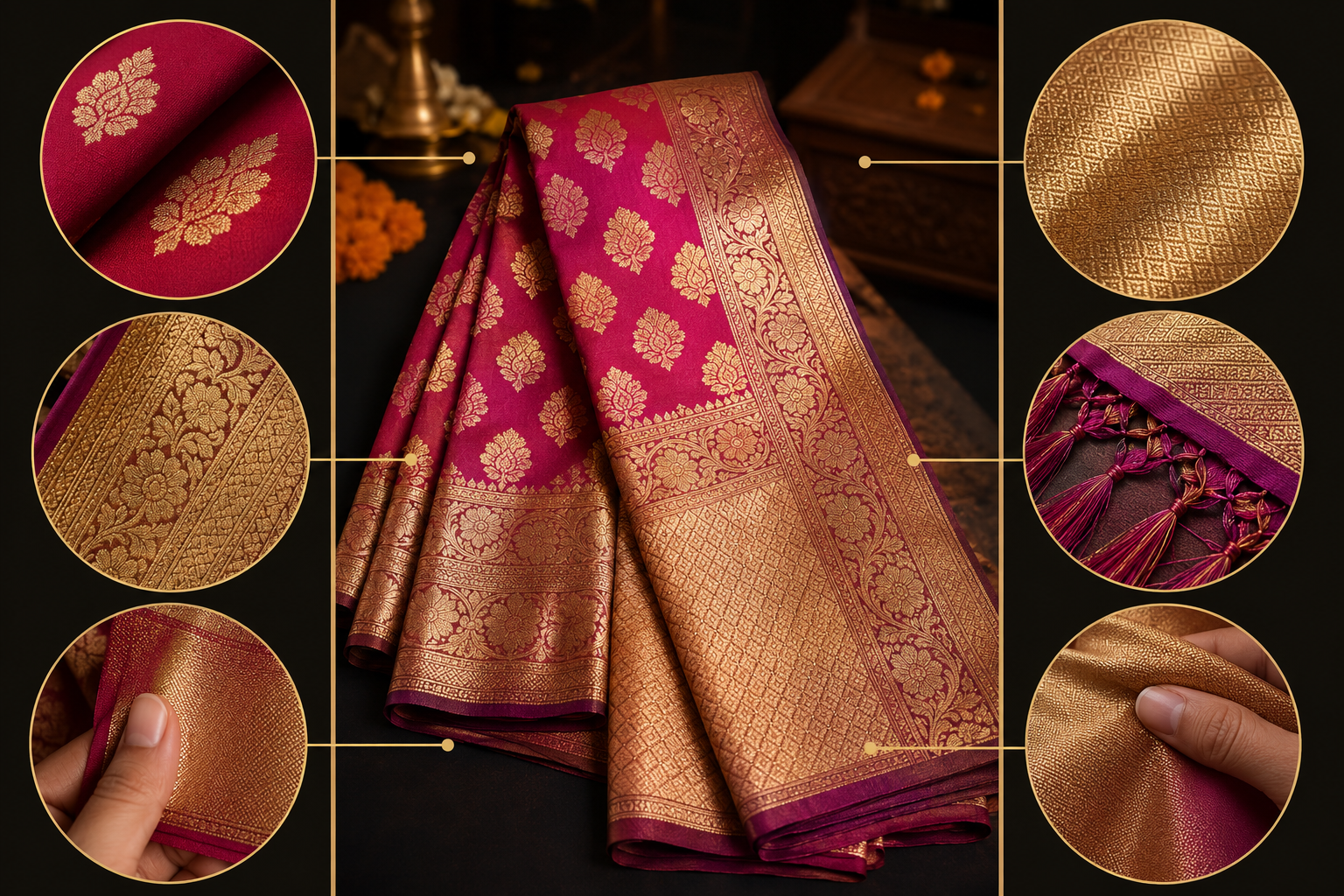
Kosa Silk is Chhattisgarh’s most distinctive and culturally rich handloom heritage, admired for its natural golden-brown sheen, raw elegance, and exceptional strength. Deeply rooted in the forest-based tribal traditions of central India, Kosa Silk symbolizes sustainability, resilience, and indigenous craftsmanship. Produced from wild silkworms and woven on traditional handlooms, Kosa Silk reflects India’s authentic artisanal excellence — truly Proudly Made in India.
Basic Overview
| Field | Details |
|---|---|
| Traditional Visual | Kosa Silk sarees and fabrics worn by tribal and rural women with earthy tones |
| Alternative Names | Tussar Silk of Chhattisgarh, Desi Kosa |
| Craft Type | Traditional Handloom Silk Weaving |
| Area | Bastar, Raigarh, Bilaspur |
| State | Chhattisgarh |
| Country | India |
| GI Registration | Kosa Silk of Chhattisgarh |
| Raw Material | Wild Silk (Antheraea mylitta silkworm) |
| Registered Logo | Handloom Mark, India Handloom Brand |
Kosa Silk – Tracing Its Origins & Cultural Legacy
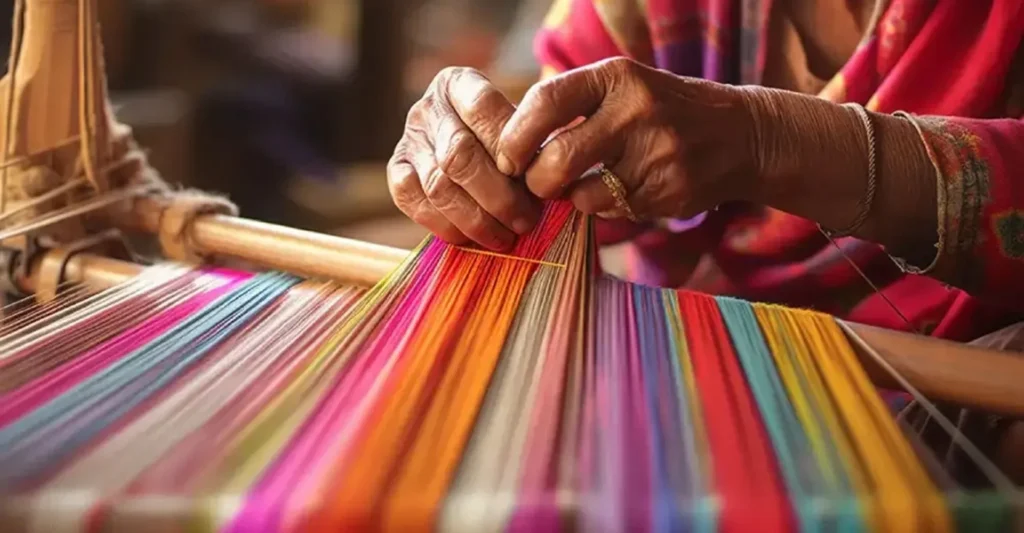
The legacy of Kosa Silk dates back several centuries and is closely linked to the forest-dwelling tribal communities of Chhattisgarh. Traditionally, Kosa silk was used for ceremonial attire, community rituals, and sacred offerings. Tribal artisans perfected the art of rearing wild silkworms on Arjun and Sal trees, spinning yarn by hand, and weaving durable fabrics suited to local climates.
Kosa Silk has long been a symbol of dignity and prosperity among tribal societies and continues to play an important role in festivals, weddings, and cultural celebrations across central India.
Global Appeal & Market Recognition
- Valued for its natural earthy sheen & raw elegance
Strong domestic demand across central & eastern India
Growing exports to Europe, Japan, USA & sustainable fashion markets
Recognized as Chhattisgarh’s signature silk identity
Preferred by ethical, eco-conscious & slow-fashion brands
Appreciated for chemical-free, forest-based silk production
Exceptional Craftsmanship & Artistic Features
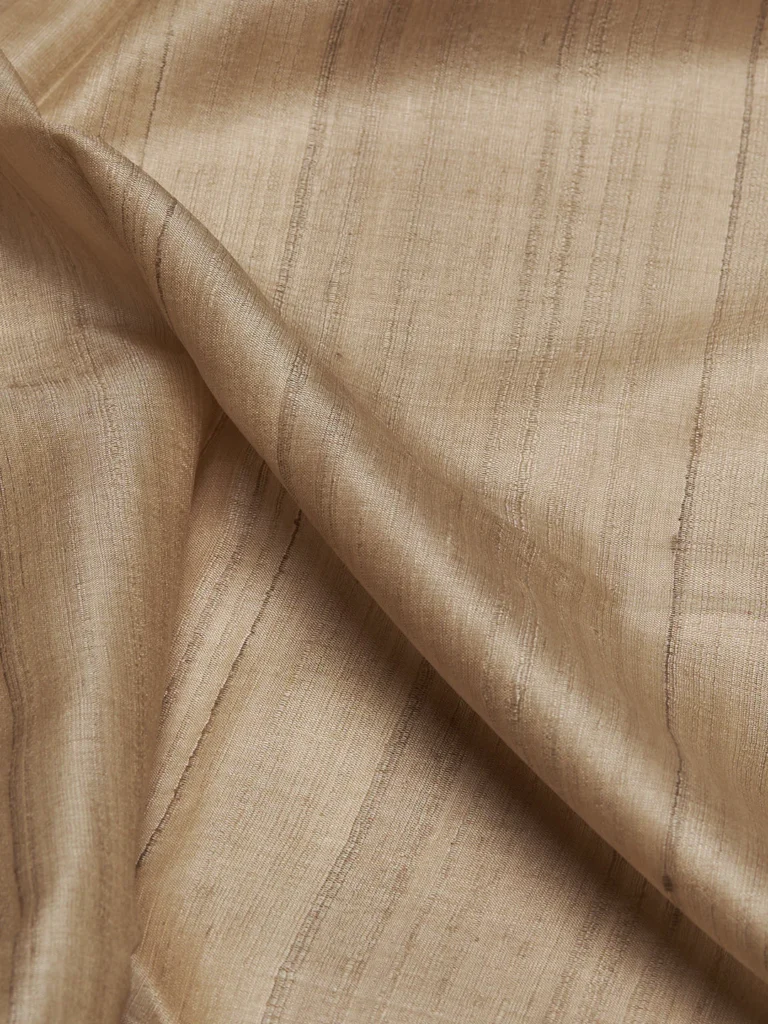
Natural Earthy Sheen
Soft golden-brown tone that matures beautifully with time.
Wild Silk Origin
Produced from forest-reared silkworms feeding on Arjun & Sal trees.
Superior Strength & Durability
Stronger and more resilient than mulberry silk.
Handwoven Excellence
Crafted on traditional pit and frame handlooms.
Minimal Chemical Processing
Retains natural texture and eco-friendly purity.
Breathable Natural Texture
Comfortable, skin-friendly, and climate-adaptive fabric.
Traditional Motifs
Inspired by tribal art, nature, geometric patterns, and temple borders.
Time-Intensive Process
One saree can take 10 days to over a month, depending on complexity.
Sustainable Craftsmanship
Supports tribal livelihoods, forest conservation & slow fashion.
GI-Certified Authenticity
Protected heritage under India’s Geographical Indication Act.
Manufacturer & Top Brands
| Cluster / Brand | Founded | Promoter | Business Type | Market Reach | Ownership | Origin |
|---|---|---|---|---|---|---|
| Chhattisgarh Handloom Development Corporation | 1978 | Govt. of Chhattisgarh | Handloom Promotion | Global | Govt. | Chhattisgarh |
| Bastar Handloom Cluster | Traditional | Tribal Weavers | Handloom Weaving | India & Export | Cooperative | Bastar |
| Raigarh Kosa Weavers | 1900s | Weaver Community | Traditional Weaving | Domestic & Export | Cooperative | Raigarh |
| CG State Emporium | 2000s | State Initiative | Handloom Retail | India | Govt. | Chhattisgarh |
| Ethical Kosa Brands | 2010s | Social Enterprises | Sustainable Fashion | Europe, USA | Pvt | India |
Conclusion
Kosa Silk – Timeless Tribal Legacy of Chhattisgarh beautifully represents India’s forest-based silk heritage, tribal artistry, and sustainable textile traditions. With its raw elegance, unmatched strength, and eco-conscious production, Kosa Silk continues to attract heritage lovers, designers, and global ethical fashion markets. From tribal looms of Chhattisgarh to contemporary luxury collections worldwide, Kosa Silk stands proudly as a symbol of India’s enduring handloom legacy.