Is Pond's or Ponds an Indian Brand? Here's the Honest Answer
If you’ve grown up in India, there’s a good chance Pond’s Cold Cream was sitting on your mother’s dressing table. The white tin with that familiar pink label has been part of Indian homes for decades. So it’s a fair question “is Ponds actually an Indian brand, or are we just loyal customers of a foreign company?”
Let’s get straight to the answer.
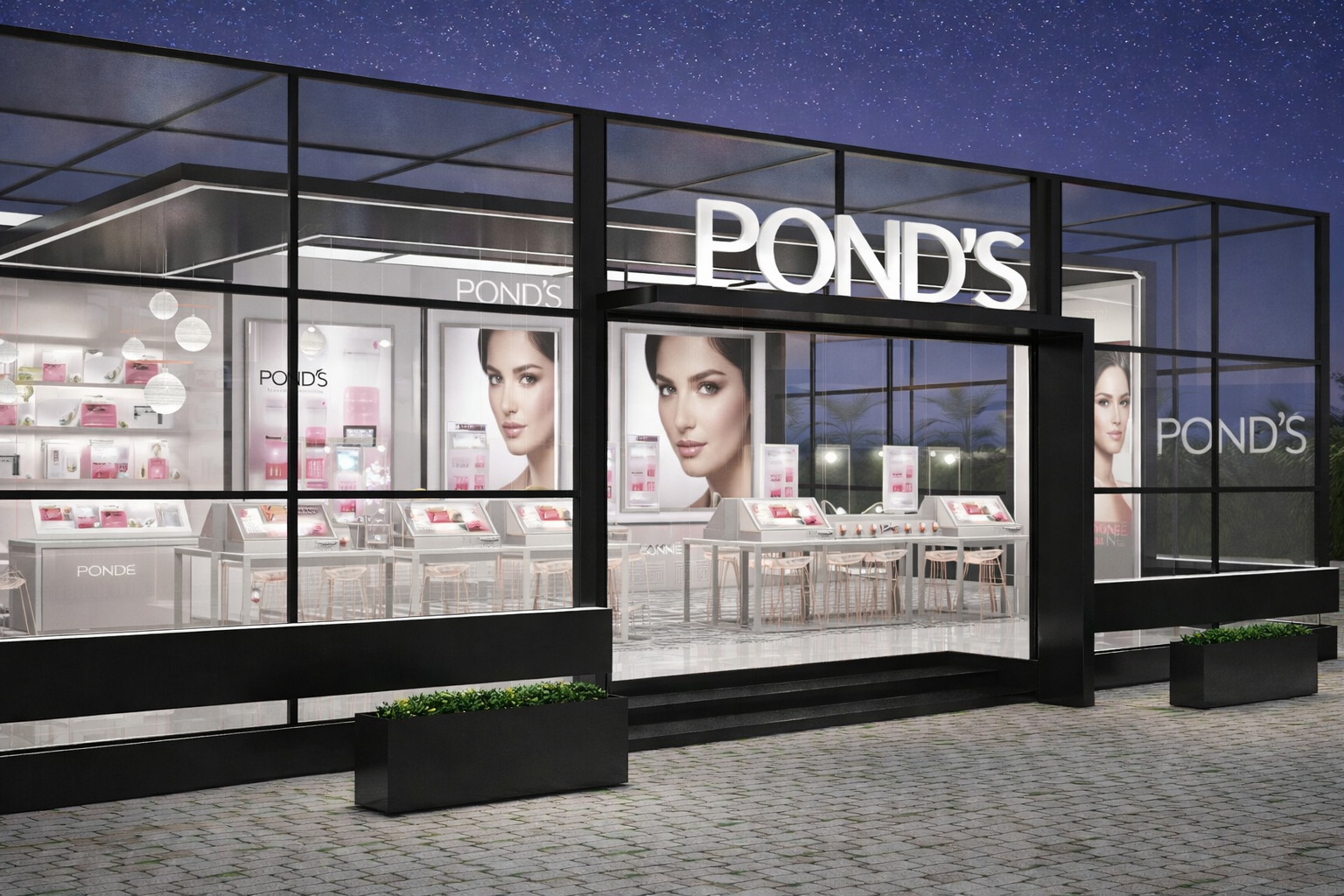
No, Pond's Is Not an Indian Brand
Pond’s is not Indian. It was born in America in 1846 and is currently owned by Unilever, a British-Dutch multinational. In India, it operates through Hindustan Unilever Limited (HUL), which is a publicly listed Indian company, but the brand itself, its intellectual property, and its global ownership sit with Unilever.
So when you buy Pond’s Cold Cream at your local kirana store, you’re buying a foreign-origin brand that’s manufactured locally in India by HUL.
Where Did Pond's Actually Come From?
The brand started not in a corporate boardroom but in a small pharmacy in Utica, New York. In 1846, a pharmacist named Theron T. Pond was experimenting with witch hazel — a plant extract known among Native American communities for its healing properties. He reportedly worked with an Oneida medicine man who showed him how witch hazel could soothe cuts, burns, and skin irritation.
Pond called his product “Golden Treasure.” It wasn’t a beauty cream. It was medicine.
By 1849, he had investors — Alexander Hart and Edmund Munson — and the T.T. Pond Company was formally registered. Theron Pond died just three years later in 1852, never seeing how far his little herbal extract would travel.
His partners kept the business alive. By the 1880s, “Pond’s Extract” was a household name across America.
How Pond's Went from Medicine Bottle to Beauty Counter
The real turning point came in 1904 when the company introduced Pond’s Cold Cream and Pond’s Vanishing Cream. Witch hazel medicine was becoming less commercially viable, anyone could buy it cheaply. Beauty, however, was a different market entirely.
The 1920s were when Pond’s became aspirational. The brand ran advertisements featuring queens, duchesses, and Hollywood actresses. If you used Pond’s, the message was clear you had taste.
By the 1930s, even through the Great Depression, Pond’s was selling face powder and lipstick. The brand had learned something important early: women will prioritise skincare even in hard times.
In 1955, Pond’s merged with Chesebrough Manufacturing, the company behind Vaseline. This expanded their product range significantly and gave them stronger distribution across America and internationally.
The $3.1 Billion Deal That Changed Everything
In 1987, Unilever bought Chesebrough-Pond’s for $3.1 billion. At the time, it was one of the largest acquisitions in the consumer goods industry.
For Unilever, this wasn’t just about Pond’s- it was about Vaseline, Rave, and several other brands in the portfolio. But Pond’s turned out to be the star. Unilever saw the potential in Asia and pushed the brand hard into India, China, Indonesia, and across Southeast Asia.
That’s where the story gets interesting for us in India.
Pond's in India — More Than Just a Foreign Brand
Pond’s entered the Indian market decades ago, but it was Unilever’s aggressive push through HUL in the 1990s and 2000s that turned it into a true mass-market brand. HUL didn’t just sell Pond’s to premium customers — they brought it to small towns, rural markets, and corner shops across the country.
Today, Pond’s products sold in India are manufactured here. HUL operates multiple manufacturing plants across India and employs thousands of Indian workers. The taxes, the jobs, the local supply chain — all of that stays in India.
What leaves India is the royalty paid to Unilever for using the brand name.
That’s the honest reality of most “foreign” FMCG brands operating in India — the economic footprint is local, but the brand ownership is not.
Who Actually Owns Pond's Today?
| Ownership Layer | Details |
|---|---|
| Global Brand Owner | Unilever PLC (UK/Netherlands) |
| India Operations | Hindustan Unilever Limited (HUL) |
| HUL Listed On | NSE & BSE (Indian stock exchanges) |
| HUL Ownership | ~61.9% held by Unilever, rest by Indian public shareholders |
| Manufacturing | Done in India by HUL |
| Brand IP | Held by Unilever globally |
Ponds Which Country Brand — The Direct Answer
For everyone searching “Ponds which country brand” — the answer is: American origin, British-Dutch ownership, Indian operations.
- Founded: USA (1846)
- Current parent: Unilever (UK/Netherlands)
- Sold in India through: HUL (India)
- Made in: India (for Indian market products)
What Products Does Pond's Sell in India?
Pond’s India lineup is quite different from what the brand sells in Western markets. The Indian range is built around what Indian consumers actually want:
Pond’s Cold Cream — The original. Still one of the best-selling winter moisturisers in North India. The blue and white tin that hasn’t changed much in decades.
Pond’s White Beauty Range — Targeted specifically at Indian consumers who want brightening and even skin tone. Controversial in some circles for the “whitening” messaging, but commercially very successful.
Pond’s Super Light Gel — Launched for Indian summers. Lightweight, non-greasy, suited for humid Indian climates. A smart product adaptation for the market.
Pond’s Face Wash range — Pimple Clear, Bright Beauty, Oil Control. All designed with Indian skin types and concerns in mind.
Pond’s Age Miracle — Anti-ageing range, popular among women in their 30s and 40s.
The Pond's Skin Institute — What Is It?
This is something most people don’t know about. In the 1990s, under Unilever, a dedicated research division called the Pond’s Skin Institute was set up. It focuses specifically on skin science — hydration, pigmentation, ageing, and cleansing.
Why does this matter? Because it means the products aren’t just cosmetically formulated — there’s actual dermatological research backing the claims. Indian skin behaves differently from European or American skin due to sun exposure, humidity, and diet. The Skin Institute has specifically studied South and Southeast Asian skin types.
In 2018, Unilever relaunched Pond’s globally under the Pond’s Skin Institute banner, leaning harder into the science angle rather than just beauty marketing.
Should You Buy Pond's? — An Indian Consumer's Perspective
This is the real question, isn’t it? Here’s a balanced take:
Reasons to buy: The products are affordable, widely available, clinically tested, and genuinely effective for most Indian skin types. The Cold Cream, in particular, is hard to beat at its price point for dry skin care in winter.
Reasons to think twice: You’re buying a foreign-owned brand. The profits ultimately flow to Unilever, a £100+ billion British-Dutch company. If supporting Indian-owned skincare brands matters to you, there are good alternatives — Biotique, Himalaya, Mamaearth, Wow Skin Science, and Khadi Natural, among others.
Neither choice is wrong. But it’s worth knowing what you’re choosing.
We have also covered other skincare brands you can go through once like Himalaya Herbals, Aaranya Skincare and Lakme Cosmetics.
Indian Skincare Alternatives to Pond's
| Indian Brand | Best For | Price Range |
|---|---|---|
| Himalaya | Sensitive skin, herbal formulations | Budget |
| Biotique | Ayurvedic skincare | Budget–Mid |
| Mamaearth | Natural, toxin-free products | Mid |
| Wow Skin Science | Apple cider, vitamin C range | Mid |
| Khadi Natural | Traditional ingredients | Budget |
| Forest Essentials | Luxury Ayurvedic skincare | Premium |
FAQs
Is Pond's an Indian company?
No. Pond’s is owned by Unilever, a British-Dutch multinational. It operates in India through Hindustan Unilever Limited.
Which country does Pond's belong to?
Pond’s was founded in the USA and is currently owned by a UK/Netherlands company (Unilever).
Is Pond's made in India?
Yes, Pond’s products sold in India are manufactured here by HUL. But the brand is foreign-owned.
Who is the owner of Pond's?
Unilever PLC is the global owner. In India, HUL (Hindustan Unilever Limited) manages the brand.
Is Pond's Cold Cream good for Indian skin?
Yes, particularly for dry skin in winter months. It’s one of the most used cold creams in North India.
What is the parent company of Pond's in India?
Hindustan Unilever Limited (HUL), which is majority-owned by Unilever.